
 •
Rating:
•
Rating:
THE REVIEW
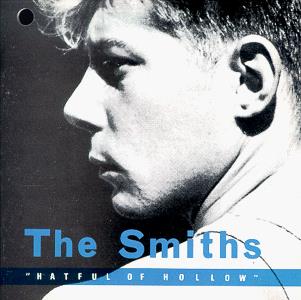
Wanting at all costs to review an album by the Smiths, since "The Queen Is Dead", essential, was already present, I was quite undecided between the first, beautiful, self-titled one and "Hatful Of Hollow", both released during the graceful year of 1984.
In the end, I opted for the second: despite the charm of the first "The Smiths" remaining unchanged through the ages, if I had to recommend to a newcomer which album to start with to best understand the historic Manchester band, the choice would undoubtedly fall on this collection of singles, b-sides, and radio sessions which is to be considered as one of the highest points of their entire discography (not surprisingly, Stuart Murdoch of B 'n' S was immortalized wearing a t-shirt featuring the cover of this album). It is the album that projects the Smiths into the hyperuranium of underground cult, maintaining that mystical and profoundly naive aura that, in a way, will fade with the subsequent, more socially and politically engaged, "Meat Is Murder". This is just a great collection of pop songs, evocative, melancholic, mocking, and at times absolutely heart-wrenching, as none were heard anywhere in the mid-cold and electronic '80s.
I don't even know to what extent I should venture to describe these songs that, from my point of view, have been practically evergreen for many years now, and the effect I feel every time I listen to the first 10 seconds of each track must be comparable to what football players feel at the sound of the national anthem before matches.
I can only declare that it truly seems strange to me how the pearls of the Smiths within this truly praiseworthy site have been rather overlooked: not to start a weak polemic, but I honestly don't understand why no one (or almost) has yet felt the need to tell of when they felt chills down their spine the first time they listened to the chorus of "Still Ill", who hasn't tried to put into words the soothing and beautiful melancholy conveyed by "Reel Around The Fountain" (which at times is really hard to listen to without shedding a single tear), who hasn't said how their worries softened when listening to a song that, despite everything, screamed that the sky knew how unhappy it was.
The first phase of the work managed by Morrissey and Marr was the sincere and suffocated need to exorcise a discomfort that, although focused in a precise and difficult historical moment (i.e., the disastrous era for the English working class, of Thatcherism), was then assimilated in the following years, through the changes in society and in the very life of those who confided in that shy and lost band from a gray industrial city.
Maybe because deep down human emotions are always the same, and sooner or later everyone has asked life to receive what they want: I cannot know if this secular prayer has ever been answered, I can only say that sometimes there are things, or people, that in any case do not make you feel alone.
Listen to this album.
Loading comments slowly
Summary by Bot
This review praises The Smiths' 1984 album 'Hatful Of Hollow' as a timeless collection of singles, B-sides, and radio sessions. Seen as essential for newcomers, it captures the band's early melancholic, evocative style before their more political turn. The album deeply resonates emotionally and holds a lasting place as an underground cult classic. The reviewer highlights the album’s unique ability to evoke strong feelings and nostalgia.Tracklist Lyrics Videos
The Smiths
The Smiths were an English rock band formed in Manchester in 1982, best known for the songwriting partnership of vocalist Morrissey and guitarist Johnny Marr, alongside bassist Andy Rourke and drummer Mike Joyce.14 Reviews
Other reviews
By luludia
Blessed is he who opened that window. Blessed be therefore Stephen Morrissey.
'Heaven knows I’m miserable now' leads to a sort of ultimate melancholy, a sweet nocturne with verve.
