
 •
Rating:
•
Rating:
THE REVIEW
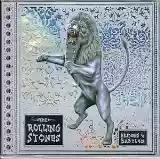
My review on this November 17th is directed towards the album Bridges to Babylon, the penultimate official studio work of the Band to date. Well, my intention is to explain why I believe it is a great album, despite what is commonly written and read about it. Let’s say right away that the Rolling Stones definitively closed a cycle with Some Girls (1978) and that from then on, things would NEVER be the same for them; it is no coincidence that the two subsequent albums (Emotional Rescue and Tattoo You) were simply a series of outtakes reassembled and "repainted" for the occasion (plus some new tracks) with disappointing (Emotional Rescue) and excellent (Tattoo You) results at the same time. After the prevailing confusion in the '80s, it was only with the arrival of Don Was at the helm that things began to march properly again; and the good Voodoo Lounge stands testament to that. But the subsequent album, Bridges to Babylon, indeed, represented a true turning point for our guys. And now I'll explain why!! First of all, with this album, the Stones turn to a "new" sound, absolutely unprecedented in all their previous production, a new way of understanding Rock 'n' Roll and the usual 4-bar measures usually used. The Stones conceived this album in a very different way compared to the past: in fact, as evidenced by an interview from the period given to Mojo, one-third of the tracks were by Keith alone (Flip the Switch, You Don’t Have to Mean it, Thief in The Night, and the closing How Can I Stop), another third by Mick alone (Already Over Me, Saint of Me, Might As Well Get Juiced, Always Suffering), and finally, the remaining third by both, as in the old days (Low Down, Gunface, Out of Control, Too Tight). In this album, Richards's concept of Rock'n'Roll (compared to the past) becomes much more essential, squared, dry, and with an obviously very clean sound, light-years away from the sick and dirty sounds of Sticky Fingers and Exile On Main Street, for example, but not less effective for that. Naturally, an important role in the construction of the sound is played by the various co-producers all under the wise guidance of Don Was and the numerous external musicians present, a richer cast than ever before on a Stones album and never again after (so much so that the otherwise valid A Bigger Bang almost seems like a "homemade" album compared to this one in terms of the musicians in action). The songs are all very beautiful in my opinion, some even particularly beautiful like the big ballad Already Over Me (which echoes acoustic or semi-acoustic ballads of Exile On Main Street) or for example the almost Calypso track You Don’t Have To Mean It; elsewhere, as in the case of the initial Flip The Switch, the bass and drum start is nothing short of explosive and deadly, with the dark but mighty work of the sax, or in Low Down: where a "almost" canonical chord progression typical of Richards corresponds, however, to a deliberately dirtier and meaner sound and a very gritty performance. Beautiful are the modern ballads with a black perspective like Anybody See My Baby and Saint Of Me, Harsh is the splendid Gunface with Wood's distorted and sinister slide solo, the deadly and apocalyptic Might As Well Get Juiced is powerful (our first and only electronic Rock Blues, but with the presence of real drums, harmonica, and guitars) and in this Beautiful album only a little mannerism emerges in two tracks: Always Suffering (a beautiful song, but not exceptional) and in Too Tight with obvious echoes of the irreproducible splendor of the magical '60s. The album closes with two splendid creations by Richards: one deliberately nocturnal and mysterious in tone (Thief In The Night) and the other with a very "Soul" feeling, something decidedly unusual for someone like Richards who has always accustomed us to granite and sparkling riffs: here, however, he surpasses himself and weaves the threads of a very sweet and refined track, giving us listeners not only one of his best tracks but also a real gem of the entire Stones catalog. In conclusion, I believe that this album deserves to be listened to and re-listened to over and over again to be appreciated in all its immense value; possibly WITHOUT PREJUDICE.
Loading comments slowly
Summary by Bot
The review highlights Bridges to Babylon as a significant and underestimated Rolling Stones album showcasing a new sound and approach. It marks a turning point with distinct contributions from Mick Jagger and Keith Richards and the influential role of Don Was. The album blends modern rock textures with classic Stones elements and deserves repeated listens free from prejudice. Some tracks show minor flaws, but overall this is a rich, well-crafted album.Tracklist Lyrics Videos
The Rolling Stones
English rock band formed in London in 1962. Key long-term members include Mick Jagger and Keith Richards. Known for blues-influenced rock, enduring live performances and a prolific discography.81 Reviews
Other reviews
By currahee72
The Stones are always the Stones and they are forgiven for everything because their experience, class, and musical attitude will remain unmatched for millennia to come.
Not all the songs live up to the group’s fame but, as in each of their works from the past thirty years, the Stones manage to slip in those five tracks that make the difference and that other young bands can only dream of composing.
