
 •
Rating:
•
Rating:
THE REVIEW
It's 1968. The recently ended summer of love withers under the scorching waves of student demonstrations all over Europe; the fight against the authority of institutions such as family, religion, and the state was carried out "with blood and iron" (to quote Bismarck).
The new rebels of '68, the young people who, for the first time in the history of mankind, had money in their pockets, the atheistic unbelievers and idolaters of Che Guevara, those who defaced the walls of the University of Paris, those who simultaneously rejected bourgeois values and the new industry born just for them, could rely on an unprecedentedly effective weapon: rock. For blues' offspring, too, it was a period of turbulent change: the future Genesis, still teenagers, were developing progressive rock at their school desks; the robust power blues of Jimmy Page's New Yardbirds, the future Led Zeppelin, emitted their first cries, with their upcoming performances in Scandinavia; psychedelia, in the minds of characters like the good madman Syd 'Madcap' Barrett of Pink Floyd, finally rose to the rank of true, great art, in works like A Saucerful Of Secrets.
And what was happening to the Rolling Stones? After the pop of early '67's "Between The Buttons" and the psychedelic detour, all flowers and garlands, of the wayward "Their Satanic Majesties Request," hot on the heels of the Beatles, the Stones experienced an awakening: being hippies wasn't in their nature. And how could they have, then: they were the ones responsible for the most transgressive and adverse image of rock. With the increasingly precarious influence of Brian Jones (even if his contribution in this microslice is far from absent), who died a year later, the celebrated Jagger/Richard (before he was known as Richards) duo marks a decisive, stubborn, and categorical return to the band's rhythm and blues roots. Preceded in May by the excellent single Jumpin' Jack Flash, "Beggars Banquet" was released in stores in November '68. An ancestor of a tetralogy of masterpieces and milestones in music history, which includes "Let It Bleed," "Sticky Fingers," and "Exile On Main Street," the album was a genuine bombshell already at its date of release.
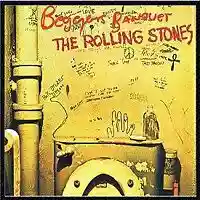
The vulgar and decadent cover, depicting a soiled and decayed latrine, rejected in the USA and replaced by an innocuous and obsequious imitation of a virginal business card, marks the return to the dark side of rock and their image of "dirty, bad, and ugly." Inspired by contemporary political-social events, the superb "Street Fighting Man," also the album's leading single, becomes a profound reflection on the crucial themes of a rebel's life. But the true masterpiece of the collection is the sinister "Sympathy For The Devil," where the explicit satanic lyrics, influenced by the reading of Bulgakov's "The Master and Margarita," Keith Richard's fiery phrasings, Nicky Hopkins' elegant piano scores, and Mick Jagger's perfect vocal rendition as an erudite and sharp Lucifer, make this track an epic and terrifying contribution to the pages of Rock History. In "Stray Cat Blues," Jagger and company delve into sexual themes already brought to the fore in previous works. Brian Jones temporarily resurfaces from the dark abyss of drugs and depression, before sinking into it permanently, and offers the listener real gems: "No Expectations" (a great sitar piece) and "Dear Doctor." With a setting etched on the dark underworlds of New Orleans or Chicago, this album was and is one of the pillars of R&B.
Loading comments slowly
Summary by Bot
Beggars Banquet marks The Rolling Stones' decisive return to their blues and rhythm & blues roots amid the turbulent cultural changes of 1968. The album is praised for its rebellious spirit, influential tracks like 'Sympathy For The Devil' and 'Street Fighting Man,' and its dark, transgressive image. It stands as a milestone in rock history, bridging the gap between 1960s psychedelia and a rawer, more authentic rock sound. Contributions from key band members, especially Brian Jones, add depth to this masterpiece.Tracklist Lyrics Videos
03 Dear Doctor (03:25)
09 Factory Girl (02:10)
11 Jumping Jack Flash (original Mono mix) (03:41)
12 Highway Child (Keith, Mick & Charlie Rock Out) (05:05)
13 And I Was a Country Boy (instrumental) (04:26)
14 Family (acoustic version) (04:14)
15 Blood Red Wine (05:21)
16 Downtown Lusie (Rough mix of This. Metamorphosis Track) (03:46)
17 Still a Fool (09:46)
The Rolling Stones
English rock band formed in London in 1962. Key long-term members include Mick Jagger and Keith Richards. Known for blues-influenced rock, enduring live performances and a prolific discography.81 Reviews
Other reviews
By the clash
The Rolling Stones are the emblem of defiance and rebellion, facing old age with energy and will to live.
"Sympathy For The Devil" is provocative and bizarre, defining the Stones as revolutionaries shaking up the system.
By Lorenzo_1987
"This is how 'Beggars Banquet' opens, the best, the most varied, the most innovative, the most scandalous and shocking album by the Stones."
"The worthy conclusion of a timeless album."
