
 •
Rating:
•
Rating:
THE REVIEW
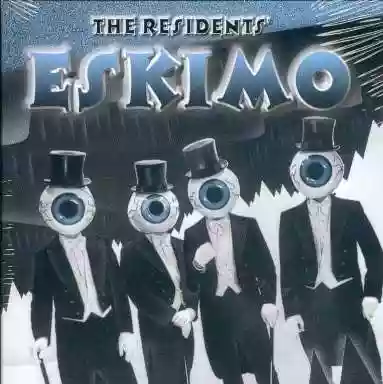
The Residents, following original releases like "Meet the Residents" or "Not Available," experimental and parodic works reflecting the customs and society of their time (see the cover of the aforementioned first album, an obvious nod to the Beatles), released their most ambitious project, "Eskimo," in October 1979 after a gestation period of about three years. This album completely deviates from any type of work ever composed and entirely redefines the boundary between music and what cannot be defined as such, positioning itself right in the middle. Let me explain: "Eskimo" is essentially an anthropological documentary that narrates stories about Inuit life and culture; what makes this release even more peculiar is the fact that the stories are not narrated (except in some parts sung in the Inuit language and thus incomprehensible) in the album but rather in its bootleg, leaving the music to act "only" as a backdrop to the narration. "Eskimo" therefore does not sing stories but provides a sound representation, so to speak, thus allowing the listener's pure imagination to fill in the gaps. The stories follow one after another, constantly accompanied by the whisper of the wind, and the minimalist sounds perfectly create the sonic setting appropriate to the album's theme. Walrus hunts ("The Walrus Hunt"), macabre kidnappings of children by alleged spirits ("A Spirit Steals a Child"), or the Festival of Death ("The Festival of Death") transport the listener directly into the Arctic universe, making them both participants and spectators of the stories told.
Thus, this album constitutes a fundamental chapter in the history of contemporary music, although similar works have never been produced (or at least as far as I know). "Eskimo" is an album to be lived more than listened to; it is a unique work in its genre that no other artist has managed or even attempted to replicate until today.
Loading comments slowly
Summary by Bot
The Residents' Eskimo is a groundbreaking 1979 album that blurs the line between music and sound art. It acts as a sonic representation of Inuit life and culture through minimalist soundscapes rather than traditional narration. Serving as an anthropological journey, the album immerses listeners in Arctic stories and environments, making it a unique and unreplicated work in contemporary music.Tracklist Lyrics Videos
The Residents
The Residents are an American avant-garde/experimental music group known for anonymity (often associated with eyeball masks), a self-mythologized “Theory of Obscurity,” and deconstructive parodies of popular music and American culture through sound collage and treated voices.16 Reviews
Other reviews
By mayhem
The Residents provide the most mystical, dark, delirious, and anti-commercial sound you can imagine.
It is impossible to describe the tracks individually; it’s a CD that should be listened to as it is, from start to finish.
