
 •
Rating:
•
Rating:
THE REVIEW
We do not know if it was the punk fever exploding in 1977 that propelled young Chrissie Hynde to leave her America for England. Rock history teaches us that it was indeed the English who breathed new life into what the Americans didn't even know they had. Hynde packs her bags and wants to live close to that whirlwind of music, describing it with fresh impressions for the New Musical Express, where she works as a journalist. But she doesn't just write; she wants to be, in her own way, part of that world which is slowly changing by incorporating other styles and moods. This is how one of the countless bands makes a debut, with the singer who writes the lyrics and moves sensually on stage, leaving the rest of the members to do the dirty work.
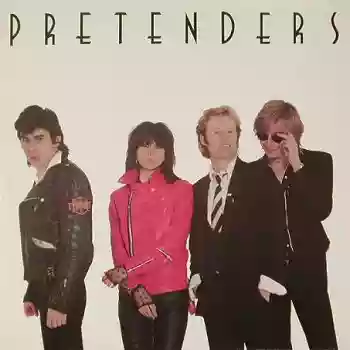
Thus, in 1979, "Pretenders" is born with Hynde acting as mistress, sometimes boss, sometimes damnably sweet and sexy in an unexpected way. And her accomplices (James Honeyman Scott-vocals, guitar, keyboard. Pete Farndon-bass, backing vocals. Martin Chambers-percussion) do an excellent job. In a pop guise, the band manages to create a concentrated mix of styles used wisely and with knowledge of the means, while at the same time, the mood perfectly matches the sounds of the era. "Precious" and "The Wait" are children of punk-pop, so dear to bands like Buzzcocks. For the rest, the pop melody and the plots of guitars arpeggiated with full-blown chorus would prevail, a style carried on by Andy Summer and which would be the banner of Johnny Marr.
"Brass in pocket" is a whole different story. It stands rightfully as one of the hits of the period, the perfect pop song, which you could put on a hundred times on the player without tiring of it, with its offbeat bass, gently touched guitars and keyboards, falsetto choruses and, above all, Hynde standing as an undisputed queen. Not to mention the homage to 60s pop with "Stop Your Sobbing" always without overdoing it, with intention and devout respect; Davies will duly thank her by also giving her a child. Finally, how can we not mention the bubblegum pop of "Kid" or the nocturnal reggae'n'roll plots of "Private Life".
Thirty years on, an album that should be rediscovered for its elegance, for the clever and skilled use of instruments, and for how the pop material is treated as an unexpected entertainment genre.
Loading comments slowly
Summary by Bot
The review celebrates Pretenders' 1979 debut album as a fresh and skillful blend of punk and pop. Chrissie Hynde leads with captivating vocals and songwriting, supported by tight instrumentation. Hits like "Brass in Pocket" exemplify the album's enduring appeal, while the varied musical styles demonstrate clever artistry. Thirty years on, the album remains a must-listen for its elegance and innovation.
The Pretenders
The Pretenders are a British-American rock band formed in Hereford in 1978 by American singer-guitarist Chrissie Hynde. The classic lineup featured Hynde, James Honeyman-Scott, Pete Farndon, and Martin Chambers. Their acclaimed debut, Pretenders (1979), and Learning to Crawl (1984) yielded enduring singles including Brass in Pocket, Back on the Chain Gang, and 2000 Miles.03 Reviews
