
 •
Rating:
•
Rating:
THE REVIEW
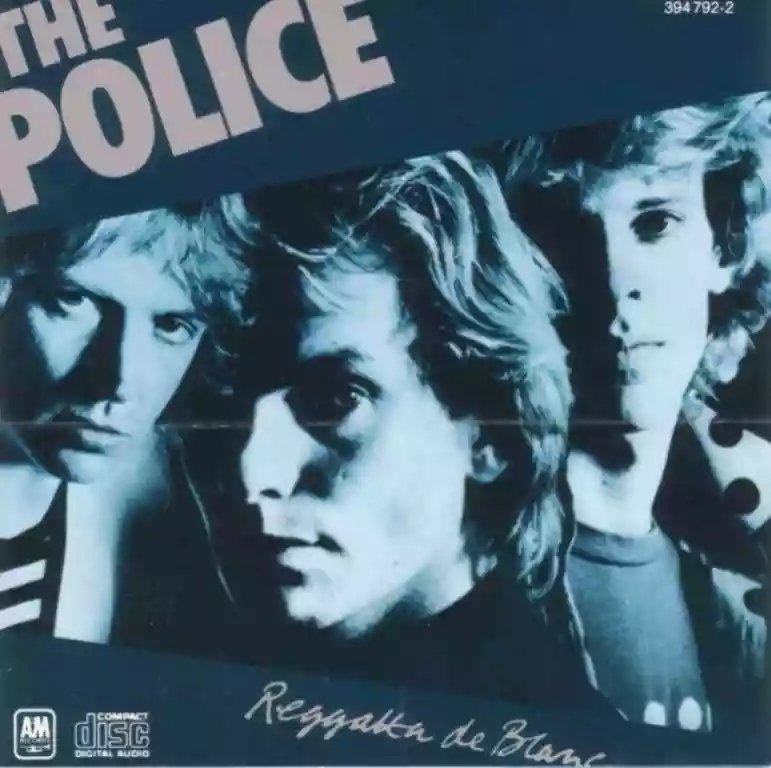
The Police: "Reggatta De Blanc" (1979 A&M). To begin with, we might say that with the arrival of The Police on the light music scene of the late seventies, we witnessed the presence of one of the very few groups modeled on the essential instruments of rock music, to have arbitrarily altered the coordinates on which the genre had moved until then; certainly, this chance was made possible by the astonishing musical depth that the three had, along with a unique background that distinguished them from the start. Here they are: Andy Summers, a much-appreciated guitar session man who had been with Eric Burdon in the '60s and later also involved by Mike Oldfield, who would give the group that crystalline sound that would make even the simplest compositions of the band shine; Gordon Matthew Sumner (alias Sting), a cautious schoolteacher with an unbridled passion for jazz, who refreshes his soul with intense vocals and sturdy bass in the somewhat unknown band Last Exit; and finally, Stewart Copeland, who grew up behind the drums and made a name for himself with the modest progressive of Curved Air, an excellent training ground for the rhythmic gymnastics he undertakes in every performance.
Reggatta De Blanc was released in 1979 and consists of no less than 11 songs where the compositional flair of the Copeland/Sting duo is outlined throughout the work, highlighting the compositional talent of the gifted bassist, in what will become the songs that will energetically imprint themselves on the listeners. "Message In A Bottle" is the right start to begin listening to this record: one of those songs where the rock vein manifests itself with six hands, where the relentless drumming does nothing but expand the presence of a winning riff, confirming the same four chords even in the delightful variation of the verse-guide-chorus; a perfect union between music (energetic and ingenious) and lyrics (incisive and essential) that through impeccable arrangement transforms into notes a story in which everyone can try to empathize with the most acclaimed castaway of the last twenty years. The title track is recognizable by the highly rhythmic side-snare hitting by Copeland and the trigger of an Indian-rooted scream (and a bit stadium-like, right?) which will pave the way to a musical tribalism that will make it one of the most captivating tracks of the live-set. "It's Alright For You" unleashes the initial adrenaline rush that was more than hinted at on "Outlandos D'Amour" while to give the cue on "Bring On The Night," it is again the drumsticks of the eclectic drummer along with the overload of the flanger and Sting's singing, to highlight the song as an excellent manifesto of white reggae (and rock). "Deathwish" relies more on the richness of syncopation and the pursuit of a clear sound, rather than the melodic beauty that is certainly not lacking in "Walking On The Moon," where what strikes is the refined sound quality and its essentialness in making the measured cross-combination of chorus chords much more than a simple pop song. We have crossed the midpoint of an album from which objectively dynamism, masterful technique, and executive freshness emerge, contributing decisively to making it an excellent musical product, giving rise to an exclusive and recognizable sound. The thrilling bass line around which "The Bed's Too Big Without You" revolves brings us back to the warmly reggae atmosphere where the three feel most at home, while with "On Any Other Day" (sung by Copeland), the fresh air that characterized the beginning of the work returns to be breathed.
Copeland’s compositional abilities are unfolded in the concluding part of the album, where "Contact" presents an amusing oscillating succession of notes guided by the four hands of the Summer/Sting duo, while the original "Does Everyone Stare" brings out its eccentricity through a seductive piano and a bizarre opera voice infiltrating from afar, leading our ears to "No Time This Time" to listen to the last frantic explosion of energy from the English band. The perfect blend of new ideas, compositional talent, and executive freshness, make the second chapter of The Police a container from which originates a new sonic archetype that for contemporary musicians and listeners will represent the musical avant-garde, retaining to this day that inimitability and finiteness that has always distinguished it.
Loading comments slowly
Summary by Bot
This detailed review celebrates The Police's 1979 album Reggatta De Blanc as a pioneering work blending rock, reggae, and jazz influences. The review highlights the musicianship and compositional skills of Sting, Copeland, and Summers across eleven dynamic tracks. Emphasis is placed on the album's innovative sound, energetic arrangements, and lasting influence in rock music. Notable songs like "Message In A Bottle" and "Walking On The Moon" underline the band's ability to mix catchy melodies with technical excellence. Overall, it positions the album as a fresh and exclusive sonic archetype.Tracklist Lyrics Videos
The Police
British rock trio formed in 1977 (Sting, Andy Summers, Stewart Copeland) known for blending rock, reggae and new wave and for hits such as "Every Breath You Take".35 Reviews
Other reviews
By marcmat
The only common denominator of the album was the elegance of Sting, the grace of Andy Summers, the creativity of Copeland.
The message in the bottle has truly reached its destination.
By kain3325
The song’s lyrics perfectly capture the indifference enveloping a society already disillusioned by the ideals of the seventies.
Sting’s musical ideas are paving his way toward dreams that seemed unattainable just a few years earlier.
By Economista63
Reggatta de Blanc still gives me chills when I listen to it at full volume.
Dress like a wild savage, close your eyes, and let yourself be carried away by the rhythm of reggatta.
