
 •
Rating:
•
Rating:
THE REVIEW
Extremely difficult is to talk about The Police, one of the bands that had the duty and honor to be the soundtrack of one's adolescence, that short and early adolescence that characterized kids back then, who at nine years old were already listening to singer-songwriters and didn't feel the parental/television obligation to still be sucklings of cartoons and video games.
Extremely difficult because I remember very well the joy I felt holding that light gray tape from A&M, that tape from which emerged a screaming and punchy voice, a crazy guitar for the standards of the time, and perhaps the most beautiful and innovative drumming one could imagine. For someone like me, who had few tapes but of Pink or Battisti, that sound impact was entirely new and had an immense impact, also emotionally. Over time, and with a billion minutes of music listened to under my belt, my opinion hasn't changed one bit. Before, there were great bands from our parents or older siblings. At most, debates were about the superiority of The Beatles over The Stones, Led Zeppelin over Deep Purple, or Gabriel-era Genesis over The Eagles, or their singer-songwriter brilliance (Dylan) over ours (De André or Guccini), or the so-called right-wing (Battisti) over the declared left-wing (De Gregori). But in '77-'78, you could feel the air changing, a bit everywhere. And it’s hard to frame these important years in the '70s...
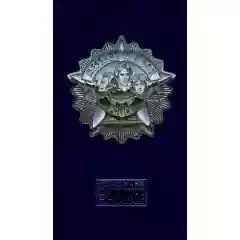
Let me put it this way: in '77-'78, my dear ones, the '80s begin, and there are no calendar tricks that can beat that. In those years, The Police, Dire Straits, Pino Daniele (the Good one), Vasco Rossi (still the Good one), Prince, U2, Simple Minds began, etc..., all people who would dominate from then on. And does that seem insignificant to you...? An important page of great music was being turned in the now nearly completed book of the seven notes. And of this beautiful page, The Police wrote some of the most beautiful lines, without a doubt. The only problem, given the years and the tendency towards lazy condensation of emotions, is that the five albums of The Policemen start to be seen as a single, unmatched album. And here’s why I take the liberty to point out this product, where the works of the Policemen are displayed in sequence on four CDs, full of live versions, B Sides, and various unreleased tracks. And, of course, the complete studio works. Four CDs to devour, starting from the hard-to-find “Fall Out”, the first single without an album, to “Don’t Stand So Close To Me '86”, the last single (fortunately ?) without an album. In “Fall Out” we hear a band brimming with energy, closer to beloved punk than the “white reggae” that would make them very famous and unique, while in “Don’t Stand So Close To Me '86” we hear a nod to the (already present) Sting “post-Police”, more contained, composed, and very charismatic, an interesting guitar riff as always, and especially, the effect of the numerous quarrels between Sting and Copeland, that is the sampled drumming of the latter, which if it was present during recordings, then I am a classical ballerina (the samples then could be recognized from afar...).
In between, however, there is paradise. A paradise that moves from the unrestrained pleasure of “Outlandos D’Amour”, to the absolute perfection of sound of “Regatta De Blanc”, to the madness of the unjustly underrated “Zenyatta Mondatta” and “Ghost In The Machine”, to the “stinghian” perfections of “Synchronicity”, an album symbolizing a great story coming to an end, making way for the enjoyable pedantry of Sting the soloist, but still with some great tom and hi-hat passages from Copeland and some measured guitar madness from Summers. And it's all included between '78 and '83, with the only exception of the '86 single. Even looking retrospectively at The Beatles' career, one realizes how, in other eras, so much of importance could be said in very few years full of good music (Hendrix, for example, only needed less than four years...).
Needless, therefore, in my opinion, to exercise in the art of classifying The Police's work, both for its extremely high quality and for the very little time between one record and the next. If anything, every comparison should be shifted between The Police’s work and that of Sting the soloist, so controversial and capable of peaks and falls. The fact is that Sting will become an excellent author and professional singer (in every broader sense of the term...), and will remain an enviable stage animal, Andy Summers will dedicate himself to jazz, with products always of high level, and some really excellent, while Stewart Copeland will oscillate between soundtracks, ethnic escapades, and risky adventures, like the one with the “new” Doors, which happily ended in a lawsuit.
What could happen if the three of them reunited today, 23 years after the effective dissolution of the group...? Leaving aside all nostalgic conservatism, I remain one of those who hope so, because I believe that, deep down, none of the three has aged badly, and that a new work by The Police, which takes into account today’s world, music, and society, along with all the time and experience that has passed, would certainly be of great interest.
I would envision it this way: a beautiful autumn album, with great long and super-effect-laden chords and crazy solos by Summers, with a mature Sting, more charismatic and less screaming, and a Copeland infinitely less punk and very precise, studied and meditative, with those two sticks flying quickly on the most inimitable hi-hat and on the snare drum with the most beautiful sound in music history.
Loading comments slowly
Summary by Bot
The review reflects on The Police's profound impact as a soundtrack of youth and music history, praising 'Message In A Box' for compiling their complete works, including rare tracks and live recordings. It highlights the band's evolution from punk energy to polished new wave sounds, emphasizing the unique contributions of Sting, Summers, and Copeland. The reviewer expresses hope for a future reunion, valuing the timeless quality and emotional resonance of the music. This collection is heralded as a vital preservation of an era-defining band.Tracklist Lyrics Videos
The Police
British rock trio formed in 1977 (Sting, Andy Summers, Stewart Copeland) known for blending rock, reggae and new wave and for hits such as "Every Breath You Take".35 Reviews
