
 •
Rating:
•
Rating:
THE REVIEW
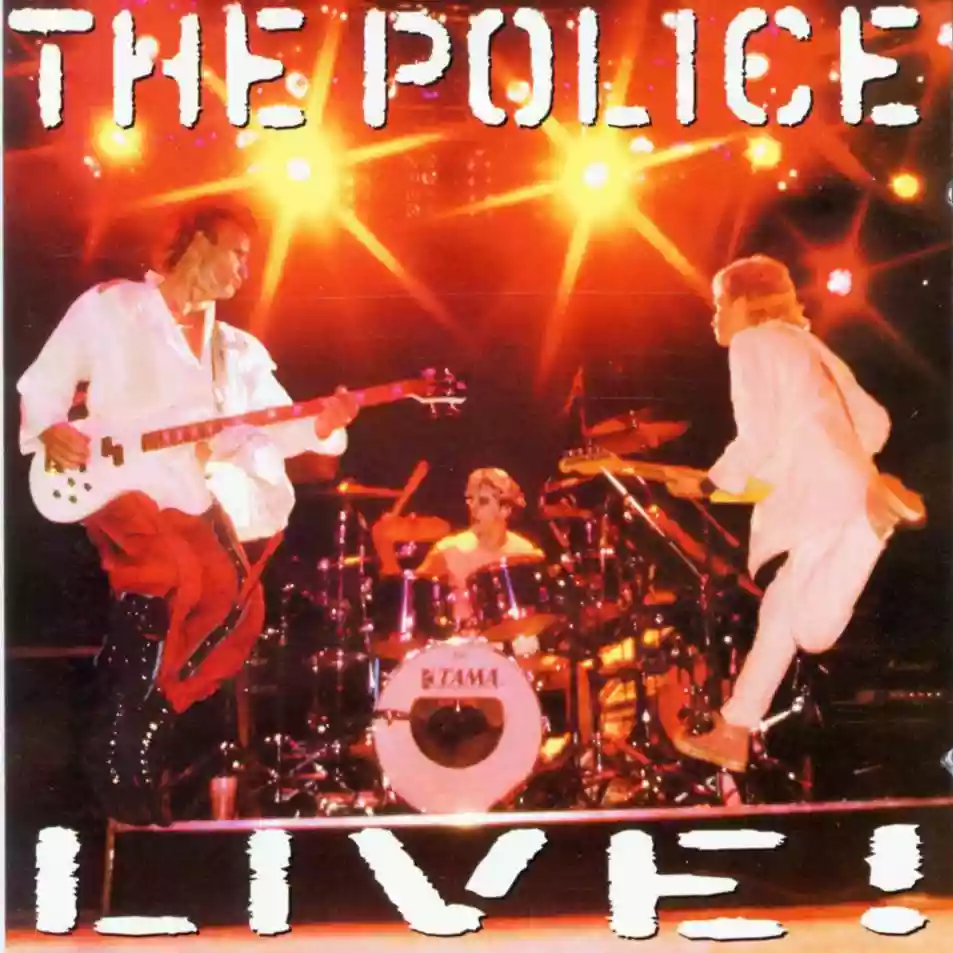
Due to that instinctive attraction that the world of music manages to exert on me (and many others who read, I suppose), I often found myself facing a great dilemma: 1) to watch (impassively!?) the "untimely" release of records that I have always wanted to own? 2) to remain wondering how these records might have been? Personally, I firmly believe in the first alternative, so seeing, purchasing, and evaluating with objectivity seems to remain the best solution. The release of 'Live!' could fall into this category, given the fact that it was created more than two decades after the dissolution of one of the most beloved bands of all time.
The work we find ourselves listening to consists of two CDs; the first show took place in Massachusetts in 1979 and is taken from a radio broadcast aired during the same year, while the second disc reproduces the Atlanta concert from 1983, which could have already been savored by long-time followers through a VHS published some years after the band ended.
The recording of the show held at the Orpheum in Boston gathers 15 tracks. About an hour of show, which naturally did not reflect the actual duration of the concerts held by The Police during that period, while keeping in mind that all the highlights are present plus several pleasant surprises, given that the inexhaustible mine from which to draw was mainly represented by the first two unparalleled chapters. From the opener "Next To You," which is presented as gritty and edgy as it is suitable and impeccable to welcome its fans, passing through the straightforward "Truth Hits Everybody" up to those two pieces of history called "Walking On The Moon" and "Message In A Bottle" that at just the hints of their respective introductions, give us uncontrolled and insuppressible emotions that seemed now confined to the treasure chest of memories. An ecstatic pleasure can be reached in hearing the hybrid guitar riffs of "Peanuts" and "Born In The 50's," which have always represented that personal and perfect "melting pot" between punk and rock ensuring the band's access to those circuits less accustomed to mixed sounds.
Another lesser-known side of the three policemen that is visibly showcased here is certainly the ability to jam and filter tribal flavors with instrumental experiments, of which "The Bed's Too Big Without You" is an example, as well as the execution of the magnificent debut record from May 1977 named "Fall Out," and the retrieval of the b-side of "Message In A Bottle" titled "Landlord," gifting us a side of this group's artistic career that many will surely enjoy discovering. A credible and genuine performance capable of capturing a group at the top of their form, representing a perfect synthesis of a promising band possessing the attitude and competence necessary to earn a spot among the groups "of all time".
Of a completely different cut is the second CD, which shows us a band at the peak of its success, which almost consciously embarks on the last tour of its career, giving its best without ever holding back, but providing a performance always up to the expectations of its fans. The tour in question, which reaches Atlanta less than four months after the release of "Synchronicity," favors the latest work from which it is possible to listen to tracks like "Synchronicity II," "Walking In Your Footsteps," the hit-single "Every Breath You Take" – which enjoyed an impressive heavy rotation with their respective videoclips –, as well as the opening given properly to "Synchronicity I," although deprived of the introduction of "Voices Inside My Head" which served the audience and the band to warm up the atmosphere, with one of the most catchy choruses of their discography. To remind us that the impeccable trio in front of us also had a past, there is the unforgettable vigor of "Don't Stand So Close To Me," as well as the amusing "De Do Do Do, De Da Da Da" and the captivating timeless beauty of "Message In A Bottle." The ability to finally capture the listener is certainly left to that exceptional triplet (whose sequence mirrors the chronological release of the respective 45 rpm) that sees the immortal "Roxanne," the seminal "Can't Stand Losing You" (in symbiosis with "Reggatta De Blanc"), and "So Lonely" succeed in a truly dazzling long-version.
The most evident difference between the two shows is that in the first compact disc we are dealing with a band that, although at the beginning of its career, demonstrates truly excellent compositional competence and technical execution abilities, giving absolute priority to deliberately more aggressive rhythms and sounds, which in the second CD become moderated in favor of greater sophistication in style and production, characterizing the final stage of the group's evolutionary path that (perhaps) more than any other reconciled fans of different musical backgrounds. This double package should be considered as an excellent summary of a band with an unmistakable sound, established through five musical chapters always characterized by a strong individuality, which never detracted from that irresistible mix of melodies and sounds that always set them apart from their contemporary Hit Parade partners and beyond.
Loading comments slowly
Summary by Bot
This review praises The Police's Live! album, highlighting its two-disc set capturing concerts from 1979 and 1983. The early show reflects raw energy and punk influences, while the later concert showcases the band's peak sophistication. The album illustrates The Police's unique sound and musical growth, making it a valuable collection for fans and newcomers alike.
The Police
British rock trio formed in 1977 (Sting, Andy Summers, Stewart Copeland) known for blending rock, reggae and new wave and for hits such as "Every Breath You Take".35 Reviews
Other reviews
By fabioz
The policemen were phenomenal live.
The formidable mix that these three managed to bring out has become a classic sound that no one has been able to replicate since.
