
 •
Rating:
•
Rating:
THE REVIEW
As an immortal seal of the greatness of the Pentangle stand (also) the famous words published by Tony Wilson in Melody Maker, which remind us how - despite how (over)used a word like "unique" is in the musical field - what these five Britons proposed was truly something INIMITABLE. And using a metaphor that I would never tire of repeating, he said that the music of the Five-Pointed Star resembles a SUNSET - of which you can grasp the colors, yes, sketch a cold list. But it is far more difficult to convey, in words, the overall impression.
Think of a William Turner canvas: is the power emanating from it in the individual nuances, or rather in the visual impact of the image in its entirety? Try translating this sensation from the language of colors to that of notes: the result is that inexplicable and perfect alchemy that was the sound of the Pentangle.
A double bass player with a jazz background: Danny Thompson. A frontier musician, always ready to challenge the fine line between drummer and "percussionist" in the broad sense: Terry Cox. Two Luminaries of the Acoustic Guitar, omnivorous researchers and explorers of musical universes far away, in space as well as in time: John Renbourn and Bert Jansch. And... an angel: Jacqui McShee.
Here it is, the perfect formula. The closure of the pentagon. The untouchable equilibrium that hides behind the magic of the Sound.
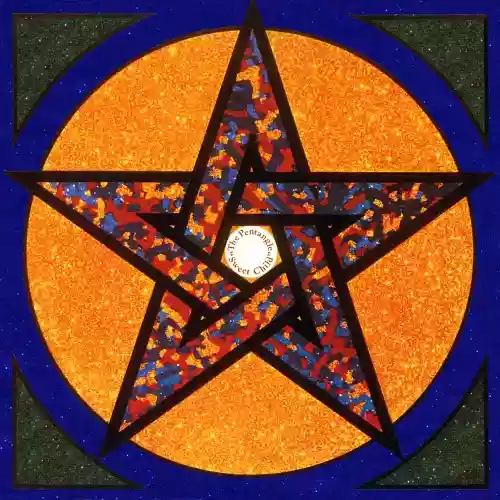
"Sweet Child," in its internal bipartition between live recordings and studio performances, is the Album that expresses this magic in its fullness. Not the absolute Masterpiece, maybe. But certainly, the most complete record. The one where nothing is missing and everything is in its place. It was '68, a pivotal year: the British Blues was taking on an increasingly "heavy" physiognomy, the volumes of the amplifiers were rising, and by the end of that same year, the most famous Zeppelin in the history of Rock would have taken flight, already sky-high. And while Led Zeppelin was aiming for the sky, the Pentangle (and the Fairport Convention, for their part, passing through Californian psychedelia) stayed on the ground and claimed a strong connection with roots, whether those of Albion folklore or the purest Delta Blues and, despite the variety of inspirations, everything in their music recomposed itself under a single, unmistakable, stylistic cipher. And citing Led Zeppelin as an ideal counterpoint is not mere convention: everyone knows how much Jimmy Page owed to Bert Jansch's lesson, beyond the (all too well-known) CASE of "Black Mountain Side".
But telling the story of "Sweet Child" actually means telling a multitude of stories (those narrated by the songs) and repositioning the pieces of an impressive mosaic in which the jazz of Charles Mingus (the variation for double bass of "Haitian Fight Song" performed by Danny Thompson), children's Christmas songs (since this was "Watch The Stars", before John Renbourn and Jacqui McShee married their Voices to create the gentle folk melody you hear in the live part) and Italian dances exhumed from the sands of time coexist: in "Three Dances" (indeed), the transition from one dance to another is emphasized by the silence of the instruments and the clamor of the audience, as if the '68 audience had suddenly transformed into the court of a 14th-century lordship, and "La Rotta" finds its place, no less than a 14th-century cadence.
Telling the Story of this Record also means encountering excruciating pain, that evoked by Jacqui's Voice kneeling while intoning a spiritual like "No More My Lord" to the notes of Bert's guitar - "tell me where my Lord is, and I will never look away from Him again..."; or rediscovering a rare gem like "Turn My Money Green," a blues from the '20s stained with the most bitter irony that exists. And getting lost in the frenzy of "Market Song," in front of the stalls of a miraculous market of abundance ("sweet apples, sweet oranges - I hear the merchants shouting - come and buy some!"), and with the sudden mirage of wandering through the streets of a London still enclosed within its medieval walls. And again, enjoying the fluid and crystalline dialogue of Bert and John's Guitars on the theme of the famous "Goodbye Pork Pie Hat," "Mingus-like" as well, or on an instrumental "No Exit," thus capturing one of the distinctive traits of the "Pentangle Sound." In Jansch and Renbourn's musical lexicon, there was no distance separating folk tradition and jazz jam-session.
But also being surprised in recognizing "The Time Has Come" among the other songs re-proposed on stage and being able to at least MENTION, on this page, Her Highness of English Folk Anne Briggs, who was the author and publicly thanked Bert for a tribute made to her from the heart. Shivering at the tremors of a dark-ballad from author like "A Woman Like You" conceived by Jansch on an ambiguous story of black magic and ancient love spells. Getting enchanted by listening to an increasingly heavenly Jacqui, performing a cappella the ancient Scottish air "So Early In The Spring," a performance so impeccable it allows no comments. Or sitting down and being moved by the story told in "Bruton Town," which in the manner of a Boccaccian novella unravels the tale of the unhappy passion between a farmer's daughter and her servant, suspended between a gruesome murder-ballad and dreamlike visions worthy of the highest Romantic literature.
I could stop here, the variety of worlds evoked so far would allow it. And yet "remains" (so to speak) the studio part. And here as well the same balance between "traditionals" and high-school originals, between improvisation ("In Time," "Three Part Thing," and "Hole In My Coal" based on a theme by Ewan McColl - a classic opportunity for final, well-calibrated virtuosity) and ancient stories to bring back to life. "The Trees They Do Grow High" is known to many, if only thanks to the Italian version by our Branduardi ("Gli alberi sono alti"), yet on this 18th-century ballad - and on its journey through the centuries - entire books could be written. It is the bizarre and tragic story of a marriage between a fourteen-year-old and a woman 10 years older than him, "interpreted" by McShee ("at 14, he was a married man; at 15, the father of a child; at 16, the grass was green on his grave: death had interrupted his growth" - in Branduardi the age of the two is freely re-interpreted...).
And there is space for love songs like the title-track - but love anything but platonic, and above all... far from a happy ending ("I Loved A Lass" - well known in Sandy Denny's feminine version, but with the different title "The False Bride" - it goes "I loved a lass and now she is rewarding me, for my love... so much so that she is about to marry another!"). And again - fishing from the rest of a repertoire that does not allow for blemishes - "Sovay," here masterfully performed by Jacqui on a dense web of guitars and double bass (the story of a bandit's woman), and "I've Got A Feeling," built on the same chord sequence of Miles Davis's "All Blues."
The many, wonderful universes of the galaxy illuminated by the Five-Pointed Star.
In memory of Bert Jansch (1943-2011).
Loading comments slowly
Summary by Bot
The review highlights The Pentangle's album Sweet Child as a unique and inimitable fusion of folk, jazz, and blues. The band’s members bring exceptional talent to create a balanced and evocative sound reminiscent of a Turner painting. Featuring both live and studio tracks, the 1968 album reflects deep roots in British tradition while exploring diverse musical universes. It is praised as the most complete and magical expression of The Pentangle's artistry. The review also honors the late Bert Jansch's legacy.Tracklist Lyrics Videos
01 Market Song (03:39)
02 No More My Lord (03:55)
04 Haitian Fight Song (03:31)
06 Goodbye Pork-Pie Hat (03:43)
07 Three Dances: Brentzel Gay / La Rotta / The Earl of Salisbury (04:32)
10 No Exit (02:16)
11 The Time Has Come (03:04)
13 Sweet Child (05:13)
14 I Loved a Lass (02:40)
15 Three Part Thing (02:26)
19 I've Got a Feeling (04:26)
21 Moon Dog (02:42)
22 Hole in the Coal (05:19)
The Pentangle
The Pentangle are a British folk–jazz group formed in London in 1967 by guitarists Bert Jansch and John Renbourn with vocalist Jacqui McShee, bassist Danny Thompson, and drummer Terry Cox. They fused traditional English, Scottish and American folk with jazz inflection and blues hues, releasing landmarks such as The Pentangle (1968), Sweet Child (1968) and Basket of Light (1969). The original lineup disbanded in 1973 and reunited in the early 1980s for further recordings and tours.05 Reviews
