
 •
Rating:
•
Rating:
THE REVIEW
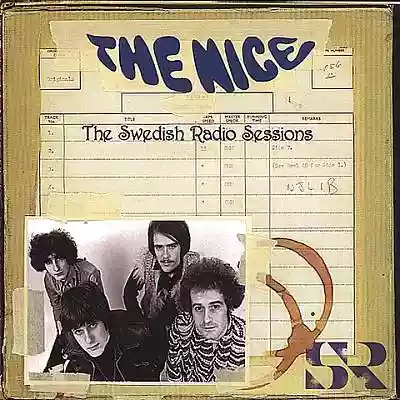
The rarities of the most fascinating drawings from the Sixties/Seventies have all come out in the last twenty-five years. One of these is the Swedish "radio session" from 1967 by the Nice. The band of the young Keith Emerson had just released the beat-classical fusion of "The Thoughts Of Emerlist Davjack" the same year and was ready to perform live.
Pointing out the skill, creativity, and egocentrism of the "child" Keith is trivial, while it's important to remember and appreciate Lee Jackson and Brian Davison. The former with his pompous bass and vocals, even if sometimes with less refined passages, and the latter with significant drumming talents. Looking at them now, we might quickly define them as Emerson's exercise before joining Lake and Palmer, but the Nice are an original entity, in fact, the foundation for the future Keith, not a poor imitation.
And the live performances are the highlight of the English combo, entirely acrobatic, with appearances even here in Italy. In short, they are the creators of the first enjoyable prog murmurs like "Rondo", "America", "Ars Longa Vita Brevis", with reinterpretations of Sibelius, and "Nice", containing the pianistic excursion of Tim Hardin's "Hang On To A Dream". In short, picturesque cover artists and savvy key authors of the British scene.
In Sweden, they promptly offer the best of their first album, and more. We have the cover "She Belongs To Me" by Dylan, which became their eternal anthem, with a slower pace compared to other renditions. Emerson's foresight is already evident, his knowledgeable classical background and structural innovations. Also noticeable is guitarist David O'List, who in my opinion failed to express himself clearly in the first album, so suffering, confined in spaces and parts that seem a lot like schoolwork... in fact, by the second album "Ars Longa Vita Brevis" he was no longer part of the band.
The other cover is "You Keep Me Hangin' On" that mocks that of Vanilla Fudge, but without the lyricism and pathos of Mark Stein. Lee Jackson has a highly personal technique on bass, but his vocals are sometimes strained, rough, not well matched with Emerson's baroque style. He would have been great in a dark group like High Tide, Atomic Rooster...
But everything blends together with the Nice.
In fact, their conception is so unique and lively that it intrigues you from the first notes. A clear example in "Rondo". The entire ensemble is perfectly fused, so much so that you find great ideas even in O'List, perpetually underrated. A piece also performed at the Isle of Wight with EL&P, practically the synthesis of the band's art. Thunderous drums, infallible bass, omnipresent and "naive" psychedelia that kisses classical music.
The beat is offered by the charming "The Thoughts Of Emerlist Davjack" and "Flower King Of Flies", with roughness that the Nice will skillfully smooth and discard later. Despite gaining more guitar space, these are two heavily dependent pieces on the British ambient of that period. However, the audio quality is good, there are no hisses or self-serving lengthy improvisations.
It's all so... "cool".
Loading comments slowly
Summary by Bot
This review highlights The Nice's 1967 Swedish Radio Session as a key moment in early progressive rock. It praises Keith Emerson's classical fusion skills and the band's creative live energy. The contributions of Lee Jackson and Brian Davison are noted, along with the unique blend of covers and original tracks. The session's sound quality and vibrant performance showcase the band's originality beyond Emerson's later fame.
The Nice
The Nice were an English progressive/psychedelic rock band formed in 1967. The lineup featured Keith Emerson (keyboards), Lee Jackson (bass, vocals), Brian Davison (drums), and, initially, Davy O’List (guitar). Their classically tinged rock and live intensity helped shape early prog before disbanding around 1970; they reunited in 2002.04 Reviews
