
 •
Rating:
•
Rating: THE REVIEW
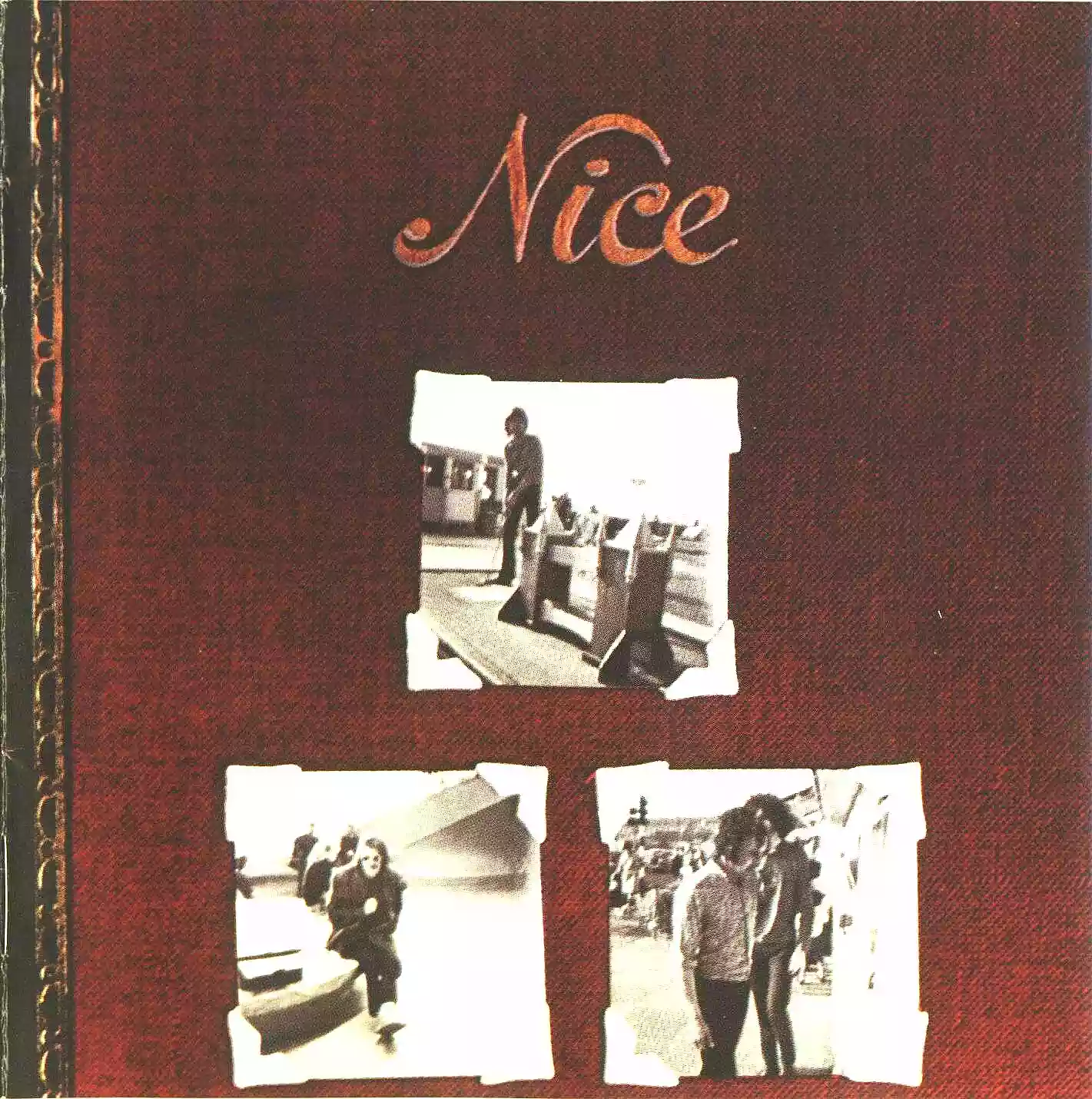
"Nice", certainly something more than that, is the third and final album released by the eponymous band among the progenitors of the progressive rock saga of the '70s. In reality, its full title should have been: "Everything as Nice as Mother Make It" which translates to "Everything as Nice as Mother Makes It", but the producer didn't think it was cool, and as was custom back then, decided to "cut" it to make it more easily accessible. Furthermore, it should be noted that "Nice" is a partially studio-produced album, with only four tracks (the side "A" of the long playing) being studio recorded, the first of which is a revisitation of "Azrael" from their debut album, which wasn't particularly hard considering the original product: a muted performance where the not-so-tuned Jackson, but especially the poor Emerson with lace on his keyboards, drag the song to its obsessive finale, an embroidery inspired by, or perhaps something more, Rachmaninoff's "Prelude in C-sharp minor", one of the early recreations by the then very young Keith, who was almost 23 years old at the time.......Azrael (in Arabic: "he who is helped by Allah"), for the record, is the protagonist of the piece, a guy who, already ready in the coffin for the funeral, miraculously awakens to life, reflecting his sensations in the heaviness of the piece, which according to him, Emerson even made more "light"......
Aware of having perhaps overdone it a bit, our three heroes (O'List had left shortly after the recording of the first album) move on to a piece of different nature and harmony, introduced by the exquisite piano interlude by Emerson, soon accompanied by the choir directed by Duncan Browne — I'm writing about "Hang on to a Dream", or rather (How to) "Hold on to a Dream" composed by Tim Hardin, a tremendously talented American singer-songwriter who was popular in the sixties and died young due to the classic issues of drug addiction. A piece that would become a classic for the English band, performed in concerts in every conceivable version, and also by Emerson once he joined with Lake & Palmer.
Next is "Diary of and Empty Day" filled, however, by music arranged by Emerson based on the so-called "Spanish Symphony", or Edouard Lalo's (with an implicit accent on the "o") warhorse, a French composer who lived in the second half of the 1800s, which is actually a Concerto for violin in five movements whose riff particularly pleased Keith during the Concerts of the London Symphony Orchestra he attended in the summer of '68. Indeed, and widely so, the inspiration is all there, even if greatly sped up by Emerson's Hammond and distorted by Jackson's voice, who wrote the lyrics, rendering it almost like a tarantella........ Who knows if the father of the composition would have appreciated this "arrangement", perhaps being a man of spirit.....
The last studio track is a real "For Example" of Blues........ indeed, because Davison, Emerson & Jackson, not content with drawing inspiration from Classical music, rightly think of measuring themselves with what they consider a universal language: the Blues, indeed. The result is this complex and very personal piece that then gets caught in the middle with jazz, enlisting two exponents like Joe Newman and Pepper Adams, with a remarkable genre transition by Jackson's bass. Just to "fill" their Example or show of skill well enough, in the finale there's even a reference to the idols of the time with a trumpeted nod (not in the Italian sense of the term) to "Norwegian Wood", basically a great patchwork (literally a work composed of "pieces").
To definitely lift the average of the album and probably lacking other studio compositions given Emerson's sudden departure, but also to remind us how the band was particularly "live oriented", we then have two remarkable live tracks recorded in April '69 during a performance at the Fillmore East, a renowned temple of music in New York City. The first is the celebrated Rondo '69, a frenzied rhythm ride sustained by Emerson and his variations, taken from the homonymous "Rondo alla Turca" masterpiece by the great jazz pianist Dave Brubeck, composed only a decade earlier and rendered masterfully by Keith (there's no doubt about that!). The album ends with Dylan's "She Belongs to Me", resurrected from the mortal boredom of its original version (oops, forgive my lack of respect to the new Nobel laureate and his followers!) and developed into over 12 minutes full of truly exciting variations and citations that I leave to you to identify, so many and so well mixed they are, making this piece the real masterpiece of the Nice and giving shine to Jackson and Davison's excellent contributions, always a bit overshadowed.
It's difficult to judge such a composite album, indeed it might be more honest to write haphazard (probably even the same Azrael more than a revisit is an "alternative" or "extended track" from ‘67) given the situation that arose among the authors; it helps me that undoubtedly the best album of the Nice remains "Ars Longa Vita Brevis", and perhaps 4 stars for "Nice" are a bit too generous, but as written, the average is necessarily raised especially by "She Belongs to Me" and so I gladly round up, also appreciating the (miraculous) quality of the remastered and expanded reproduction in my possession, the one containing two bonuses such as the edited versions of "Hang on to a Dream" and "Diary on an Empty Day" — the two sides of the 45 rpm derived from the Long Playing. An album that had significant success both critically and publicly: reaching the sales podium in the domestic market, but all of this was irrelevant in Emerson’s eyes, who already perceived his destiny would be even brighter outside of the Nice. Less so for his companions who vainly sought a revival with the Refugees. Poor art design with the usual group photos, moreover, unappreciated by Emerson himself.
An extremely interesting (and recommended) exercise for those wanting to delve deeper into the "Nice" (album) topic is to preliminarily go listen to the source tracks of the individual pieces and derive a useful emotional comparison from them.
Loading comments slowly
Summary by Bot
The Nice's final album 'Nice' is a complex and engaging progressive rock work that combines classical music inspiration with blues and jazz elements. Featuring both studio and live tracks, it highlights Keith Emerson’s evolving artistry and the band’s live prowess. While not as acclaimed as their earlier work, this album holds a special place for fans and collectors. The remastered edition with bonus tracks further enriches the listening experience.Tracklist Lyrics Videos
The Nice
The Nice were an English progressive/psychedelic rock band formed in 1967. The lineup featured Keith Emerson (keyboards), Lee Jackson (bass, vocals), Brian Davison (drums), and, initially, Davy O’List (guitar). Their classically tinged rock and live intensity helped shape early prog before disbanding around 1970; they reunited in 2002.04 Reviews
