
 •
Rating:
•
Rating:
THE REVIEW
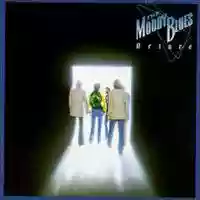
Alright; it's 1978, and for a couple of years now, the pioneers of Punk have carved a nice tombstone with the inscription R.I.P. for the leading movement of the late '60s - let's say mid-'70s. And in not too long - about a year - another world, the New Wave, will go "bang." But such a sudden collapse frankly makes one sigh. A well-hidden collapse, by the way. And besides, who would have expected the Lords of the English Prog school - for those who don't know, one of the very first groups to use the mellotron synthesizer - to surrender so easily, without even trying to get back up? Probably many, I believe. Let's put it this way: in 1972, after the release of the album "Seventh Sojourn," the group officially disbanded, with the usual reasons of the case. Need for rest, family dedication, solo projects. Given and established that in five years they have done little or nothing, Hayward, Lodge, Pinder, Thomas, and Edge decided to put together a great album - with a consequent tour - to proudly celebrate the grand return.
A well-hidden collapse, it was said. Why? Well, because despite everything, as soon as you play the record, it still feels like being in the golden age: the opening is entrusted to the single Steppin' in a slide zone, and in the first few seconds, it seems like listening to the intro of Shine on you crazy diamond, year 1975. Sure, the Moodies want to do things right, and they can afford it, after all. All the songs are well-arranged, every instrument is in the right place at the right time. There are the usual keyboards, Edge's usual drum tempo changes, the usual semi-psychedelic melanges. But the ideas are lacking. The record unfolds like this, between the more lively tracks Steppin' in a slide zone, I'll be level with you, and Top rank suite, and the predictable ballads Under Moonshine, Driftwood, and One Step into the light, moreover one of the better-achieved tracks. Particularly, it's the second side that creates major spasms: tracks like Survival and I'm your man are frankly lapses of taste that could easily have been avoided. Besides Top rank suite, a sweet Motown-like track that seems placed there on purpose to say "see where we can go?", for better or worse, obviously.
However, despite everything "Octave" sells, reaching the seventh position in England. The consequent and much-awaited tour will not add much, except Pinder's departure, replaced by former Yes member Patrick Moraz. In short, a prime example of popularity inversely proportional to the actual value: if you want to remember the Moody Blues, it's better to do so with the image from the '60s in mind, not the dismal one of this record that succeeded only in part.
Loading comments slowly
Summary by Bot
Moody Blues' 1978 album Octave marks their attempt at a comeback after a hiatus. While the album features solid arrangements and moments recalling their classic sound, it lacks innovative ideas and is uneven in quality. Some tracks stand out positively, but others feel like missteps. Despite this, Octave reached #7 in the UK charts, demonstrating popularity not fully matched by the album's artistic impact.Tracklist Lyrics
The Moody Blues
British rock band formed in Birmingham in 1964, pioneers of symphonic and progressive rock, renowned for the album Days of Future Passed and the single 'Nights in White Satin'.08 Reviews
