
 •
Versione 1
Rating:
•
Versione 1
Rating:
THE REVIEW
No Sonic Youth-like whirlwinds or Slint-like minimalisms. The Jesus Lizard, rising from the ashes of Rapeman and Scratch Acid, formed in Chicago in 1988. The insane imbalance of David Yow and the tight rhythm provided by bassist David Sims and drummer Duane Denison create a fearsome lineup. The faithful Steve Albini produced all their albums from 1988 to 1994 (the band's golden period), and drummer Mac McNeilly joined the group with "Head," as they initially used a drum machine, in Big Black style.
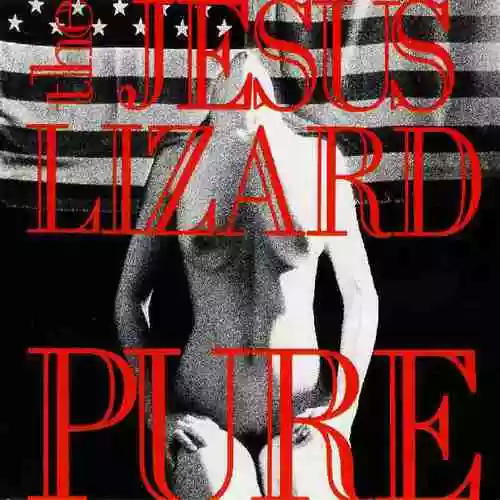
They debuted in 1989 with the absence, indeed, of a real drummer, but bassist Sims "delights" us with his desecrating artwork featured as the EP cover. The trio was ready and excited (especially Yow) to spew out a damn sound that would even stun Kurt Cobain. The band is one of his favorites (and I also heard he loved "Red" by King Crimson too much...), and so, in just three minutes, the Jesus Lizard became part of the great and noisy American scene.
This time span, of course, is the opener "Blockbuster." They launch for twenty seconds a bass riff tinged with feedback, and we immediately become aware of the "voice" of the "new" David Yow. You instantly sense a "dark" project when caught in this crazy sonic black hole. The dirty, shrill, and dissonant guitar is the sound that will be the trademark of the colossal "Goat" and the rest of their career. A lesson thoroughly learned by a certain Capovilla and his various "dimensional theater men"... On January 8, the debut of Bunuel (Capovilla, Valente, Iriondo, and Eugene Robinson of Oxbow!.. the first single "This Love" is a thousand-speed panzer) will be released.
Returning to "Pure," we face the second track: already a masterpiece. "Bloody Mary," with its stumbling start of drum machine, where we immediately bask in Denison's note litany, we're in front of Yow's true expression. Desolation exploding in the chorus' scream, tacitly suppressed by David's fear-laden mumbling. Two minutes of blackout, one hundred and twenty seconds of high school for future generations. Reflective pauses, obsessive torments, and frantic accents. A life spent in haste, which fades out with the icy "Rabid Pigs." They give space to the instruments, letting the strings speak. A picturesque noisiness, yet nothing more expressive, realistic.
This persists with "Starlet," an instrumental where Yow struggles, croaking in the blindest uproar. You remain still, floundering in the dark, without a destination and without a God, with the chilling neurotic watercolor of "Happy Bunny Goes Fluff-Fluff Along."
This seemingly unstable and ruleless world will quickly take shape instead. They will become an institution with "Goat" and subsequently self-destruct little by little. Because they are real, stupid, human.
Loading comments slowly
Summary by Bot
The review praises The Jesus Lizard's album 'Pure' as a raw and intense noise rock masterpiece. It highlights the band's formation, lineup changes, and Steve Albini's production during their golden era. Key tracks like 'Blockbuster' and 'Bloody Mary' are noted for their dissonant guitars and emotional delivery. The album is positioned as foundational to the American noise rock scene and influential on subsequent artists.Tracklist Lyrics
The Jesus Lizard
The Jesus Lizard are an American noise rock/post-hardcore band strongly associated with the Chicago scene. The classic lineup is vocalist David Yow, guitarist Duane Denison, bassist David Wm. Sims, and drummer Mac McNeilly. Their catalog is widely discussed for its abrasive sound, Denison’s distinctive guitar work, and Yow’s extreme vocal and stage performance.13 Reviews
