
 •
Rating:
•
Rating:
THE REVIEW
June 9, 1984. We are at The Living Room in London. 20 people present. The Jesus And Mary Chain, aka the brothers William and Jim Reid, Doug Hart, and Murray Dagleish (later replaced by Bobby Gillespie) perform for the first time. The show lasts ten minutes and is the beginning of a myth.
Deliberately provocative, they mix punk with the icy sounds of the Byrds and Maureen Tucker's percussion, are regular features in the pages of NME and Melody Maker, and herald devastating concerts (often interrupted by incidents), with sets lasting about 15/20 minutes. Well, what else can be said: the guys pull out all the stops to play the role of rock stars. Amidst all the chaos, they release "Psychocandy", a vinyl that overturns the rock landscape of the eighties, then, continuing down this same path, they stumble and let slip "Darklands": more than just a record, the beginnings of a musical downfall.
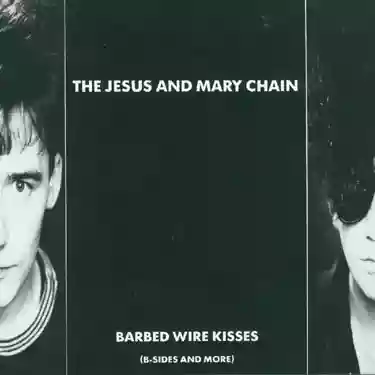
It will take "Barbed Wire Kisses," a collection of b-sides and much more, to return the Jesus to their best form to the spirits chosen by rock. It's already all clear with the initial "Kill Surf City", "Head", and "Rider": intro of the bass drum like "Just Like Honey", a wall of maximally distorted guitars, and the dubbed voice of William that tries to unfold through the chaos from one track to the next. The strident "Hit" is a hybrid explosion of noise that connects the grotesque and cavernous atmospheres of the Birthday Party with the wild ones of Stooges-style rock.
Besides the noisiness of Einsturzende Neubauten, already present in several song snippets and then powerfully amplified when "Cracked" starts, there is also room for the country tinges in the sound of the four from Glasgow: those of "Don’t Ever Change", "Psychocandy", and "Taste Of Cindy", which in the acoustic version becomes even more beautiful because between the voice and the guitar a perfect fusion is created, in which, however, something dark, spectral, like in ancestral Scottish folk ballads, always remains.
The Reid brothers and their associates deserve great credit for having reintroduced the formula of the three-minute song, already tested in the sixties by the Beatles and the Beach Boys (here honored with the cover of "Surfin’ Usa"), updating it with the sounds of bands like Television Personalities, combining an underlying melodic structure with a shower of thunderous, explosive feedback: "Upside Down" and "Everything Is All Right When You’re Down" are conceived using this formula just like, even though with a clearer sound, the memorable riff that runs from the first to the last second of the beautiful "Sidewalking". The Jesus manage to venture into musical territories almost unexplored until then, spreading in the desert of indie rock the seeds from which powerful shoegaze and fuzz pop vibrations will grow. Grand finale with "Bo Diddley Is Jesus": a turnabout. To the dirty feedback a funky bass and the tight rhythms of the drum, which incessantly marks time, are added. Like the timer of a time bomb. There, in the background, echoes, still detonations of riffs and distorted voices.
"We are the Beach Boys of the 80s; say what you want, but ours are just pop songs, even if they are different from all the other pop songs and even if they are not suitable for morning show deejays." (Jim Reid)
You can say that again, baby.
Loading comments slowly
Summary by Bot
This review celebrates The Jesus And Mary Chain's 'Barbed Wire Kisses' as a powerful return to form, showcasing their ability to blend noise and melody in compact, impactful songs. It highlights the band's pioneering role in shaping indie rock and shoegaze with a mix of distorted guitars, punk attitude, and pop structure. The collection revitalizes their musical spirit after previous struggles, combining chaotic energy with thoughtful songwriting. Standout tracks like 'Kill Surf City' and 'Bo Diddley Is Jesus' are praised for their innovative sound.Tracklist Lyrics Videos
01 Kill Surf City (03:13)
02 Head (03:52)
05 Don't Ever Change (Darklands Out-Take) (03:35)
07 Happy Place (02:23)
08 Psycho Candy (02:59)
10 Who Do You Love (04:04)
12 Everything's Alright When You're Down (02:39)
13 Upside Down (02:59)
14 Taste Of Cindy (Acoustic Version) (02:01)
15 Swing (Darklands Out-Take) (02:28)
16 On The Wall (Porta Studio Demo/F.Hole) (04:50)
The Jesus and Mary Chain
The Jesus and Mary Chain are a Scottish alternative rock band formed in East Kilbride, best known for combining pop melodies with heavy guitar feedback, and for their influential debut album Psychocandy.13 Reviews
