
 •
Rating:
•
Rating:
THE REVIEW
The credit goes to the boss. Before singing "The 59 Sound" together with the Gaslight Anthem (it's June 29, 2009, it's Hyde Park) the group of Brian Fallon, the heavily tattooed leader of the New Jersey band, was just a punk n roll group relatively unknown with two albums well-received by critics (the raw "Sink or Swim" and the more focused "The 59 Sound") which in their lyrics unabashedly cited the entire American songbook (in High Lonesome there was even an entire chorus borrowed from Round Here by Counting Crows, and Meet Me By The River Edge referenced No Surrender and Bobby Jean in the same verse); the first time I heard it I fell off my chair. "No, it's too much" I groaned while I memorized the songs, getting carried away by the catchy melodies.
Live, the group earned their keep by playing with the necessary fury their urgent songs full of workers, broken dreams, broken bones, betrayed lovers and betrayers, and distracted loves. Brian Fallon, with a voice that's hoarse and expressive just enough yet certainly not refined, made up for the off-key notes with a blue-collar attitude and honesty worn with pride. Even the rest of the group, with the exception of the machine gun drummer Ben Horovit, certainly didn't shine for their musical virtues. But the songs got people singing along and often invited raising a fist, which was quite painful for someone like me with a dislocated shoulder.
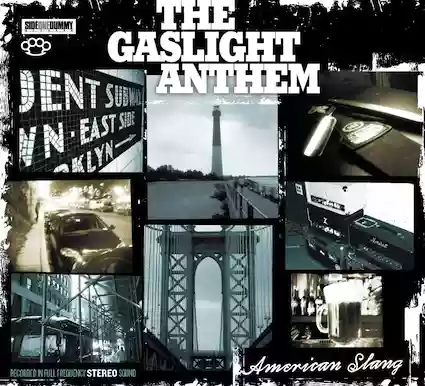
Buoyed by the hype generated by the Boss (whom they openly admit to being inspired by) the Gaslight Anthem in 2010 released their third album, "American Slang", like the previous one produced by Ted Hutt, who also worked with Jesse Malin and Lucero.
Compared to "The 59 Sound" the sound is more varied and the lyrics become more personal and intense. The themes are the usual but there's more introspection and less citation.
The early fury gives way to a more mature rock, with softer tones but not lighter for that matter. Tom Petty and Springsteen, with few exceptions, remain in their heads but don't appear in the words.
The title track is a call to arms with a dry and authoritative gait. Fallon talks about dead fathers and wasted opportunities, and the rest of the group plays as only they know how.
The difficulties of love appear in Bring it On, a poisoned declaration to a girl from whom "the fevers that just won't break and the children you don't wanna raise" are demanded back while the shuffle of The Diamond Church Street Choir takes us back to the boss in the year 1973. Brian screams like a Cossack and shows he has taken singing lessons (but I want to hear it live, dude). The chorus is so catchy it would cheer up even a truck driver whose Playboy calendar was stolen. Orphans draws inspiration from the man from New Jersey, and Fallon is not afraid to admit it in the lyrics where he references the fountains where he drank the blood of his hero. The collection is joined by Boxer, with a Hip Hop intro quickly swept away by a nice whistlable riff, and Old Haunts and Spirit of Jazz which, if they don't add much, at least maintain a high level.
The roundup closes with We Did it When We Were Young, a phenomenal, two-voiced ballad that puts Here's Looking at you, Kid from the previous album and half of the songs released in the past two years to shame. A piece so intense that every time it ends I have to drink a glass of water.
In short, an album that highlights the strengths of the previous works and eliminates the flaws. The masterpieces are elsewhere, but if you're looking for a good album from the first to the last song, you can give "American Slang" a chance.
Loading comments slowly
Summary by Bot
American Slang by The Gaslight Anthem marks a step towards maturity with more personal and introspective lyrics. The album features varied rock sounds that maintain the band's trademark blue-collar honesty. Highlights include the stirring title track and the emotional two-voiced ballad 'We Did It When We Were Young.' Overall, it solidifies strengths from earlier works and offers a solid, enjoyable listening experience from start to finish.Tracklist Lyrics Videos
The Gaslight Anthem
The Gaslight Anthem are an American rock band from New Jersey led by Brian Fallon, known for fusing punk urgency with heartland storytelling and singalong choruses.05 Reviews
