 •
Rating:
•
Rating:
THE REVIEW
This is not how a review should start.
It's not quite right for me to want to tell you about my own stuff, just because I've run out of all the available alcohol but I realize I'm still able to use a keyboard.
So I won't do it.
But I have to tell you that this album is something that goes beyond the moment and the contingencies, because it might be useful to you.
"We Can Have It" starts with a voice, at times two, and a few notes and echoes, it seems to say: take your seats, breathe, don't worry if all this seems excessive to you, in reality, it's of an incredible simplicity.
"Who Are You, Defenders Of The Universe", the second track and the first real blow to the heart, the directives of this journey begin to reveal themselves, always the same two voices that risk getting trapped in a too-dark sentence spitting while the instruments create atmospheres that smell too much like Nick Cave. Yet there is something more in that simple "I can't love you / you can't love me": a call to something we know and have forgotten, something that will become clear, if not brilliant, later, after surpassing the Robert Smith-style clichés of "Lost In The Plot", with the acoustic intro of "The Second Part".
An unknown alchemy of dark guitars and orchestrations that directly call to that 60s sound hardly definable without mentioning Françoise Hardy or Nino Ferrer or even the theatrical push of Lewis Furey (Canadian like The Dears), a mood that in recent, but not very recent, times was evoked so well only by the splendid soundtrack of The Virgin Suicides by Air.
The following "Don't Lose The Faith" and "Expect The Worst/'Cos She's a Tourist", the latter a true hybrid suite between constructed 80s decadence and real decadence dictated by organ layers and choirs of voices and winds that have no temporal belonging, serve to dissipate all the musical backstories we carry with us waiting to bring them out; this is the music of the "here and now": misted and dirty with all that we have been, and perhaps we will forever be, torn and ripped by the keystrokes or the guitar distortions of "Pinned Together, Falling Apart" but still drunk with lightness and spirituality as in "Never Destroy Us" before it becomes punk violence at the end, after all, we are also this.
I take a breath with "Warm And Sunny Days", before the simple melody of "The Death Of All The Romance" transports me elsewhere between interwoven voices like threads and dreams told as if they were real life, the reason why I am here writing.
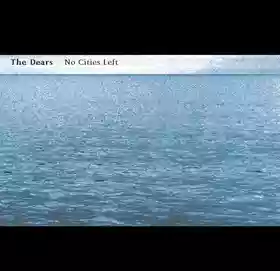
"Postcard From Purgatory" is a tango, sad and dirty with unusual frequencies, but it's a tango: sensual and nostalgic, strong and compliant, visceral and melancholic, fierce in its conclusion among feedback. The concluding "No Cities Left" is an accordion that laments us from a place we will never be.
It laments us and mocks us: "don't you think it's time to stub out that cigarette and get up off the floor?"
"No".
Loading comments slowly
Summary by Bot
The Dears' album 'No Cities Left' is praised for its intricate blend of dark guitars, orchestration, and nostalgic influences. The review highlights the emotional depth and varied musical styles across tracks, from punk to tango, creating a haunting yet beautiful listening experience. It captures moods from melancholia to spirituality, underpinned by memorable vocals and evocative themes.Tracklist Lyrics Videos
The Dears
The Dears are a Canadian indie rock band from Montreal, formed in 1995 and led by singer-songwriter Murray Lightburn, with longtime member Natalia Yanchak on keyboards and vocals. Known for dramatic, orchestral-tinged arrangements and emotional intensity, their acclaimed albums include No Cities Left and Gang of Losers.03 Reviews
Other reviews
By Socrates
No Cities Left is not just an album that tries to retrace the most virtuous paths of ’80s rock, but much more than a successful copy of the Smiths.
The Dears are, unequivocally, one of the most exciting bands listened to over the course of this year and I believe one can bet on their bright future.
