 •
Rating:
•
Rating:
THE REVIEW
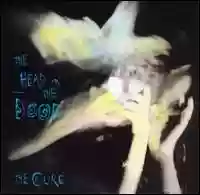
The Cure have always more or less inadvertently accustomed their audience to surprises. After the first pop-punk with dark undertones of "Three Imaginary Boys", they transformed into one of the most interesting post-punk bands, with a distinct hypnotic and rarefied sound, so much so that they were compared to their compatriots, Joy Division. And after the fiery whirlwind of the apocalyptic and cryptic "Pornography", they reached a point of no return with the sophisticated lightness of the singles from "Japanese Whispers" and the irreverent psychedelic-oriental pastiche of "The Top". For "The Head On The Door", Robert Smith's admirers should expect yet another shake-up, and this time it seems to be the strongest and most decisive.
In six years, The Cure have been the only ones to delve so deep into the depths of human malaise and survive, almost miraculously.
They decided to do what no other group considered "alternative" and simultaneously adored like them would have been capable of: an incredible swerve with a steady hand towards the most melodic and radio-friendly pop-rock while maintaining their identity as a group of the most exciting and reflective new wave, not only increasing their commercial potential, but especially their musical horizons, their art as pop craftsmen, their familiarity with the most diverse genres. The step that for any other band would have been interpreted as a desire to sell out, as the beginning of the end, becomes for The Cure a small triumph of courage and willpower. A desire to emerge from the depressive period that had tied its leader to the bed and the shadows, a Smith who had increasingly less need for makeup to achieve the pallor of his face/mask, worn by difficult years and mounting stress.
These ten songs represent the last chance to prove there's still something inside, indeed, a warmth and happiness never exhibited before. Here occurs the extraordinary intersection between an old, glorious dark punk band and a new alternative rock group that has no more inhibitions but finds its strength precisely in the spontaneity of the creative process, in the fun of playing together — four little men who can find meaning in their lives thanks to the pleasures offered by these modest seven notes. It all seems like an experiment, a human jukebox fueled by the tokens of a naive, rosy-cheeked child of the mid-80s.
The overwhelming start of "In Between Days", with unheard-of acoustic guitar strums and keyboards no longer ominous, but strangely sweet and sunny, is already a declaration of intent that something has changed. Subsequently, the tracks dart from genre to genre, passing from the flamenco of "The Blood", to the delightful fable of "Six Different Ways" (which incredibly manages to intersect Prince with adorable Beatlesque echoes), from the epic arena-rock anthem of "Push", to the famous bass riff underpinning the pulsating "Screw", a wild dance number. Certainly, the accolade for the most characteristic piece of the era goes to the masterpiece of danceable college rock that is "Close To Me": it's "just" a silly love song from the charts, but it's the capsule of a decade, the perfection of the killer single for the top ten, unrepeatable, indestructible, and inimitable (especially in the overlay of playful keyboards and Robert's languid sighs that pace the piece), listen to believe.
There are, nonetheless, pieces for nostalgia seekers of the old sound, detectable in any case in "Kyoto Song", in the magnificent "The Baby Screams", and especially in the jewel of "Sinking", perhaps the highest achievement by Smith over the ten tracks, a coda full of conflicting emotions, sleepless nights, cold, a desire for redemption and alienation, a hidden seed of the future, which will ripen only four years later in the monumental "Disintegration". "The Head On The Door" remains instead the transitional album par excellence, which takes on the thankless task of cataloging — with elegance — the sounds of the present and the past, risking and risking again, being dated, banal, incomplete, confused. In reality, it is the act of strength that saved Robert Smith's life and musical career, it is the awareness that nothing ever has just one side or one color. It is not just the magnificent birth of joyful sadness, of the more amusing and humorous side of the dark: it is the joy of discovering that being a sensitive and fragile person is not a curse, but a splendid gift.
Loading comments slowly
Summary by Bot
The Cure’s ‘The Head On The Door’ marks a courageous shift from their darker roots toward melodic, radio-friendly pop-rock without losing their identity. The album balances diverse genres with emotional depth, reflecting Robert Smith’s personal struggles and renewal. Key tracks like ‘In Between Days’ and ‘Close To Me’ highlight their artistic growth. This transitional album combines past influences with new sounds, representing both survival and creative triumph.Tracklist Lyrics Videos
The Cure
The Cure are an English rock band formed in Crawley and led by singer-songwriter Robert Smith. Since the late 1970s they have moved between post-punk, gothic atmospheres and pop-oriented experiments, producing widely admired albums such as Disintegration and Pornography.89 Reviews
Other reviews
By Daedal
"Inbetween Days" is a great pop fabric, a mosaic of the never banal talent of the sad clown.
"The Head On The Door" is a compendium of the Cure: in just 38 minutes it gathers a vast array of sounds and emotions, always focused and attractive.
