
 •
Rating:
•
Rating:
THE REVIEW
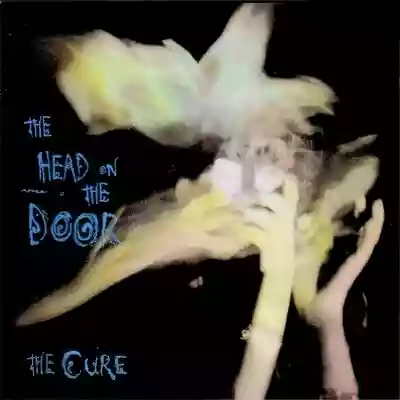
THE CURE
"THE HEAD ON THE DOOR"
Fiction, 1985
Produced by David M. Allen and Robert Smith
Robert Smith – vocals, guitar, keyboards
Simon Gallup – bass
Porl Thompson – guitar, keyboards
Lol Tolhurst – keyboards
Boris Williams – drums, percussion
- "Inbetween Days"
- "Kyoto Song"
- "The Blood"
- "Six Different Ways"
- "Push"
- "The Baby Screams"
- "Close To Me"
- "A Night Like This"
- "Screw"
- "Sinking"
The mid-'80s Cure are at a crossroads: their mercurial leader, Robert Smith, launched them into the ebbing wave of punk, then progressively and inexorably guided them into the chasms of his toxic obsessions, leading them to destruction after Pornography and an immediate rebirth in a new guise. Former drummer Lol Tolhurst, in fact, now does the tasks assigned to him by uncle Bob on keyboards, and the old drinking buddy, bassist Simon Gallup, has returned to the fold after a good 24 months of solo jaunts; the drum seat is firmly occupied by the excellent Boris Williams, while in the family (Smith's, of course) is the acrobatic Porl Thompson, guitarist from past Cure seasons. In 1985 Robert had to decide what to do when he grew up: whether to continue in his cavernous gothic experiences, embrace the pure and sometimes too unpredictable experimentation of the previous "The Top," or soar into the musician's Hall of Fame.
How? With tracks like "Inbetween Days". The song is a great pop fabric, a mosaic of the never banal talent of the sad clown, where every instrumental piece knows exactly where to place itself. The acoustic guitar rides along carefree with the drums, while the keyboards lazily try to conjure a smile, that half-smile that only Robert Smith can manage while telling us, with a sardonic air, "Yesterday I Got So Old I Felt Like I Could Die". The contrast between the apparent carefreeness of the music and the tension of the lyrics is fully in focus, shaped by the rich and meticulous rhythmic work and the catchy keyboards. This is how successful and valuable songs are born.
The subsequent "Kyoto Song" is less bouncy and more laid-back, endowed with an irresistibly dark charm. The whirlpools of Pornography are far away, however: the darkness is no longer just a shell of nightmares, but also of Eastern reflections in Robert's mind. The keyboards dot the black advance of the bass with light, giving the track a strange magic echoing in the night.
Just to vary again, Robert Smith brings out an unexpected flamenco reinterpretation of his religious obsessions. "The Blood" is indeed a triumph of strummed acoustic guitars in a magnificent Moorish Spanish frame, full of fascinating Arabian specters. If Smith is “paralyzed by the blood of Christ,” we are by the grand versatility of this artist.
It's a forest of scampering electronic animals that welcomes "Six Different Ways", a sweet and extravagant experience of a shy Robert who has really decided to cut the brakes and dive headlong into every corridor of his labyrinthine mind. The result is pleasant and airy.
Of a completely different caliber is "Push", perhaps the true masterpiece of the album. The guitars sing and run simultaneously, while in the sky the first signs of what will be a terrific drumming are flickering. When the track takes off in a symphony of strings, it all takes on a gently epic tone, capable of being the ideal backdrop for an unforgettable journey, or at the same time for a melancholy look at a photo album. The song rises and falls, following the magnificent scalene heartbeat of Boris Williams, until Robert's voice, never so familiar, sweeps away any hesitation with his “Go, go, go!”. It's like the official start for one of the most fascinating songs in the Cure's repertoire.
The second half of the album opens with "The Baby Screams", electronic and energetic. Gallup's bass is the usual minimal but highly effective driving force for a song that flows with power, woven with thick textures by the highly effected guitars and Smith's high-pitched vocals.
"Close To Me" is the manifesto of the Cure of the period: supported by a constant and thick rhythm, it is painted with hand claps, sighs, whispers, and a keyboard of embarrassing shyness and sweetness. The grand performance by Robert does the rest, delivering an improbable yet brilliant pop gem that enters your head instantly and never leaves.
Rising from afar, menacing, is "A Night Like This", with the waves of guitar highlighting an obsessive piano. The piece, like the others on the record, combines an inherent song sensibility with a disarming inability to be banal, even offering a nice sax solo, painting your '80s evenings as few could.
The bass becomes aggressive in "Screw", heralding a hard and nasty piece. Well, not at all. Dear Robert surprises us again, bouncing on top of it, mixing toy keyboards, and adding a touch of metropolitan madness: what can you do, the canvas is his, and (fortunately) he paints what he wants.
The closure is entrusted to "Sinking", a beautiful nocturnal swell perfectly constructed; like in a great theatrical work, the instruments enter the scene at the right moment, guiding us through the relaxed and once again melancholic atmospheres of Robert Smith's dark dreams.
"The Head On The Door" is a compendium of the Cure: in just 38 minutes it gathers a vast array of sounds and emotions, always focused and attractive. The album is rich and varied, never redundant or dispersive and played excellently (the additions of Thompson and Williams really give it an extra edge). Yes, in 1985 the Cure made the leap to Olympus.
Loading comments slowly
Summary by Bot
The Cure's 1985 album The Head on the Door marks a pivotal moment in their career, showcasing Robert Smith's artistic growth and a blend of diverse musical styles. The album balances catchy pop melodies with dark, introspective themes. Standout tracks like "Inbetween Days," "Push," and "Close To Me" highlight the band’s versatility and creative depth. The review praises the band's tight musicianship and Robert Smith's unique songwriting. It concludes that this album represents a confident leap forward for The Cure.Tracklist Lyrics Videos
The Cure
The Cure are an English rock band formed in Crawley and led by singer-songwriter Robert Smith. Since the late 1970s they have moved between post-punk, gothic atmospheres and pop-oriented experiments, producing widely admired albums such as Disintegration and Pornography.89 Reviews
Other reviews
By RingoStarfish
The step that for any other band would have been interpreted as a desire to sell out becomes for The Cure a small triumph of courage and willpower.
It is not just the magnificent birth of joyful sadness, of the more amusing and humorous side of the dark: it is the joy of discovering that being a sensitive and fragile person is not a curse, but a splendid gift.
