
 •
Rating:
•
Rating:
THE REVIEW
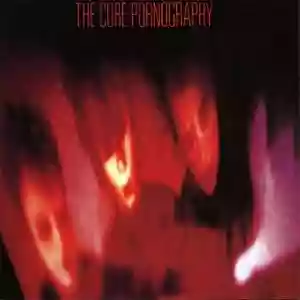
When people today ask who The Cure are, they receive responses like: "I don't listen to that crap music," "too old," or even "I hate their singer" (I've dealt with people who thought this way, believe me). And then there are those who refer to the Cure of today, who despite still being spectacular in concerts, play almost pop songs but still very catchy, like "Friday I'm In Love," "Pictures Of You," or "Close To Me."
Despite everything, unfortunately, many people have forgotten their contribution to international rock music: After releasing two good albums with a very post-punk sound that aimed at the new age of the early 80s, The Cure changed direction entering a path of deep melancholy, pessimism, and sadness (what the ignorant of today call "emo" and which I do not understand at all): in their early 80s works, one breathes a very dark, almost suffocating atmosphere, and all this powerful effect is achieved especially thanks to the keyboard, the heavy and clear sound of the drums, the peculiar distortions of the guitars all the way to the voice of the charismatic leader Robert Smith, who over time became a world icon along with the late Ian Curtis of Joy Division. Although I do not consider this "Pornography" the best album of this band, I admit that after listening to it over and over again to the point of nausea, I have come to a conclusion: for me, this is their dark album par excellence along with "Faith" and "Seventeen Seconds."
It is the album where the instruments suffer the most, the singer emits sudden cries of hatred as if he was crying, and even the sound is very heavy and malicious. Not to mention the lyrics that deal with subjects like death, nightmares and (it’s worth emphasizing) drugs. The only flaw of the album? Very similar songs among themselves, many even have the same drum rhythm and the same chords, but despite everything, the interpretation of each individual track is powerful, moving. Songs like "One Hundred Years," "The Hanging Garden," and "A Strange Day" are gems, ideal for getting depressed. Other stunning tracks from this album are "Siamese Twins," slow and monotonous but of unheard-of sadness; "Cold" with a punishing drum introduction leading to an absolutely heart-wrenching organ loop, but in its genre, the effect is spectacular despite repeating the entire duration of the song. The album ends with the title track, almost an instrumental song where the instruments seem to want to fight each other: it’s a clash of voices, guitars, heavy sounds, and a "galloping" rhythm that seems to get stronger and stronger as the minutes pass, until Smith's hammering and suffering voice unites all the instruments, taking the listener into the deepest of his agonies.
One can love or hate it, but you must understand that here we are faced with a great cult of this genre that would influence the rock music of the 80s, in those years when Heavy Metal and New Wave became the trends of the moment. Great interpretation, great charisma, great album, although as I said before, it is not the best of the band, but certainly the darkest.
Loading comments slowly
Summary by Bot
This review highlights The Cure's Pornography as a seminal dark album from the early 80s, showcasing deep melancholy and powerful musical expression. Though not the band's absolute best, it stands as a cult classic influencing alternative and rock music. The album is noted for its heavy and suffocating atmosphere, Robert Smith's emotive vocals, and themes of death and despair. Tracks like "One Hundred Years" and "The Hanging Garden" are praised for their sad yet compelling qualities.Tracklist Lyrics Videos
The Cure
The Cure are an English rock band formed in Crawley and led by singer-songwriter Robert Smith. Since the late 1970s they have moved between post-punk, gothic atmospheres and pop-oriented experiments, producing widely admired albums such as Disintegration and Pornography.89 Reviews
Other reviews
By TenshiSell
"This monument of dark music contains the anxieties and frustrations of a generation that isn’t mine, but they cannot fail to belong to me."
"It starts by saying 'It doesn’t matter if we all die.' It ends with hope. 'I must fight this sickness, find a cure.'"
By vanamente
Robert Smith’s sad and lonely existentialism has probably hit rock bottom in his personal journey through drugs and visions.
Pornography is the Cure’s masterpiece album, but for those unfamiliar with them, it’s perhaps better to start from much further back.
By lucarandi80
The Cure knew very well they were recording their greatest masterpiece; it was felt in the air, it was clear.
They cannot be commented on with simple words because the right nouns and adjectives to do so have not yet been invented.
By Rocky Marciano
Pornography is anguish, fear, and discomfort; the assault of "One Hundred Years" is a metropolitan nightmare.
The apocalypse of the title track continues with a Smith increasingly down but still not wanting to lose the battle.
By Daedal
The masterpiece of the first dark generation.
"Pornography" ends after a gloomy 43-minute journey into the alienating landscape that is Robert Smith’s mind.
