 •
Rating:
•
Rating:
THE REVIEW
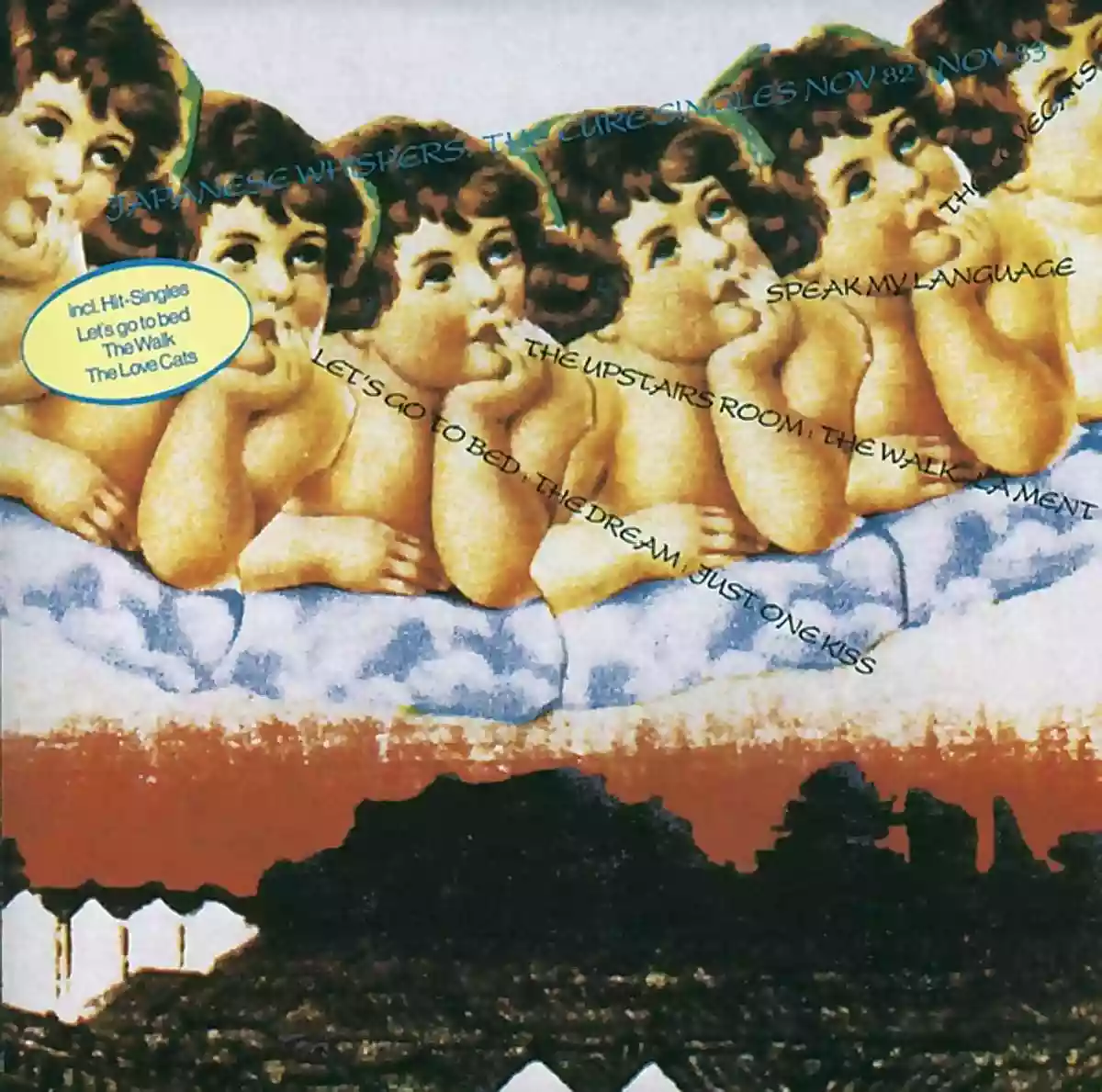
Japanese Whispers was officially released as a collection of the main songs written by Robert Smith during one of the most unstable phases of the British band. Chronologically, this phase can be placed between Pornography (1982) and The Top (1984) and holds great significance in the historical perspective of the group's evolution. During that period, Robert Smith independently matured various ideas and projects, which led him to write a lot of material both on his own and collaborating with other musicians from the post-punk scene of the time.
But the name of The Cure, setting aside the long tour with Siouxsie and The Banshees (with the related live double album Nocturne) and the album by The Glove (Blue Sunshine co-written with Steve Severin, bassist of the Banshees), was nonetheless linked to a very precise project line, which saw Smith undertake a notable stylistic and iconographic turn.
From the essence of the songs that were eventually published on Japanese, the group's reformation and two significant albums of the mid-80s emerged: The Top and The Head on the Door.
The break from the prolifically dark and nihilistic atmospheres of Pornography is immediately evident, where songs like Lovecats, Upstairs Room, and The Walk show a more nonchalant, disillusioned, and often playful approach to life's emotions. While remaining adherent to a non-bright view of the future and relationships with others, Robert Smith in 1983 began writing lyrics less focused on internal short-circuits; he started looking around, describing everyday loves (Let's Go To Bed, Speak My Language), small urban dramas (Lament), dreamlike sensations (Just One Kiss, The Dream). All this was set against a choice of sounds that were certainly less traditional for The Cure's standard; sounds generated by the use of instruments that in turn revealed a more sarcastic and dreamy hue, to the point of infusing jazz into the mood of certain tracks (pianos, trumpets, double basses, flutes) or technopop (synthesizers, drum machines).
All of this, not coincidentally, would partially reflect in the subsequent albums mentioned above, sometimes mitigating the playful vein but strongly erasing the depressive and dark impressions of the early days. Perhaps keeping the jazz imprint more alive than the electronic one.
Japanese Whispers encapsulates the essence of this phase and becomes its unique testimony, presenting eight songs among the many that were released on mixes, remixes, mini-LPs over the course of those fifteen months.
Among the various musicians who collaborated with Smith at the time, note the bassist Phil Thornalley (who also played on The Top and its related tour) and the drummer Steve Goulding.
Loading comments slowly
Summary by Bot
Japanese Whispers captures a key transitional period for The Cure and Robert Smith, moving away from bleak atmospheres toward a more playful and musically diverse style. The collection highlights experimentation with jazz and technopop elements and reflects Smith's evolving lyrical focus on everyday life and emotions. This phase paved the way for important mid-80s albums and demonstrated a significant change in the band's creative direction.Tracklist Lyrics Videos
The Cure
The Cure are an English rock band formed in Crawley and led by singer-songwriter Robert Smith. Since the late 1970s they have moved between post-punk, gothic atmospheres and pop-oriented experiments, producing widely admired albums such as Disintegration and Pornography.89 Reviews
Other reviews
By the clash
Robert Smith... so real with his doubts and troubles and so transcendent in the way he narrates them.
"Japanese Whispers" is a way to understand the evolution, for others devolution, of Robert Smith’s Band.
By vikcrow
"I admit to shedding a few tears listening to it."
"A rising climax that explodes like fury, drenching the heart in tears, down to the bones, which helplessly shatter."
