 •
Rating:
•
Rating:
THE REVIEW
As soon as the record starts spinning, your ears are filled with a typically retro sound. Definitely from the '80s. "Let's go to bed" opens this album with such sweetness that you can feel the Christmas atmosphere in your veins. Strangely pop (good old Pop), this single is a little treasure to be cherished. The structure, as with most of The Cure's songs, is very stable, but gradually many facets are added that enrich the sound, nuances sometimes imperceptible yet giving that touch of magic to the melody. In this track, it's the case of the guitar, which plays a funky rhythm at the end, just as Robert is about to dream "tu tutu tu..tu tutu tu... Let's go to bed..".
The next track, "The dream", is influenced by a Japanese sound, to say the least, delightful. Complicated and cryptic, it offers a pearly energy, leaving much to hope for in what is about to come. The keyboards insult each other through unusual and experimental verses, just as the drums articulate in a ruthlessly impossible and engaging tempo. Following this splendid beginning, the album takes on a shape all its own, indescribable. "Just one kiss" is the first piece that resumes the dark atmospheres, but it does so in an unusual way. I admit to shedding a few tears listening to it. A tribal beat joins the mix, supporting the anguish delivered by the voice. A delicate arpeggio weaves throughout the piece, while the keyboards add pathos with their faint whispering. It's moving when Robert sings "Remember the sound that could wake the dead...but nobody woke up at all..somebody die for this...somebody die for just one kiss". The bass grows more insistent as we approach the end of this marvel. The arpeggio shatters into millions of noises, giving way to "The upstairs room". Even here, the dark theme is present. Meowing guitars blend with the bass, which reaches a climax in the chorus. The harmonics that play in the background during the bridge and intro immerse the listener in a crystalline and fragile world.
"The walk" turns out to be the most "Dance" track of the album. The references to Japanese sounds are much more explicit here. It's a great track that breaks things up a bit, acting as a bridge between the two parts of the CD, one more Pop, the other almost Jazz. Indeed, "Speak my language" presents itself with an almost Jazz tendency. Double bass instead of bass, brushes instead of sticks. Those typical '80s effects are missing. Shadowy and comfortable, joyful and fun, especially when Robert starts mumbling incomprehensible words while screaming "Speak my language!!". Splendid. But the following track is even more wonderful. If "Just one kiss" brought tears to my eyes, with "Lament," I burst into desperate tears. Sublime. Shocking. The '80s drums return, overwhelming with their hammering sound, perfectly marrying the mighty bass with a profoundly unsettling line. The arpeggio takes your breath away with its sinuosity. The keyboards scream in pain, suffocating in their Japanese whispers. A rising climax that explodes like fury, drenching the heart in tears, down to the bones, which helplessly shatter. A masterpiece. Indescribable the emotions it makes me feel. I wouldn't even know where to begin. Visceral emotions.
We head towards the final track, "The lovecats", which returns to the Jazz theme. Crystal clear and clean. It moves like a cat, with the same curiosity, the same indifference, the same softness. The piano gives gentle strokes, as if played by the timid paws of a kitten. The album is over.
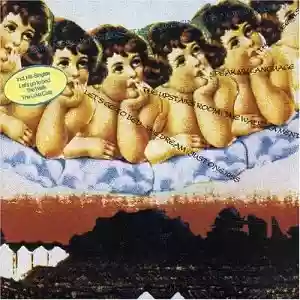
It is a compilation (although to me it's an album in its own right). It's hard to believe this record came right after "Pornography" (just the name gives me chills). The chameleon-like nature of The Cure is great, morphing into genius.
Loading comments slowly
Summary by Bot
Japanese Whispers captures The Cure’s 1980s essence by blending retro pop with experimental and jazzy touches. The album beautifully balances dark moods and emotional intensity, highlighted by Robert Smith’s expressive vocals. Tracks like 'Just One Kiss' and 'Lament' evoke profound feelings, while others add eclectic, danceable energy. This compilation stands as a uniquely powerful piece of the band’s evolving sound.Tracklist Lyrics Videos
The Cure
The Cure are an English rock band formed in Crawley and led by singer-songwriter Robert Smith. Since the late 1970s they have moved between post-punk, gothic atmospheres and pop-oriented experiments, producing widely admired albums such as Disintegration and Pornography.89 Reviews
Other reviews
By the clash
Robert Smith... so real with his doubts and troubles and so transcendent in the way he narrates them.
"Japanese Whispers" is a way to understand the evolution, for others devolution, of Robert Smith’s Band.
By Algeone
The break from the prolifically dark and nihilistic atmospheres of Pornography is immediately evident.
Japanese Whispers encapsulates the essence of this phase and becomes its unique testimony.
