
 •
Rating:
•
Rating: THE REVIEW
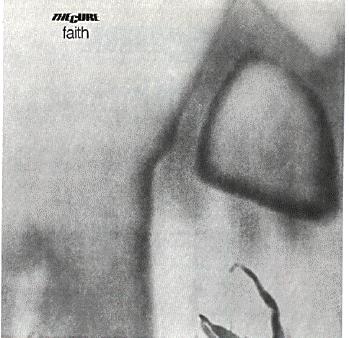
After the release of "Seventeen Seconds", the group from Crawley dives into a work with even grayer and more suffering tones.
Never as in "Faith" will the sense of decay be so evident in a Cure album; the tracks, if in its predecessor were already slower compared to the debut of "Three Imaginary Boys", are now of an agonizing stillness, wrapped in a deadly stupor.
Aside from the danceable "Primary" and the violent outburst of "Doubt", the sense of heaviness is often unbearable, and is rendered not only by the fatalistic lyrics, but by an ever more obsessive rhythm section, worthy of the PiL of "Second Edition", and keyboards that literally bury the sound structures (these are played by Smith himself, since the previous keyboardist, Mathieu Hartley, has been removed).
Smith's voice, sometimes agonizing, sometimes resigned, does the rest.
"The Holy Hour" baptizes the album in the guise of a sort of private mass, paced by the distant chimes of Tolhurst and the dull progression of the bass and guitar. It must be said that the album is almost a concept about faith as its name suggests, and with "The Holy Hour" one is introduced to this feverish search for certainty, and indeed, the song almost represents the initial moment of the "crisis".
"Primary" is anomalous compared to the rest of the album; as mentioned before, it is driven by a train-like rhythm that makes it resemble "Play for Today"; the lyrics too are out of context, with an invective against the English educational system.
With "Other Voices", the first masterpiece, the thematic canons are re-entered. A rustle and a compressed, distant drum introduce one of the most suffering riffs in all of dark music (even though Smith will constantly reject this term, the works from "Seventeen Seconds" to "Pornography", including the single "Charlotte Sometimes", can undoubtedly be placed in the goth scene...), as well as a voice that calling it sad would be euphemistic. Robert's moral ghosts appear here ruthless, ready to insinuate the doubt that brings destruction.
The exquisite "All Cats Are Grey", whose content is Shakespearean in origin, sets up a whirling bass line, well supported by a shadowy drum and Smith's fatalistic whispering; it is the prologue to the true masterpiece of the album, "The Funeral Party". With this piece, they reach the peaks of "The Eternal" and "24 Hours", as well as "Swan Lake" or "Albatross".
It's difficult to explain the frightening emotionality of this song, both lyrically and musically. The suffering and resignation that transpire from this bare melody are simply intolerable, with drums and bass repeating the same dead phrases, and a keyboard so touching as to seem unreal. Meanwhile, Smith raves about a funeral where it is possible to dance and cry, in an atmosphere permeated by a perpetual sadness. Truly tear-inducing.
After the muffled abyss of "The Funeral Party", a sudden slap is given by the doubt sown in "Other Voices". "Doubt" indeed is driven by a vehemence alien to the previous atmospheres. Although the speed may associate it with "Primary", the themes and musical structure are radically different. The music is in fact extremely concise and direct, decidedly post-punk, while the collected voice from the funeral party
explodes in a nervous breakdown outburst. Almost the last gasp of a man who is drowning, the last desperate attempt. In "The Drowning Man" indeed vanishes any hint of vitality; Smith's death row chant marks a melody full of reverberations, where the guitar strings are torn. As usual, the bass creates loss-inducing claustrophobia, well supported by the synth. The theme is one of resigned suffocation, of the extinguishing senses, slow and velvety, until breathing like the drowning man. A truly distressing metaphor.
To be highlighted, for the record, is the great work of Gallup, who with his moribund pulsing coins a very personal and effective style, which fits well with Smith's truly peculiar guitar work.
The closure is entrusted to the title track, where once again grayness and gloom prevail. Every residual hold is faded, every hope is chimerical. Everything except obviously faith itself. Faith, seen as the ultimate resource, but also as damnation. Faith that still forces the heart to fight a war lost from the start. That drives away the squalid but comfortable bed of oblivion, of defeat. Which compared to this ongoing
agony takes on the features of a savior, comparable to the famous "consoling death".
"Faith" thus concludes with this deep reflection on how sometimes the taste of annihilation is sweeter than an empty and blind faith.
And so concludes what is in my opinion the work most laden with malaise of the '80s. Not a cynical and angry malaise like that of Suicide, not the realistically metaphysical one of Joy Division, not the violent and esoteric one of early Christian Death, not even the claustrophobic and ingenious one of PiL. An existential and fatalistic malaise, typically adolescent, which may certainly seem pathetic and self-flagellating to many, but in my opinion free from that mannerism that will characterize the works of The Cure post-"Pornography", and which now reaches the peak-abyss of lyricism and intensity.
Loading comments slowly
Summary by Bot
The Cure's Faith is an intense and melancholic album marked by grayness and existential malaise. It delves deep into themes of faith, despair, and resignation through agonizing rhythms, haunting lyrics, and powerful post-punk instrumentation. Highlights include emotionally charged tracks like 'The Funeral Party' and dynamic shifts such as 'Doubt' and 'Primary.' The album represents a peak in The Cure's dark lyricism and musical intensity during the 1980s.Tracklist Lyrics Videos
The Cure
The Cure are an English rock band formed in Crawley and led by singer-songwriter Robert Smith. Since the late 1970s they have moved between post-punk, gothic atmospheres and pop-oriented experiments, producing widely admired albums such as Disintegration and Pornography.89 Reviews
Other reviews
By m
If sadness had the gift of emitting sound vibrations, it would probably sound like mournful bells foreboding grief against a backdrop of languid guitars that drool.
Faith is a single sensation of wonderful anguish, imperceptibly stretched over time.
By Mariaelena
This album is dark, dramatic, funeral, and the synthesizers become instruments of tragic pulmonary claustrophobia.
‘Faith’ I personally consider the most sorrowful, overwhelming, and wonderful track I have ever heard in my life, a song of my darkest soul.
By Rocky Marciano
An album that makes its "weak points" its strengths.
The title track represents the entire spirit of the work: dark, slow, melancholic, and full of that musical "monotony" and stillness.
By gigi sabani
Only a genius could create "Faith" at such a young age.
Unlike today where many musicians pretend to be different... Robert Smith at 21 "was" different and lived his diversity on his own skin.
