
 •
Rating:
•
Rating: THE REVIEW
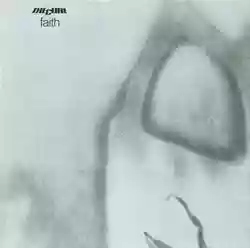
If sadness had the gift of emitting sound vibrations, it would probably sound like mournful bells foreboding grief against a backdrop of languid guitars that drool. If it had the gift of appearing in vision to those who call upon it, it might resemble a desolate chapel draped in funeral-grey. And there is no telling that all this hasn’t already been done by sadness, using the mind and arms of good Robert Smith.
This is Faith. It is a single sensation of wonderful anguish, imperceptibly stretched over time. It proceeds slowly like a dewdrop tracing its path on the window glass, amidst echoes of resigned despair and sideways notes of a piano echoing in a cave where "all cats are grey"... the sound of something that would like to come out, but is too deep down, cannot emerge... it would be too much. The dross of the soul.
Written in a period that even Smith himself willingly avoids talking about, Faith contains everything, absolutely all the spleen of a soul too sensitive to the orgasm of the sense of its perception impregnated by a lady sadness who moves lips to make them assert that "nothing is left but faith." Earlier, it was the poorly concealed panic of Seventeen Seconds. Shortly after, it will be the malevolent energy of Pornography. Here, we are in the heart of nothingness. Void because it's too full. And we know very well that it is better to refrain from feeling rather than greeting tons of fears. Years and years and years... Robert Smith’s voice sounds like a distant echo of moans dispersed in a glacier, while the rhythmic section of Gallup and Tolhurst marks a time in perpetual yearning to extinguish. Above all, hordes of minimal guitars and synthetic sounds vibrate, vibrate like the strings of the soul, vibrate and hurt, or rather do nothing, because they don’t exist, they don’t want to exist, and they don’t. And in the end, that's for the best.
Go out on a damn grey day and let yourselves be bloodied by the rain. It's the same thing.
Loading comments slowly
Summary by Bot
Faith by The Cure is a deeply emotional album that immerses listeners in a space of mournful beauty and resigned despair. The review captures the haunting minimalism and profound sadness that define the work. Robert Smith's voice and the sparse instrumentation create a delicate yet powerful atmosphere. The album represents a poignant moment in the band's evolution, balancing emptiness and emotional richness.Tracklist Lyrics Videos
The Cure
The Cure are an English rock band formed in Crawley and led by singer-songwriter Robert Smith. Since the late 1970s they have moved between post-punk, gothic atmospheres and pop-oriented experiments, producing widely admired albums such as Disintegration and Pornography.89 Reviews
Other reviews
By Overkill
"It's difficult to explain the frightening emotionality of this song, both lyrically and musically."
"Faith, seen as the ultimate resource, but also as damnation...drives away the squalid but comfortable bed of oblivion, of defeat."
By Mariaelena
This album is dark, dramatic, funeral, and the synthesizers become instruments of tragic pulmonary claustrophobia.
‘Faith’ I personally consider the most sorrowful, overwhelming, and wonderful track I have ever heard in my life, a song of my darkest soul.
By Rocky Marciano
An album that makes its "weak points" its strengths.
The title track represents the entire spirit of the work: dark, slow, melancholic, and full of that musical "monotony" and stillness.
By gigi sabani
Only a genius could create "Faith" at such a young age.
Unlike today where many musicians pretend to be different... Robert Smith at 21 "was" different and lived his diversity on his own skin.
