
 •
Rating:
•
Rating:
THE REVIEW
An impossible falsetto and an extraordinary resemblance to Tweety Bird, the canary from Sylvester the Cat.
Fragile, defenseless but combative. In one word: Jimmy Somerville.
Openly gay, in the early '80s he forms the Bronski Beat and with "The Age of Consent" he puts the difficult condition of the homosexual proletariat in Thatcher's England into pop, selling millions of copies thanks to highly effective singles: "Smalltown Boy," "Why," the Gershwin-like "Ain’t Necessarily So."
Then the toy breaks, his bandmates recruit a new, insipid singer, and he crashes into a serious multi-instrumentalist named Richard Coles, with whom he forms the Communards.
The two communards (in name and in fact: the attack on "Breadline Britain" where "fascism leads a new dance" and "they would privatize your mother" is a true political manifesto, like the bitter dedication to Margaret Thatcher in "Reprise") get to work and what comes out proves that Jimmy was the real and only talent behind the Bronski beat. His voice here reaches sci-fi heights without ever being emphatic or caricatural, Coles has a clear piano background somewhere between classical and jazz and crafts sinuous structures to accompany the acrobatics of the tiny singer.
Somerville and Coles seem like two little chemists in a state of grace, distilling everything within their reach: the lesson of "Smalltown Boy," polished to a shine, is still seen in "You Are My World," where Coles and Somerville compete in vocal and pianistic virtuosity, and in the dramatic dance of "Disenchanted," but new worlds appear on the horizon. "Breadline Britain" owes much to Brecht/Weil, "La Dolorosa" is a harsh and poignant flamenco, "Don't Slip Away" plays with Black music, "Don't Leave Me This Way," a global hit, covers a classic disco/soul track and dares to involve a sacred monster like Sarah Jane Morris. With the captivating "So Cold the Night," the cauldron is enriched with oriental spices, and just to leave nothing out, the Communards even challenge none other than her majesty Billie Holiday in "Loverman," turning it a bit into a "divertissement" but managing quite well.
R&B, disco, jazz, ethnic sounds are thrown into the pot without schemas or preconceptions.
The mayonnaise doesn't curdle thanks to excellent writing and decidedly restrained arrangements for the time (we're talking about the mid '80s, the icons of the gay-friendly pop scene are Marc Almond, Dead or Alive, and the Village People... people who didn’t even want to hear about restraint).
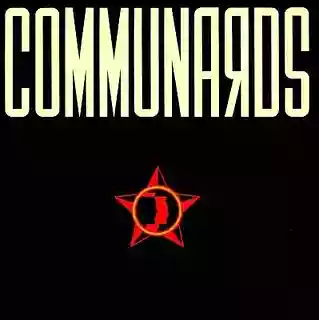
Without calling it a masterpiece, "The Communards" (like its successor, "Red") is still a great album, magnificently played and sung. While it is dynamic and full of danceable moments, for me it's a winter album: it manages to create a warm and enveloping atmosphere suitable for a cold evening, perhaps with the fireplace lit, a Jonathan Coe book on your lap, and a cat curled up next to you. If you can, replace the cat with a human being (choose the gender you prefer): Tweety Bird, in this case, might even turn out to be an aphrodisiac.
An album to rediscover.
Loading comments slowly
Summary by Bot
The Communards' debut album showcases Jimmy Somerville's distinctive falsetto and political edge in Thatcher-era England. Partnering with Richard Coles, they blend disco, jazz, and diverse styles, crafting a warm, danceable, and introspective 80s pop record. The album balances striking political statements with excellent musicianship and lasting emotional impact. Highlight tracks include "Don't Leave Me This Way" and "Breadline Britain." A sophisticated and compelling musical experience.Tracklist Lyrics Videos
The Communards
The Communards were a British pop duo formed by Jimmy Somerville and Richard Coles in 1985, active until 1988, known for blending synthpop, disco and soul and for the hit "Don't Leave Me This Way".01 Reviews
