
 •
Rating:
•
Rating:
THE REVIEW
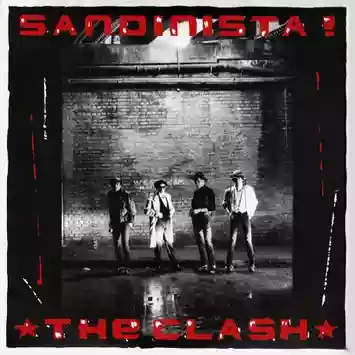
The Clash is the band that best represents the entire punk movement. In 1980, they declared themselves Sandinistas, a political movement inspired by the political thought of the Nicaraguan revolutionary Sandino, aiming to create a free and independent Nicaragua.
Everyone knows the Clash as a punk band, but perhaps not everyone knows they were the first white band to produce rap songs. In the 36 brief gems of this "infinite" triple album, the Clash showcase their ability to authoritatively engage with various musical genres: from reggae to funk and soul, from dub to jazz. The album represents an unprecedented work: an unrepeatable mix of genres that blends the best musical feelings of that period, marking the debut of "pop." The album somehow, indeed, marks the transition of the Clash from punk to the experimentation belonging to the concurrent new wave movement, a brief interlude before returning to a softer, less inspired, and more catchy punk in the subsequent album "Combat Rock."
The album opens with the rap of "The Magnificent Seven," one of the most significant tracks, and is followed by various, but brief, changes in rhythm and melody that impress the listener without ever annoying or tiring them. The Clash dedicate themselves to experimenting with new and different sounds, skillfully combined with voices of various intonations and noises of different nature, both natural and artificial ("Ivan Meet G.I. Joe").
In the album, there is ample time to try and successfully compose tracks that include jazz and swing ("Look Here"), and even waltz ("Rebel Waltz"). They are built on long and fascinating echoes ("The Crooked Beat"), and the melody never leaves the listener, surprising them with tunes that, upon superficial listening, might be defined as mere ditties ("Up in Heaven"). The motif changes, passing several times through dub ("Let's Go Crazy") and returning briefly to punk in its most classic sense ("Police on My Back").
In this album, in addition to including more musical styles belonging to hip hop, we find reggae tracks ("Junco Partner," "One More Time"), black - funky and soul - ("The Sound of the Sinners"), and I believe it could even be considered the precursor of trip hop ("The Equaliser").
The desire to "cross boundaries" from world music to country - folk ("Lose This Skin") makes listening to "Sandinista" a continuous experience of new sensations and exceptional moments. "Silicone on Sapphire" hypnotizes by alternating the singing between the left and right channels and "Version Pardner" is an alternative dub version of "Junco Partner," almost tried by chance in the recording studio, which would normally be discarded in another situation, yet here it is perfectly placed in a record where everything is different, and anything can find its rightful place.
The experiments and blends follow one another, creating a transversal work that enters and exits every genre, passing through the noise rock of "Mensforth Hill," where the gloomy setting is realized not only by the music but especially by the lyrics of "Something About England" sung backwards with some verses from "If Music Could Talk."
By mixing these countless musical varieties, a unique result is achieved that overflows from every genre and does not fully fit into any definition.
Punk is mature to be revolutionized, and the Clash are the first to do it, transforming it and shaping it to their liking, without forgetting who they are and what they have done, writing and playing all sorts of music, creating a rhythm never heard again in their albums.
The Clash is one of the most significant bands of the '80s, and "Sandinista" marks the musical beginning of that decade 30 years ago. The triple LP is a turning point not only musically but also commercially: no one at that time had ever thought of including so many compositions in a single album, produced moreover on a medium, vinyl, meant to hold music for just over 50 minutes.
Bold and ambitious, not pretentious as many defined it at the time, it is a project, or experiment as it is best described, ultimately successful even in its packaging, desired at a special price; it is a collage of new and brilliant ideas and represents the maturity album of the Clash.
The album can presumably be even defined as the symbol of 1980, as a dense collection of tracks that best embrace all the styles and trends that would be celebrated in the newly begun decade.
Sandinista is ahead of its times, and despite not receiving favorable reviews and acceptance from fans and critics upon its release, it carves a special place in the Clash's discography and also in music history, not only of those '80s.
It is the result of an unparalleled level of compositional inspiration, a work completely different from what was expected, not understood by those who hoped for an album that would return, after "London Calling," to the classic noisy punk sound. The album still today, indeed, can either excite or not, and it is unlikely that anyone with an opinion on this record will change their mind with further listens. It is different both from previous and subsequent works of the London band. It is incomparable, a project similar to it was never realized before and few have pursued it thereafter (The Smashing Pumpkins - "Mellon Collie and the Infinite Sadness" fifteen years later and Magnetic Fields - "69 Love Songs" a full twenty years later), but nonetheless, "Sandinista" is an exceptional work, a milestone.
Seen as a revisitation with concurrent reevaluation of many past works, the often excessively positive judgments attributed in reviews of many old records that are nothing more than parts of long discographies of prolific artists, "Sandinista" can only be considered a masterpiece of music, unfortunately very often overlooked.
Loading comments slowly
Summary by Bot
The Clash's 1980 triple album Sandinista challenged punk norms by blending reggae, rap, funk, jazz, and more. Inspired politically, it marked a key musical and cultural milestone. Despite mixed initial reception, it's now hailed as an ambitious masterpiece that captured the spirit of a new decade.Tracklist Lyrics Videos
The Clash
English punk rock band formed in London in 1976. Core lineup included Joe Strummer, Mick Jones, Paul Simonon and Topper Headon. Influential for blending punk with reggae, rockabilly, funk and early rap; disbanded mid-1980s.35 Reviews
Other reviews
By peeck
In just four years, the Clash transitioned from champions of raw, street punk to a refined rock band with a 360-degree musical vision.
The English critics initially received this masterpiece lukewarmly, only to later elevate this complex album to its rightful rank among the most ambitious works of rock music.
By bjork68
I was listening to an incredibly multifaceted work, with a thousand facets, an overwhelming big bang of genius and creativity.
With Sandinista! this eclectic and surprising group bequeaths us a timeless masterpiece that still disconcerts and fascinates.
By ChaosA.D.
"Sandinista! certainly does not go unnoticed!"
It shows that you can break the bars of that prison known as labels or musical genres and create something new and absolutely honest.
By hoamazzatokenny
This is music without gossip or scoops around. Only the lyrics and voice of Strummer, Jones’ musical inventions, Simonon’s love for the sounds of the third world, and Topper’s technique.
Sandinista! is an album that must be listened to. Even if just to shut up those who tell you, 'I listen to a bit of everything...' and then that everything is just what’s served to them by the radio at work.
