
 •
Rating:
•
Rating:
THE REVIEW
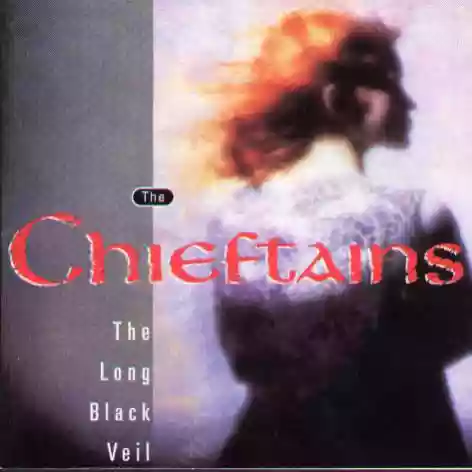
Who knows if these six lively Irish old-timers could have imagined that in 1995, after more than thirty years of an honorable but somewhat obscure career in the field of traditional Celtic music, they would record an album alongside a lineup of rock and pop stars so illustrious that even their very worldly compatriot Bono Vox, fanatical about these "reunions," would have struggled quite a bit to assemble.
Their rediscovery, which for many, myself included, was indeed a true discovery, is owed to the Celtic music boom in the '90s and has resulted in a series of excellent albums. Some are true gatherings of other artists who sometimes have something to do with Celtic music (Loreena McKennitt), but more often have nothing to do with it (Sting, Rolling Stones, etc.) and yet deemed it appropriate to honor these valid and serious musicians with their presence.
Usually, these mega-reunions have a bit of a self-congratulatory feel, but in "The Long Black Veil," it seems that Paddy Moloney, the group's leader, wanted to entrust each artist with the task of interpreting an Irish traditional song in their own way, and the excellent results fuel the very successful trend of blending Celtic sounds with modern music, the same trend that has brought so much success particularly to Enya.
The only exception is Van Morrison, who with the excellent "Have I Told You Lately That I Love You?" does nothing but interpret himself, but he is now fully part of the Irish musical tradition. Sinead O'Connor in the mysterious and splendid "The Foggy Day" weaves her voice so well with the magical Galician bagpipes (but still Celtic) and the sharp "tin whistle" (flute) that it makes one think she was born among these sounds, and who knows, maybe it's true. Her intense rendition of "He Moved Through The Fair," another gem from the immense popular repertoire, is also remarkable. If we can't be too surprised by her, as she is Irish, the most pleasant surprises come from other illustrious guests, generally associated with blues-rock, like Mark Knopfler and Ry Cooder, who achieve a well-judged fusion of folk and blues sounds by placing their voices, and especially their precious guitars, at the service of airy and melodic themes like "The Lily Of The West" (with Mark Knopfler), "Coast of Malabar," and "Dunmore Lassies" (with Ry Cooder, the second an instrumental with a highly effective crescendo).
It is also surprising how Mick Jagger defies the cliché of the furious rocker to approach another great slow song like "The Long Black Veil" with calm balance, whereas Sting, on the contrary, seems to want to shed his somewhat formal elegance to dive headfirst into "Mo Ghile Mear" (Our Hero), a very ancient march marked by the timpani. Even the stentorian voice of Tom Jones does not fall short in the festive "Tennessee Waltz," which at a certain point accelerates and becomes "Tennessee Mazurka." The Chieftains are always present but humbly leave the stage to the more famous guests, putting themselves at their service with their typical instruments and reserving only two of the few non-memorable songs for themselves.
The album closes with the triumphant "The Rocky Road To Dublin," a traditional dance interpreted with the Rolling Stones, this time appropriately unleashed, and according to Paddy Moloney, "the most fun of all the sessions we have recorded."
It's believable, and the same goes for anyone who listens to this album full of surprises, essential for those who love Celtic music, but recommended to anyone.
Loading comments slowly
Summary by Bot
The Long Black Veil by The Chieftains is a landmark 1995 album combining Irish traditional music with celebrated rock and pop artists. The collaboration delivers an authentic and innovative fusion, highlighted by remarkable performances from guests like Mick Jagger, Van Morrison, and Sinead O'Connor. The album successfully merges Celtic sounds with blues and rock elements, making it essential for both Celtic music fans and newcomers alike.Tracklist Lyrics Videos
01 Mo Ghile Mear (Our Hero) (03:22)
03 The Foggy Dew (05:21)
04 Have I Told You Lately That I Love You? (04:40)
06 The Lily of the West (05:10)
07 Coast of Malabar (06:01)
08 Dunmore Lassies (05:14)
09 Love Is Teasin' (04:36)
10 He Moved Through the Fair (04:55)
11 Ferny Hill (03:43)
12 Tennessee Waltz / Tennessee Mazurka (03:58)
13 The Rocky Road to Dublin (05:03)
The Chieftains
The Chieftains are an Irish traditional music group formed in 1962 and long led by Paddy Moloney. They are known for instrumental mastery of Irish traditional forms and for high-profile collaborations.02 Reviews
