
 •
Rating:
•
Rating:
THE REVIEW
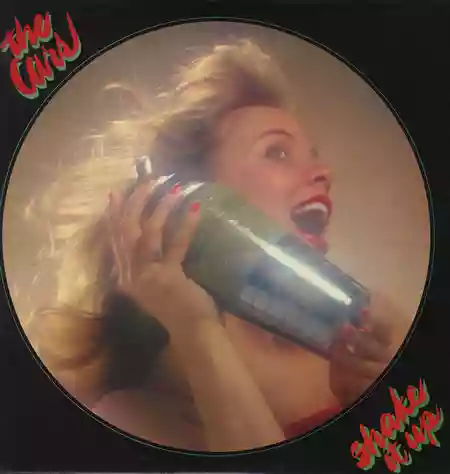
Another year later, making it four records in four years... After the wave of the first two and the electrobeatrock of "Panorama", it seems the Cars are far from taking a break. We, who if we could, would have recommended at least a sabbatical year after "Panorama", now find ourselves facing this blonde with a wide mouth, preparing a cocktail for us. And one wonders what on earth that cocktail will contain, what new ingredients there will be, and more generally, what will its taste be.
The suspicion is compositional dryness, structural mannerism, having produced a sound so recognizable that each record could be nothing but a collection of carbon-copy songs from the previous one. And the previous work had only one hit...
It starts with "Since You're Gone" and the suspicions disappear (for the moment). Far from repetition, one might say: the piece sounds new to all fans' ears. The slightly epic advance of the guitar before the singing begins, with a piano(-keyboard) breaking the four quarters, is beautiful. Easton's solo is a small masterpiece for simplicity, originality, and freshness. It continues with the title track, which shows how the Cars reinterpret traditional rock n' roll. In the alchemical chemistry of the Cars, as written in a previous review, musical genres from the True America like rock n' roll, country western, surf have always been sources of compositional and sound ideas, but never before this track they had pushed so far "backwards," almost completely reviving the style of classic rock n' roll.
Then comes "I'm Not The One": a track where ticking xylophone-like keyboards accompany a gentle Ocasek at the mic; sometimes Hawaiian guitar (chorus) sometimes electrobossanova (two verses before the chorus). A keyboard solo that almost emulates medieval brass, with a disorienting result, but so effective that it clearly shows what these guys are capable of in 3 and a half minutes when they are in shape. The piece is the best that has been produced until then under the category "chill ballads". It's a pity that the traditional drums have been replaced with electronic ones. Perhaps some delicate, chill percussion would have done better than a program.
With "Victim Of Love" we return directly to "Candy-O": friendly little song, slightly twist chorus, guitar special of 4 seconds from a rodeo. With this track, the level of compositions has considerably lowered after the highly inspired initial triad. The first track for Benjaminn Orr's vocal cords, "Cruiser", redeems itself only in part. A catchy rock on which Orr safely travels with elementary plots, stretched out to 4 minutes and 55. The synthetic drums return in "A Dream Away", a very catchy spoken word. The choice to sacrifice David Robinson for the second time and the rich sound of his drums undoubtedly makes the track lose thickness, flattening the sound. Splendid Hawkes on the keyboards with his dozens of different scores (pre "Heartbeat City"), and something that seems sampled from the famous '80 one-shot song "Funky Town". Refrain-chorus and finale in which Hawkes wants to sound just like Ray Manzarek.
A program of at most 5 bytes accompanies Robinson's muscles on drums, with the same result of making the piece lose "body"... The second track for Orr, "This Could Be Love", although catchy and with a good basic structure, seems it will never take off when unexpectedly you find a splendid keyboard solo, and it is these and the virtuoso playing above that are the true protagonists of this album, and in the Cars' music from here until they disbanded. Orr's bass spins, his voice walks in balance on the vocal cords of an Elvis Presley on a skateboard, guitars tighten the rhythm, the drums, without overdoing as always, at least are back. The piece is a bit too long for what its own plot is. At least, for the first two minutes of this "Think It Over", one does not get tired...
After having humiliated him by replacing him with a basic program, and after relegating him for a career to the role of one who "keeps time" and that's all (redeeming himself in private and taking his ample satisfactions by cultivating the hobby of collecting pin-up girlfriends, including the one on the "Candy-O" album cover), the "poor" David Robinson can finally stretch his arms in this excellent "Maybe Baby", a kind of epic rock. Everything, played by the Cars, is lightened in sound, and therefore this band seems capable of testing itself with all genres, with all sounds, with all background atmospheres... The track offers an ending of pathos à la "All Mixed Up" ("The Cars", 1978), but not romantic or dreamy. The result is perhaps the only song on the album on par with the initial triad. Special mention for the suggestive spoken word "A Dream Away".
In this album, the Cars started very strongly, too strong for a band that is on its fourth album in four years. An inevitable vertical drop in terms of overall quality, originality, and maybe even "honesty" (sometimes they sound a bit mannered to me...). The sound then gains more sap (Hawkes' keyboards increase, layer, and diversify in sounds) but lose blood (if the bass "survives," the drums do not). The result is an album at least twice as listenable as "Panorama" but almost empty of emotions, as if the remaining six songs (although at least two successful in every way) were meant to be fillers on an album that in itself could have ended even at track number three (tracks 1, 2, and 3 were in order the singles number 1, 2, and 3).
While Ocasek will not rest and will publish the fifth album in five years the following year (this time solo), the container of new wave, pop rock, pop, rock, chill, beat, electrobeatform, and now even classic rock n'roll named The Cars will finally stop in the pit for a bit...
It will return flaming, highly performing, in 1984, but it will no longer be a fifties Cadillac convertible with zebra or polka dot interiors... Instead, it will be a dream car, one of those that made a sensation in the '80s, Tom Selleck's Ferrari, David Hasselhoff's Pontiac Firebird, or a DeLorean DMC-12. And it will race at night through the streets of the city of the heartbeat.
Loading comments slowly
Summary by Bot
The review highlights The Cars' Shake It Up as an album with an inspiring and fresh start, particularly the first three tracks. However, the latter half suffers from compositional dryness and overuse of electronic drums, reducing emotional impact. Despite these flaws, the album remains more listenable than its predecessor, Panorama. Overall, Shake It Up showcases the band's evolving sound with strong keyboard contributions and genre blending but signals a creative plateau before their later resurgence.Tracklist Lyrics Videos
The Cars
The Cars are an American new wave and power-pop band formed in Boston in 1976. Led by Ric Ocasek with co-vocalist/bassist Benjamin Orr, they broke through with the 1978 debut and singles like Just What I Needed and My Best Friend’s Girl. Heartbeat City (1984) delivered major hits including Drive and You Might Think. They disbanded in 1988, reunited in 2010–2011 for Move Like This, and were inducted into the Rock & Roll Hall of Fame in 2018.08 Reviews
