
 •
Rating:
•
Rating: THE REVIEW
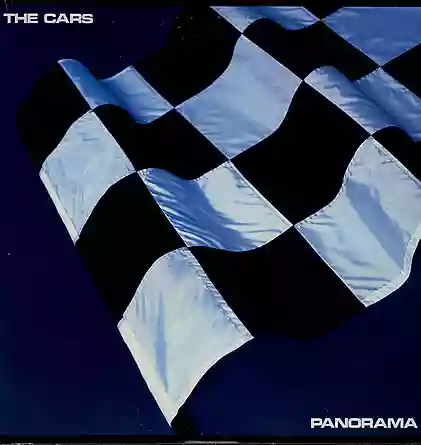
Has Ric Ocasek already gotten tired of new wave? Perhaps... But of rock? Still, after a year, following the successor "The Cars" and the follow-up "Candy-O", the Cars release this "Panorama", an "electrobeats" album. Or not? The sound has changed, you notice it right away, and even Ric's voice has altered, and that's not just because recording techniques were improving year by year back then. But what is concretely new? Saddidandà?
If the track that gives the album its title is a song that dresses an old body anew, with simple guitar patterns over which Hawkes and his keyboard embellish (for an impressive 5 minutes and 40 seconds!), "Touch And Go" doesn't resemble any other track previously released by Ocasek and company. With a jerky keyboard cadence that sometimes seems offbeat (Or is the rest of the song offbeat by not following the keyboard?) but then always aligns at the last moment with the rest of the song, it launches into a cunning refrain with an almost western guitarist. Easton's "foamy" solo, the surfer. If I said that this track alone justifies the entire album, I might be exaggerating, but the fact remains that in the compilation hits over the years, from "Panorama", only this "Touch And Go" has been pulled. Moreover, if we talk about style shifts, it's worth noting that for the first time in the Cars' music, the keyboards form the main structure and appear "first" in the lineup, ahead of the guitars.
"Gimme Some Slack" and we return to the galloping-trot of guitar and drums. And don't those little keyboards remind you of something by Grandaddy (even though it should be the other way around? Shouldn't "Ok With My Decay" remind you only in the sound of those little keyboards of "Gimme Some Slack" by the Cars?)? The "polished" new wave of the Cars as we know it.
The real '80s for the Cars begin with "Don't Tell Me No", where guitar and keyboard share the task of keeping the rhythm, one with a riff and the other with a loop. Orr sings a song that Ocasek composed for himself, and poor Benji ends up sobbing.
"Getting Through" (not very melodic): still on a very Texan guitar and a high drum beat.. A keyboard kicks in that seems to come out of an Alan Parsons record. But the "exciting" thing is the special, which has become a jumble of keyboard effects that today make you smile, recalling the old sound effects of Atari video game spaceships when they exploded. Ocasek in this track perfectly suited (loser) candidate in 1980 for the "Space Cowboy" contest..
If earlier I talked about how (maybe) Grandaddy inherited something in their (almost) always wonderful music from the Cars, try listening to "Misfit Kid". Ocasek decides not to sing it, to make it more "his own", thus reciting it "over" the music. A real shame.
Another return to "tradition" with "Down Boys", a fast-paced piece with sufficiently long verses to ward off timed talk. Again according to "tradition," the keyboard is "behind" the guitars.
Crickets in the night and gunshots that follow one another, or rather calm and madness, in "You Wear Those Eyes", Ocasek's first chill track in its own way with guitars and keyboards that "wobble" and "glare" a note on purpose. Beautiful solo of a few notes by Easton, one who in those few seconds he has (and in the impossibility of not respecting Ric Ocasek's taste for simplicity), must build a reputation as a top-level guitarist.
"Running To You", like "Panorama", "Gimme Some Slack", and others mentioned, travels thanks to the guitars. But come on!!! Wasn't this the album abandoning new wave? Yes, but not traditional pop-rock, so it seems. Beautiful chorus ("Running to you" sung 4 times) and keyboard solo for an all-guitar track. Undoubtedly one of the album's finest tracks, if not the best after "Touch And Go". Note how in this album, unlike the previous two, the sound wall is tall and proud.
"Up And Down" is an excellent song with a nice claustrophobic rhythm to which a good arpeggiated and airy chorus contrasts/clashes. The piece's quality is partially undermined by Ocasek once again speaking in time "over" the notes, or in other words, over the best part.
If the goal was to give a "sharp turn" to the car, well, this car's road behavior seems worthy of a modern big sedan equipped with esp! In fact, after some sway, it resets and aligns on the path of the previous two albums. To truly veer, this album needed to run faster towards innovation. But to do so, you need the right engine, and the right engine is the quality of the tracks.
It's worth saying that Ocasek's tracks were never intended for keyboards (Ocasek is a guitarist with a nearly stubby red Marlboro always lit, one eye tearing and the other on the chord), not even in "Heartbeat City"... Yet, precisely in that very successful episode of his career, marked 1984, Ric succeeded, thanks to a gentleman named John Lord-Alge, in transforming them into pieces with a prominent keyboard, twenty meters ahead of all the other instruments. Here, however, Ric doesn't succeed, but maybe, given the average quality of the tracks ("the engine" of this car, much inferior to that of "Heartbeat City"), it was better not to overdo it, in other words.
Of this album, the good arrangements are especially appreciable, the sound more "fresh" than before (easier to appreciate immediately, but less inclined to age over time, and therefore 20 years later if it doesn't sound current like Kraftwerk "must" sound almost lo-fi, and here it fails to end up either like the first or the second), and three truly good tracks, namely "Touch And Go", "Misfit Kid", and "Running To You".
The album, therefore, while not to be thrown away, comes off poorly both from a design perspective (the "turn"!) and a compositional one: three tracks out of ten is little for the Cars. Still, a year later, with "Shake It Up", Ric Ocasek tries again, showing more creativity from a compositional viewpoint but more "flat" in the arrangements, nonetheless failing to match even this time the first album "The Cars" and the second "Candy-O". But indeed four albums in four years are too much even if your name is Ric Ocasek.
Loading comments slowly
Summary by Bot
Panorama marks a stylistic shift for The Cars with a stronger keyboard focus and altered vocal delivery by Ric Ocasek. While tracks like "Touch And Go" and "Running To You" stand out, the album overall struggles to capture the energy of earlier releases. Despite fresh arrangements, the songs lack consistency and innovation, showing a mixed success in moving away from their classic new wave roots. It’s a respectable but uneven effort in the band’s rapid four-album run.
The Cars
The Cars are an American new wave and power-pop band formed in Boston in 1976. Led by Ric Ocasek with co-vocalist/bassist Benjamin Orr, they broke through with the 1978 debut and singles like Just What I Needed and My Best Friend’s Girl. Heartbeat City (1984) delivered major hits including Drive and You Might Think. They disbanded in 1988, reunited in 2010–2011 for Move Like This, and were inducted into the Rock & Roll Hall of Fame in 2018.08 Reviews
