
 •
Rating:
•
Rating:
THE REVIEW
"Heartbeat City" is such a huge success that it ends up overshadowing the works, sounds, and images of what the Cars were before. For those who stumbled upon them only starting in 1984, the Cars were nothing more than a "colorful" pop band, perhaps one to be sacrificed on the altar of American consumerism, but still, it must be said, a pop band on a continuous rise.
In 1985, their "Greatest Hits" came out, they played at the American Live Aid, their "Drive" was chosen by Bob Geldof to circle the globe as the soundtrack to the heartbreaking images of African children (strip away the lyrics "Who's gonna plug their ears/ When you scream?/ You can't go on thinking/ Nothing's wrong") consigning "Drive" to eternity; Mr. Andy Warhol completely opened up his Factory to them, guitarist Elliot Easton debuted with an excellent solo album of traditional rock and hard rock titled "Change No Change," all the artists were fighting to be produced by Ric Ocasek. Meanwhile, this not particularly handsome man was in a relationship with supermodel (and female face in the "Drive" video) Paulina Porizkova, whom he would eventually marry. But in 1987, it was time to put themselves to the test again: the 5 (pop) rockstars had to give "Heartbeat City" a worthy successor.
The album, with "Leave Or Stay" begins exactly like "Heartbeat City": a "diagonal" rock song filled with keys like "Hello Again." The keyboards of '87 are, however, less pleasant than those of '84, or is it just me? Circus-like guitar riffs for aerial acrobats, good vocal harmonies over Easton's always splendid arpeggio, someone who with four touches does good to a song. If only there were the 1984 keys rather than these dull, boring, flat ones covering the sound... "You Are The Girl", just listen to it, with its crystal-clear, linear new wave, to suspect it may be some outtake from the early works. The truth is, instead, there is known a '70s version of "Leave Or Stay", while this wave, as far as we know, is an eighties composition.
"Double Trouble" starts "confident," but the good work of the guitars is nullified by keyboards that must at all costs impose themselves over the guitars by the mister’s choice. Truth be told, I don't even like Ben Orr's singing. What will the typical "Heartbeat City" consumer think in the face of this one, an example of a genre I usually call "Kenny Loggins rock"? And what, instead, will they think of hearing these 5 minutes and 22 seconds of hallucinatory drowsiness in the endless New York night titled "Fine Line"? Hypnotic keyboard saturating the air, Ocasek's voice so sadly chill as to not even seem like him, guitar weeping for its own reasons, facing the wall, sound top-notch samples worthy of the '80s (especially those slow keyboard-flute notes), countermelodies and falsetto choirs that seem like background singers. That chill was in Ocasek's strings had already been heard, and it is thanks to his taste that the Cars boast "Drive" and "Heartbeat City-Jacki" in their repertoire, but this "Fine Line" (good, to be clear) practically exits entirely from the boundaries of pop. With "Everything You Say", a bit of tradition is mingled in this very catchy, fast country. Even this time the sound comes out poorly, the sound wall doesn't rise... And the beauty is that Ocasek is a highly sought-after producer! No instrument is safe, least of all the original guitar solo.
Five songs have passed, and the only one relevant to "Heartbeat City" is the first one. Even "Ta Ta Wayo Wayo", rather than the previous work, seems to come from "Shake It Up" from '81. A sunny rock functioning perfectly, with that typical ice cube splash sound diving into a drink before the guitar solo. If there's a piece where the sound (and the sound of the keyboards) is to my liking, it's "Strap Me In". After their interlude, the keyboards remain harmonious and spatial, thus leaving the rhythmic guitar of Ocasek and Easton's arpeggios the work of being the song. And then there are the choirs to "help" Ocasek, who, after all, doesn't seem uncomfortable with his mid-tempo rock. What didn't go well with "Double Trouble" (perhaps also due to the too-spaced and martial rhythm to undergo touches and embellishments) works fully in this one.
"Coming Up You" is a delightful keyboard toy, a sort of depowered "I Refuse". Orr redeems himself from the previous misstep. Strange, this band: at times, it seems that, for the success of the piece, it is necessary to shoot the keyboardist... Other times, on the contrary ("Drive" teaches us) one realizes how much better an idea it is to freeze (maybe just for that piece) the two guitarists. The quiet continues with the ticking "Wound Up On You": what didn't succeed with "Fine Line", that is, packaging the chill inside pop.
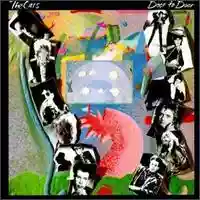
The album awakens with "Go Away", even though it is not yet daytime. New wave dramaturgy for Benjamin Orr with guitars borrowed from "Stranger Eyes" and "It's Not The Night" from the previous work. They let it travel, bass and drums, punctuated arpeggios, a musical space for keyboards similar to that in "Jacki"; soft choirs and breaths on the staff like in "Drive". The album should/could end here, dreamy, in an endless fading, but instead, the typical "Heartbeat City" consumer has to endure this hard rock 'n' roll partly coming from "Panorama" from '80 and partly again from something from the early trash you could hear around in American clubs. Useless, unhelpful to the cause, too much stronger than anything played up to then. And even a title track! Once, title tracks were "Heartbeat City": in 1987, they were "Door To Door".
The typical "Heartbeat City" listener will have enjoyed "Leave Or Stay" and the corny sweetness of "You Are The Girl". They will have been pleased with the elementary perfection of "Coming Up You" and a bit moved by "Go Away". They will have found the songs "Everything You Say" and "Strap Me In" catchy, even if far from their taste and without recognizing the compositional imprint of the Ocasek of 1984. The longtime Cars user, who gradually begins to become a bit nostalgic and adult-oriented, will have rejoiced at listening to so much new wave, albeit weakened (we are nine years after their first album), and for the presence of tasty rock and roll like "Ta Ta Wayo Wayo". Finally, they will have "concentrated" on "Fine Line" to discover Ocasek in a more yuppie guise.
Ric Ocasek, on the other hand, listening and relistening to "Door To Door," seeing it indeed achieve platinum but not match the previous work, taking it on tour across America but sometimes not even selling out, decided to dissolve the Cars. A decision that throws everyone into despair, except drummer David Robinson, who would never return to the stage for the rest of his life. And if you think that David was the most playful, the craziest, the clown of the group, everything has been said.
For the reviewer, however, "Door To Door" is a decent record that suffers from disharmony. AOM rock pieces poorly pair with clown pop; the synth beat and chill look bad compared to, except in "Coming Up You", the Cars' super hits in chill and synth style from the previous "Heartbeat City". The rock 'n' roll and new wave, however good, can't extend the breath of this record and raise the average. If this had been a record released six months after "Heartbeat City," it would have been the classic record to speculate on a bit. But three years later, much more was expected from the Cars.
So "Heartbeat City" didn't have a successor? Wrong. It's just that I haven't reviewed it yet.
Loading comments slowly
Summary by Bot
The review critically analyzes The Cars' 1987 album 'Door To Door,' noting its struggle to match the success of 'Heartbeat City.' The album showcases a mix of nostalgic new wave and rock elements but suffers from inconsistent production and keyboard dominance. While some tracks capture the classic Cars spirit, others feel weak or misplaced. Ultimately, the album is viewed as decent but falling short of expectations, preceding the band's breakup.Tracklist Lyrics Videos
The Cars
The Cars are an American new wave and power-pop band formed in Boston in 1976. Led by Ric Ocasek with co-vocalist/bassist Benjamin Orr, they broke through with the 1978 debut and singles like Just What I Needed and My Best Friend’s Girl. Heartbeat City (1984) delivered major hits including Drive and You Might Think. They disbanded in 1988, reunited in 2010–2011 for Move Like This, and were inducted into the Rock & Roll Hall of Fame in 2018.08 Reviews
