
 •
Rating:
•
Rating:
THE REVIEW
Unfortunately, due to latent internet connection problems, I couldn't verify if the review of this album was already present on the DeBaser server, so I apologize in advance if I end up repeating something already said before.
Let's start with the assumption that for more recent fans, the name Byrds might mean little to nothing. However, in mid-'60s America, which was suffering terribly in comparison to the emerging English music scene (Stones and Beatles, of course, but also the budding Doors and Cream), the members of the aforementioned band all had great individual fame, and indeed, to varying degrees, they all went on to have respectable solo careers. Consider Roger McGuinn, the Byrds' standard-bearer even after the band's breakup, guitarist David Crosby, a member of the incredible and seminal trio Crosby, Stills & Nash, as well as bassist Chris Hillman with his country-leaning Flying Burrito Brothers.
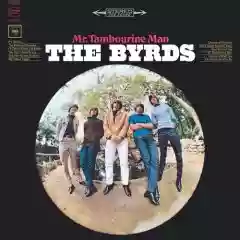
The great invention (and merit) of the Byrds was finding a compromise genre, which was by no means a hybrid lacking personality, between the folk of Dylanian origin and the British rock of the Beatles, and in turn they influenced the artists from whom they drew inspiration. On one hand, they claimed paternity over the Beatles' psychedelic period (which peaked with Sgt Pepper's), and on the other, they completely shocked Dylan, who abandoned just the acoustic guitar of folk and replaced it with a full-fledged rock band, which cost him quite a few criticisms. The summit, the pinnacle of it all, was obviously the very famous (and beautiful) Mr. Tambourine Man, coincidentally a cover of Dylan, which as a single swept away all rivals (and what rivals!!!) and revolutionized all the parameters of folk-rock. However, it would be reductive to focus only on this song (Bob Dylan commented: "Wow, you can even dance to it!"): other Dylan covers masterfully executed (Chimes Of Freedom), renditions of old American folk songs in The Bells Of Rhymney (a move replicated by the Boss 40 years later), and significant original episodes in You Won't Have To Cry.
Ultimately, I don’t award a full 5 stars even to this album, although it certainly comes close, because it is undoubtedly revolutionary and seminal like few others after it, and undeniably has great artistic peaks. However, it doesn't reach the perfection of albums released in its decade such as "Sgt Pepper's Lonely Hearts Club Band", "Highway 61 Revisited", "Let It Bleed", and others of this kind. Nevertheless, it remains an album that, if only for historical significance, is an absolute must-have.
Loading comments slowly
Summary by Bot
The Byrds' album 'Mr. Tambourine Man' is a revolutionary folk-rock landmark blending Dylan's folk with British rock influences. It features iconic covers and unique originals that shaped music history. Despite not reaching the perfection of some 1960s classics, it remains an essential album due to its impact and quality.
The Byrds
The Byrds were an American band formed in Los Angeles in 1964, widely credited with shaping folk rock via Roger McGuinn’s 12-string Rickenbacker sound and electric interpretations of Bob Dylan. Their catalog is frequently discussed as moving from early folk-rock hits into psychedelia and later country-rock, notably on “Sweetheart of the Rodeo” with Gram Parsons.15 Reviews
Other reviews
By Lewis Tollani
The entire work is permeated by that veil of magic that only the Byrds could render so sweetly and melancholically.
Folk(rock) would rise to the rank of a worthy and recognized musical genre, and rock as a whole would receive a significant contribution to its maturation.
