
 •
Rating:
•
Rating:
THE REVIEW
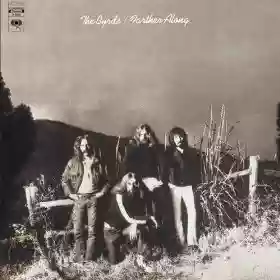
There isn't much to highlight about this record, which marks the end of the Byrds' era with Columbia Records and, all in all, without any particular claims, it does a pretty decent job among the ear drums, settling on a well-arranged traditional (the title track), a country boogie rock (the cover of "So Fine"), the festive but not too much "Get Down Your Line," the sunny "Precious Kate," and the very clever ending of "Lazy Waters..."
Just a couple of things: Kim Fowley's authorship, always in collaboration with the Byrds' bassist at the time, Skip Battin, seems to want to return to his own standards after the country rock binge, which could be defined, paraphrasing the title of one of his most representative albums, outrageous. And so "America's Great National Pastime" looks more like a cabaret country, a vaudeville, rather than a saloon. Thus, Fowley seems gradually, perhaps even unconsciously, to start making his way back to his own style. It's obvious that, with David Crosby and Gram Parsons gone, someone like Roger McGuinn would never even entertain the thought of proposing Fowley's actual inclusion in the Byrds: where would a brainy fuse like Kim's ever take him?
And then another thing: "Bugler" is a cover of an old song, here reinterpreted by Clarence White, the excellent guitarist, one of the most renowned session men in the country-root circle. White, whose surname was LeBlanc, fell victim to his time. A musician like him simply didn't break out under his own name or with bands he was a former member of due to the abundance of big names during that period. Thus, rather than working in his own name and on his own behalf, he ended up preferring work in the service of a band whose strong shots he had already fired or working as a session man for Ry Cooder or James Taylor, and even ending up unemployed, as happened after the breakup of these Byrds. There are loads of people like him, second and third lines who could have given and taken more, going back to that period, starting, out of the laziness of the writer, right from Kim Fowley's friend, the bassist Skip Battin, who before being a bird had a duo, Skip & Flip. But again, there are loads of names, and they cannot emerge if from that period and movement most people only end up remembering Dylan, barely Baez, and Young.
The last thing: Bugler is the name of a dog with whom the singer, as a boy, ran free and happy, in search of wilderness and adventure. Bugler then died, hit by a motorist; so says the song. Bugler is not just a dog, but it is the wilderness itself, it is the adventure of feeling free, it is the essence of being young. Bugler is the sentiment of the country man, especially of the country artist, and it is also his destiny: Clarence LeBlanc died in 1973, at twenty-nine, also hit by a car driven by a drunk woman. He died in front of his brother's eyes while loading instruments and equipment into the car together at the end of a concert, a reunion of his first old country band, the Kentucky Colonels. In "Bugler," Clarence White sings about his death and dedicates the song to himself, unknowingly. A bit like Gram Parsons did, who dedicated his last song, "In My Hour Of Darkness," to Clarence, even playing it at his funeral, not knowing it would be the song of his own sad end, in a tragic successive downfall of domino pieces.
Death and Rock.
Loading comments slowly
Summary by Bot
The Byrds' 'Farther Along' marks the end of their era with Columbia Records, offering a decent blend of country rock without standout highlights. The review explores contributions from Kim Fowley and Clarence White, highlighting their stylistic influences and tragic destinies. Though the album lacks major claims, its themes of freedom, youth, and mortality resonate subtly throughout. The record reflects transitional moments for the band and its members.Tracklist Lyrics
The Byrds
The Byrds were an American band formed in Los Angeles in 1964, widely credited with shaping folk rock via Roger McGuinn’s 12-string Rickenbacker sound and electric interpretations of Bob Dylan. Their catalog is frequently discussed as moving from early folk-rock hits into psychedelia and later country-rock, notably on “Sweetheart of the Rodeo” with Gram Parsons.15 Reviews
