
 •
Rating:
•
Rating:
THE REVIEW
This must be the hundredth review of this masterpiece, but it's impossible to remain indifferent and silent about this stellar work of rock.
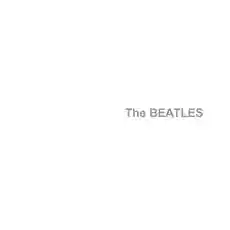
With "Revolver," "Rubber Soul," and even the beautiful "Sgt. Peppers'", the four Beatles followed a logical order, i.e., various experiments with psychedelia with various hints towards rock, pop, and even Indian music. This time, however, they decide to break the rules. Just take a look at the cover, simple yet mysterious: the first time I noticed it, it sparked my interest; I was curious to listen to it all in one go and let myself be carried away by the music of these four brilliant musicians; as someone has already written: "the most underrated and overrated band at the same time."
This album, fascinating yet unsettling, is a mix of emotions, of experiments, and sounds that seem to come from another galaxy (here I quote "Tomorrow Never Knows" from the "Revolver" album): they have no logical thread, no connection between them. The meaning of the album, in my opinion, is that each of the Beatles wanted to play the last card by giving their own part for this work, starting with that mad genius John Lennon, who in this album reaches the peak of his psychedelic experimentation, up to Paul, George, and finally Ringo Starr, who, whereas in previous albums, was perhaps the most detached, in this album participates much more frequently, showing the world that he too is a good "composer," even if slightly less so compared to the others (if we were to compare him to John and Paul...). This great double album is thus the result of what the four Beatles brought out unbeknownst to each other, and the fascinating thing is that it impresses: with almost obsessive care, some songs became real gems. This time I avoid the tracklist because there are too many tracks and they are difficult to describe in a few words, also because there is a serious risk of saying some nonsense, not to mention worse. Therefore, I've decided to give my own take on each member's work:
1) John Lennon: what is there to say about this music prodigy? For many, a cursed poet; for others, a great mind of international music. Without him, probably this album, but also all the others, would not have had the same impact and the same poetry that they indeed enjoyed. He enjoys manipulating sounds and reversing them to create an experimental nine-minute-long track: I'm talking about the unsettling "Revolution 9" created together with his wife Yoko Ono (well, she too eventually became part of this group), an experiment that if today is considered "abnormal," imagine back then... he experimented in his own way with the country of "The Continuing Story Of Bungalo Bill" sung with Ono, the R&B of "Yer Blues," although far from the sacred monsters like Robert Johnson and Eric Clapton (who participated often in this album) it is very elegant, up to the sweet lullaby "Good Night" dedicated to his son. But his simple yet effective melodic touch is not missing, present in songs like "Happiness Is A Warm Gun" and "I'm So Tired," a two-minute song with a delightfully pleasant relaxing rhythm.
2) Paul McCartney: certainly in this album, there is much more of him than the others, even if his impact was much less "brilliant" than Lennon's. Dear Paul, as in the old albums, enjoyed pretending to be dead again by dropping numerous clues about his fake death, which has become an urban legend (but I won't waste words on this because I imagine you are all more or less aware of it). This time, however, the bassist and pop voice of the band transforms like a chameleon and changes the tone of the voice, the lyrics, and even the melodies. His is the pop tune "Obladi Obladà," with lyrics that seem taken from a soap opera and a damn catchy rhythm that almost seems like a nursery rhyme to be sung in elementary schools, the sweet ballad "Blackbird" with beautiful sound effects of birds in the background up to "Helter Skelter." And here it is the apotheosis: the Beatles seem to have taken the pick of destiny (quoting the "Tenacious D") creating a stunning piece, noisy hard rock where good old Paul shouts and gets angry for the first time to seem like Roger Daltrey, the vocalist of The Who: the guitar hits hard, the bass uses a heavy very dirty distortion for the first time in the Beatles' career, and even the drums pound hard. The result is an incredible masterpiece, considered by many together with "Revolution 9" and "I'm So Tired" as "the cursed song of the White Album" due to the news events that followed the murders by the killer Charles Manson and his sect.
3) George Harrison: always fascinated by Indian music, he is the author of the best track of the album, namely the poignant and stunning "While My Guitar Gently Weeps," with the participation of Eric Clapton, as great as always. A suffering, sad and melancholic blues, with a truly beautiful and catchy refrain. George also notes "Piggies," one of the most daring lyrics of the album, together with "Why Don't We Do It In The Road?" by McCartney up to the Bob Dylan-like ballad "Long Long Long."
4) Ringo Starr: and finally, we conclude with the unjustly less appreciated Beatle, but his imprint on the album is very good: for the first time, he creates a piece all his own, namely the fun country song "Don't Pass Me By," nothing exceptional but that gives the drummer a chance to redeem himself.
In conclusion, the "four horsemen of the apocalypse," as the psychopathic Manson described them, create their most spectacular work, which hides everything and more, and despite the changes over the years and the arrival of new bands, the Beatles always manage to stay on their pedestal without ever losing balance and falling into the void. With this album, they have proven to be ahead, turning music into simple and pure art, even simply playing with experimentation and the simplest rock. The true essence of the Beatles, more than a double album...a gemstone of rock that has become a "music encyclopedia."
Loading comments slowly
Summary by Bot
This review celebrates The Beatles' White Album as a groundbreaking, experimental double album showcasing the individual talents of John Lennon, Paul McCartney, George Harrison, and Ringo Starr. The reviewer highlights the album's mix of psychedelic sounds, emotional depth, and diverse song styles. Despite its complexity and lack of a unified theme, the album remains a cornerstone of rock music history and innovation. Notable tracks and contributions from each Beatle are analyzed, emphasizing the album's timeless impact.Tracklist Lyrics Videos
The Beatles
The Beatles were a British band formed in Liverpool in 1960 by John Lennon, Paul McCartney, George Harrison and, from 1962, Ringo Starr. They revolutionized popular music through songwriting, studio innovation and cultural impact, releasing landmark albums from Rubber Soul and Revolver to Sgt. Pepper’s, the White Album and Abbey Road before disbanding in 1970.173 Reviews
Other reviews
By enbar77
"While My Guitar Gently Weeps"... really seems as if the guitar is weeping through a metallic and desperate wail.
The "White Album" is undoubtedly a magnificent work, of excellent artistic value, certainly confused, acidic, ferrous, overshadowed by some low blows almost fortunately concealed by other finely crafted tracks.
By Rax
This is the best description one can give of this (controversial) album. Because it is indeed a masterpiece; but it is a masterpiece in potential.
George Martin said: 'I didn’t want them to release a double. I told them to make a single album with 12 great songs.'
By zaireeka
For those who are already well acquainted with this album, white album, white review.
For all others, there’s the first version.
By AxGx
A cult object, a manual, a bible, a totem.
If you listen to records before the White Album and after—the difference is there, and you can touch it.
