
 •
Rating:
•
Rating:
THE REVIEW
Honestly, I never thought I would actually find myself reviewing a CD by those I consider among the Secular Sacred Monsters of the music I love and of music in general: a sort of reverential fear held me back from daring.
BUT... the McCartney operation of 2003 gave me the right cue to dare so much.
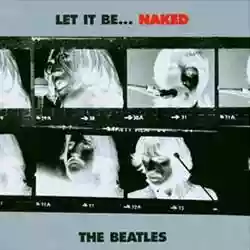
So, after a full 33 years since the release of the original self-titled album dated May 1970 (!) - as well as during the peak crisis period as the Band was about to dissolve a month after the said publication - one of the last official works of the Beatles, according to the aforementioned bassist and vocalist of the group, comes out in our current market "stripped" of the contaminations the Band didn't want at the time, and attributable to the then-producer: Phil Spector.
In short, after 33 years, McCartney feels the need to propose and offer to the general public - who for the same 33 years has loved the album as it reached the charts, stores, radios, homes, and future generations - the real and original version of the album as the Beatles thought it and wanted it, not distorted by anyone's whims and eccentricities. A commendable intent.
The album at that time was artistically at the peak of the group's career but already carried the signs of the group's decline, no longer finding the right cohesion of previous golden times; scuffles between individual members, the annoying role of intrusive uncomfortable wives, differences of opinion, and opening up to different musical tastes, all this undermined the harmony of the group that had just completed the excellent White Album. Let it be, or rather, Get back – this was the initially chosen title – is full of insights, there are many ideas and creativity of individuals now increasingly leaning towards different paths... it is placed between this and "Abbey Road" but comes out quietly, almost on tiptoe and especially without the full approval of the Fab Four: Spector, to put it mildly, added his touch to it, and this, for the aforementioned reasons, deprived of energy to oppose him, the group did not like.
So, with the original tapes recovered, Let it be is published today with the following differences:
first of all, gone are the strings and the sweet choral orchestration of "The long & winding road" in the name of a minimalist and yet sublime version, piano, voice, guitar; then 33 years of Harrison's solo of the title track are changed, minor and very short tracks like "Dig it" and "Maggie Mae" are removed and a famous b-side "Don't let me down" is added in their place, gone are the orchestra and choirs in "Across the universe", gone are the voices and mini dialogues in the background characterizing the fact that the "Let it be-movie" was also being shot at the same time, what else?
A second CD is added, perhaps 25 minutes long, in which you hear friendly dialogues and chords or snippets of songs lasting at most 20 seconds and recorded with the worst 4-track that the history of the Beatles recalls, and here is the gem at a medium-high price for collectors.
But these, along with the admirers and true lovers of the group, will be left with a bitter taste in their mouths. Because more than love for music in its purest essence, McCartney thought of a true commercial and marketing operation; the attempt to still tap into a very precious but ancient resource by exploiting the potential of what must certainly be considered masterpieces in every respect is well known to everyone, I believe (I think of the dear mother of the much lamented Jeff Buckley, for example), but these are masterpieces also and above all in relation to the time that produced them and to which they belong, which is the past. It's as if a writer republished an old book after 33 years, changing commas or accents, it wouldn't make sense.
These post-mortem exhumations leave me a feeling of coldness and speculation, nothing more.
I take the CD and carefully place it in its case, then take the original and play it full blast.
Then the chills and warmth return as well.
Let it be remains a masterpiece, but in its original, tormented and dressed version.
The saying "Every scarrafone is beautiful to its own mother" isn’t always true.
Loading comments slowly
Summary by Bot
This review explores the 2003 re-release of The Beatles' Let It Be album under the 'Naked' edition, stripped of Phil Spector's orchestration. The reviewer respects the original as a historical masterpiece reflecting the band's final moments, but questions McCartney's motives as more commercial than artistic. While appreciating the rawer approach, the reviewer ultimately prefers the original's fuller, though conflicted, sound.
The Beatles
The Beatles were a British band formed in Liverpool in 1960 by John Lennon, Paul McCartney, George Harrison and, from 1962, Ringo Starr. They revolutionized popular music through songwriting, studio innovation and cultural impact, releasing landmark albums from Rubber Soul and Revolver to Sgt. Pepper’s, the White Album and Abbey Road before disbanding in 1970.173 Reviews
Other reviews
By Hal
"We are facing yet another marketing operation."
"Regarding the Beatles, what they represented, their history, Let It Be dressed says much more than naked."
By ste84
This album sounds a bit more rock than the old one but ultimately doesn’t add anything new to what we already knew about the Beatles.
It feels like listening to demos: just listen to 'The Long And Winding Road,' 'Across The Universe,' or 'Let It Be' before and after the treatment, and you’ll understand the chasm that separates the two versions.
By cece65
Finally, Sir Paul has done himself justice.
"The Long And Winding Road" with only Paul’s piano and Ringo’s drums is even more magical than the original.
