
 •
Rating:
•
Rating:
THE REVIEW
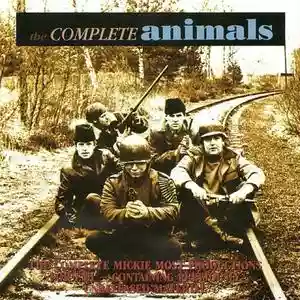
It is extremely risky to jot down these few and unseemly lines to talk about Burdon and company. There are several reasons: it's a historical group, it's about a series of masterpieces just 3 minutes each, embedded in time, it's about old stuff, very old. Furthermore, this is a compilation released more than twenty years after the golden years of the English beat, 1990, that is when people like the Yardbirds, the Kinks, the Animals present here were dinosaurs scattered between directing work and guest appearances, if not six feet under due to some excessive concoction.
Yet, "The House Of The Rising Sun" is known by everyone, maybe too many (see Pooh). "We've Gotta Get Out Of This Place" was dusted off to score a commercial in the 2000s. Occasionally someone cites Eric Burdon as a master of vocal prowess and stage presence akin to an animal, and Jim Morrison was nothing but his disciple in music, partly because of the similar vocal tone, partly because of the same total devotion to the most classic blues. The well-nourished Chas Chandler would make his fortune pushing Hendrix to the top of the world, leaving him alone before the experimental and ambitious ventures of "Electric Ladyland."
The Animals revived the old black tradition and gave it a sound slap to free it from austerity and academic formalities (namely, the ills that have plagued the genre, sometimes relegating it to cocktail music, although fortunately a good part of it continued to carry forward its visceral nature). They dug into the American sound past and brought it to the United Kingdom, faithful but not sad idea snatchers: every piece of their career, at least in the sunniest moments, was a real homage to tough guys like John Lee Hooker, Muddy Waters, Bo Diddley and other noisy drunks. The Yardbirds were bolder, innovative, creative in their desire to "go beyond," the Animals more physical and sincere, passionate and passionate.
A sequence of classics, mostly remakes, dominated by the screams of the frontman but efficiently accompanied by a screeching and warm organ, a guitar and a diligent rhythm section, boisterous enough. Thanks to them, and the entire English beat, we had hard rock and new blues, even some sparse sprouts of something that, a dozen years later, would be called "punk" (see the developments and influences seen in groups like Dr. Feelgood). Little in common with Burdon's solo career, who fled to the USA attracted by Frisco, LSD, and country, before the funky protest of War.
The already mentioned "We've Gotta Get Out Of This Place" would be enough to justify the unconditional devotion to the group, this collection contains forty other valid reasons. A historical value and importance that, by mathematical rules, must be enclosed in a simple 5/5.
Loading comments slowly
Summary by Bot
This review praises The Animals' compilation album as a vital collection of blues rock classics. It highlights their role in reviving traditional American blues within the UK scene, driven by Eric Burdon's powerful vocals. The album is credited with influencing future rock developments and is awarded a perfect score for its timeless appeal and historical importance.Tracklist Lyrics Videos
02 Talkin' 'Bout You (full version) (07:06)
03 Blue Feeling (02:33)
05 Baby Let Me Take You Home (02:23)
07 Baby What's Wrong (02:51)
09 F-E-E-L (02:44)
10 I'm Mad Again (04:18)
11 The Right Time (03:47)
18 The Story of Bo Diddley (05:45)
19 The Girl Can't Help It (02:23)
20 I've Been Around (01:36)
The Animals
The Animals formed in Newcastle upon Tyne in 1963 and became a cornerstone of the British Invasion with a hard-edged R&B sound driven by Eric Burdon’s vocals and Alan Price’s organ. The classic lineup included Burdon, Price, Hilton Valentine, Chas Chandler, and John Steel. They scored major hits in 1964–1966 and later explored psychedelia as Eric Burdon & The Animals.04 Reviews
