
 •
Rating:
•
Rating:
THE REVIEW
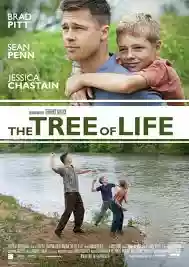
Attention to detail. If I had to describe this film in three words, I would say just that. It's not an easy film to watch, nor is it a masterpiece, but it is a work that stands out, offering no middle ground: you either like it or you don't. The themes competing for the spotlight are two, both equally significant.
On one hand, there's the dynamic of a typical 1960s family, with particular attention to the father/eldest son relationship among three brothers. On the other, there's Nature, with its allure and mysteries, viewed across a wide range from the very small to the very large. These two elements are held together by a subtle thread like a whisper: questions and statements we secretly make, perhaps — or definitely — also influenced by traditions and upbringing, but ones that everyone, more or less often, feels within themselves: Are you there?, Who are you?, if you're there, what are you like?
The story focusing on Men is understood little by little, intuited, and what is not understood is interpreted. After all, that's how a good film should be. An authoritarian father (Brad Pitt), a sweet and weak mother deeply in love who forgives everything, or almost everything. A father who wants to raise his sons to be as strong as he is, but who fails precisely in this conscious endeavor; at least he believes he fails because, for him, it's unimaginable for a son to be introverted and not exuberant, docile and not aggressive, sensitive and not "tough." The result is that he distances himself from his children, doesn't reach them. He is not loved, especially by the eldest. The film places a strong emphasis on the psychological aspect.
Brad Pitt shines as a well-known versatile actor, Sean Penn is not easily judged due to the slight emphasis placed on him, and Jessica Chastain is excellent, highly expressive in the role of a loving wife, tender mother, and compensator for the lacking paternal love.
But those who are fathers in reality, like the writer, can identify with this family father, sometimes justifying him, more often criticizing him. They recognize certain mistakes of their own, perhaps not as grievous, but see them reflected in the film, understand the eldest son's reactions, and see a bit of their own son. And all this leaves a bitter aftertaste and the desire to turn back time, to undo things that have been done. This is precisely because the film is rich in detail.
In fact, I held back in the analysis of this phase of the work until last, because it was a strong point, the scene cuts and above all the description of details, sometimes seemingly insignificant, but which elevate the film to an auteur film. The children's games, the solitary actions of the eldest, his childish attraction to the neighbor, the dialogues with the mother, etc. All these details, these attentions to spontaneous gestures, which we know to be true because each of us has experienced them: brushstrokes creating a realist painting.
Extensive and skillful use of handheld cameras characterizes much of the film and distinguishes its style. Music that rises to the occasion. Original and stimulating editing.
Attention is also paid to the details of Nature, simple and complex scenes never before seen or often overlooked by the viewer in their real life. Visions that make one reflect on the grandeur of the World we live in. Water, the plant world, the animal world, the Sun, the Universe. Presented in simple scenes, sometimes fleeting, that make the sensitive viewer contemplate. And to the distracted viewer, they bring attention to things never noticed before. They make everyone ponder the meaning of the title, the Tree of Life. In a broad sense because, as Malick so aptly explains, Life must be understood in its totality, encompassing all existing Matter, so that we never forget that behind, or rather above, our daily occupations and concerns, we are part of a colossal, mysterious, fantastic Life. Whether Someone created it or it exists on its own. And in some respects, that has relative importance.
Loading comments slowly
Summary by Bot
The Tree of Life is a detailed and thought-provoking film that explores the complexities of a 1960s family and the vastness of nature. It delves into psychological themes through the lens of an authoritarian father and his introverted eldest son. The film’s style, including handheld camera work and subtle editing, complements its contemplative nature. Performances by Brad Pitt and Jessica Chastain stand out, while the film invites viewers to reflect on life’s bigger mysteries.
Terrence Malick
Terrence Malick is an American film director and screenwriter known for visually driven, philosophical films often featuring minimal dialogue, voice-over narration, and a strong focus on nature and spirituality.11 Reviews
Other reviews
By Hellring
"There are two ways through life: the way of nature, and the way of grace."
"A dramatic and essential Bible for understanding cinema and the person of Malick."
