
 •
Rating:
•
Rating:
THE REVIEW
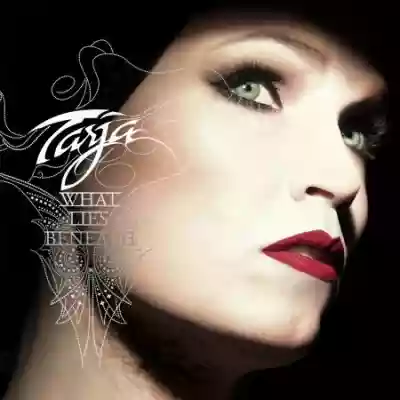
The album I'm reviewing, the second solo effort by former Nightwish vocalist Tarja Turunen, is an ambitious work. After her solo debut in 2007 with "My Winter Storm," Turunen aimed for "What Lies Beneath," released in 2010, to feature prestigious collaborations (to name a few, Van Canto in "Anteroom of Death," Phil Labonte in "Dark Star," Joe Satriani's guitar in "Falling Awake," Will Calhoun's drums in "Crimson Deep") and a very polished production, in addition to tackling the piano parts herself. The goal of producing a striking album, more mature than the last, capable of leaving a mark on the symphonic metal scene and better defining Tarja's personal "style," was, in my opinion, only partially achieved.
Without a doubt, there are many positive aspects to this work, making it overall a pleasant listen, I'd even say at times fascinating: Tarja's vocal performance is superb and shines especially in the ballads (such as "Underneath," "Rivers of Lust," "The Archive of Lost Dreams"), which form one of the two main threads of the album alongside the more "gritty" tracks; the symphonic parts, entrusted mostly to violins, do not fall into the saccharine and do not overpower, as often happens, the guitar and drum lines, which know how to be sufficiently robust and incisive, although never very complex; in some tracks, there is a clear desire to cautiously experiment with something new, or at least to explore territories still untouched for Tarja, such as in "Anteroom of Death," a piece with strong rhythmic variations and extremely "theatrical" (undoubtedly also due to the presence of Van Canto), or in "Crimson Deep," characterized by a rather unusual dark atmosphere for Turunen's style. However, the final impression is one, forgive my expression, of a "handbrake" perpetually engaged; the potential to produce more aggressive and grandiose metal seems to be there, but it has not yet been realized. I think (though here we tread into the realm of pure speculation) that this is influenced by the unresolved dialectic between Tarja's inclinations, which guide her toward ballads and generally slower, more melodic pieces, and the desire not to disappoint her longtime fan base, following her since her Nightwish days and expecting the classic symphonic metal, indeed, "in the Nightwish style" of the early days. When this dialectic is resolved, in one direction or the other, I believe a work with a more defined character might emerge, even if not necessarily metal, and of a high quality level nonetheless.
We shall see...
Loading comments slowly
Summary by Bot
Tarja Turunen's second solo album 'What Lies Beneath' is an ambitious and polished work showcasing strong vocals and tasteful symphonic elements. The album features notable collaborations and cautious musical experimentation. However, the review suggests the album feels somewhat restrained, lacking a fully realized aggressive metal edge. It balances ballads and heavier tracks but does not completely satisfy either side. The reviewer anticipates a more defined future direction for Tarja's music.Tracklist Videos
Tarja
Finnish soprano and songwriter, former lead vocalist of Nightwish (1996–2005). Launched a solo career spanning symphonic metal and classical crossover with My Winter Storm (2007), followed by What Lies Beneath (2010) and Colours in The Dark (2013).05 Reviews
Other reviews
By federico"benny"
Listening to this 'What Lies Beneath' one constantly senses a missed opportunity.
The end result is still an enjoyable album that more than adequately passes, given also the fact that at the microphone is always a very talented soprano.
