
 •
Rating:
•
Rating:
THE REVIEW
Female folk or feminine folk? Hmm, let's see, then... What draws a woman to this genre? Pure preference, family traditions, a certain "intimacy" that the performer/author can reproduce thanks to the genre? Women, as we know, are the moon while we men would be the sun... Does having a passion for handmade things matter? The country decorations for the furniture, the passion for decoupage?
Ok, I'm providing a version of the feminine universe that could lead the competent authority to censor the review and "cut off" something else. While I'm showcasing the most despicable side of my personality, these women use music to bring something credible, true-to-life, played and not sampled; sung, not just pitched; proposed, certainly not imposed through TV.
It's not right to mock female folk, especially when we are continually bombarded by spice girls, atomic kittens, lollipop girls, sugar-sucking girls, sugar dolls, pretty wooden girls, etc. Talking about women and chart music is a bit like presenting a medal: it has two sides, inevitably inseparable. In some decades, one side has been more shining than the other, maybe today the chart-topping pop planned at the drawing board is regularly ahead, but in general, each decade has its worthy representative in both senses. Take the eighties, for example: I know a comparison in sales, celebrity, and media exposure is almost impossible, but those were Madonna's years as much as they were Tracy Chapman's, weren't they?
In the eighties, however, a rather peculiar character emerged: a nineteen-year-old presented on TV in little shows and Festivalbars as if she were just any pop singer because of her beauty, as crystalline as it was austere, perfect for magazine covers worldwide and for opening new dozens of fan clubs. She sang songs certainly difficult for those who went to the Arena di Verona to worship Rick Astley and Nick Kamen, but like them, she held the stage and the onslaught of cameras, and she did it precisely because you couldn't stop looking into those sad and profound black eyes. At that time, she was a living mix between the artistic sensitivity of a folk woman and the superstar ambition of quite other colleagues... A kind of Tracy Chapman as courted as a Samantha Fox...
It is undeniable that Tanita Tikaram, the nineteen-year-old in question, English born in Westphalia, with Indo-Chinese, Indian and Fijian blood in between, at that time had neither the awareness nor the attitude for certain postures and framed in that way, but soon, I imagine, she had to learn the rules of the game, in order to better deal with the trap she had fallen into: success had taken her songs around the world, it's true, but the path they traveled was less than half of that completed by her face. And being a "daughter" of those years, she couldn't help but lose backing and fame, just as everyone else couldn't help but identify her as "that pretty girl... who sang the saddest songs in the world... with that deep voice... remember her?" or, for those in the know, ?the one from "Twist In My Sobriety"?'...
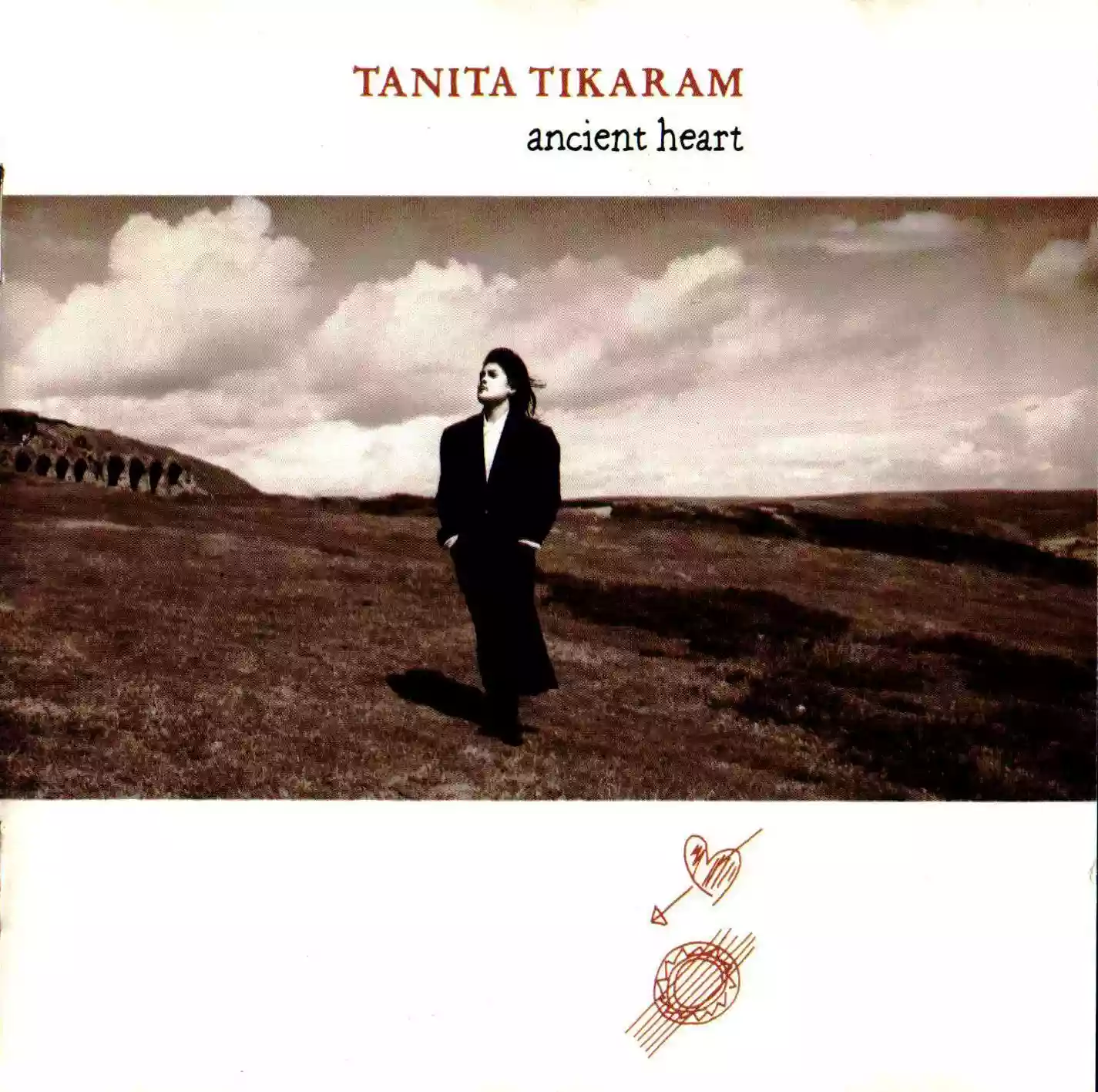
This track, indeed the most famous of her discography, is contained in the debut album "Ancient Heart", dated 1988; it's almost a purely folk record, even Irish in the opener "Good Tradition" (damned eighties keyboards: they are everywhere!), of adolescent innocence married to an almost existentialist awareness. And "Twist In My Sobriety", one of those tracks I remember most fondly from that decade, is, in my opinion (sans d'émuler aucune), pure existentialism, song dramaturgy. Contributing significantly to this is Tanita's voice, almost masculine like Chapman's, deep even if not low, differing from the American's because it's stylistically and technically inferior (to the limits of bad, I would say) but with something indescribably more seductive, elevated, and sensual.
If in the excellent "Cathedral Song" this voice is authentically that of a brother, it works well in the tiptoeing blues of "He Likes The Sun" or the dreamy "Valentine Heart", in the more joyful tracks it "weighs down the lightness" (a bit like when I read a sign on the freeway indicating "slow down speed"), causes half-smiles to fall, and flattens the electrocardiogram. It's suggestive to hear her uncertain between the jazz winds in a venue with too much echo in "For All Those Years", while it becomes a little annoying when, inevitably, with that deep voice she has, it cools the last track, the heartfelt "Preyed Upon".
Further mention for the lyrics: find me a teenager in 1988 who, when thinking of writing a song, considers putting this level of writing into it.
Tanita was a somewhat singular phenomenon, for common pop charts, despite her beauty we all noticed it a bit, didn't we? She quickly returned to the penumbra of singer-songwriter territory, but contributing factors were also records not up to this. Her eyes continue to shine black even today, and her voice (improved) was recorded until 2002, but this time it's up to us to go find them; it's no longer time (for a while), for her, of successes/commoditization...
An ancient heart, one might say, that of Tanita; therefore not at ease in a too modern world like that of the charts.
Loading comments slowly
Summary by Bot
The review explores Tanita Tikaram's debut album Ancient Heart as a unique folk work characterized by a deep, sensual voice and poetic songwriting. It reflects on her singular position in the 1980s music scene, balancing folk authenticity and pop fame. The reviewer appreciates the album's emotional depth, especially the iconic track "Twist In My Sobriety," while acknowledging some 80s production quirks. Tikaram's music remains credible and true in a commercial era saturated with manufactured pop.
Tanita Tikaram
British singer-songwriter who debuted in 1988 with the album Ancient Heart; best known for the single "Twist in My Sobriety" and a deep, distinctive voice.02 Reviews
