
 •
Rating:
•
Rating:
THE REVIEW
How to get the white neurosis moving, this must have been the idea.
And to do it, four young lads very much from art school knocked on the alchemist's workshop so he could help them set up a psychotic and danceable cartoon movie soundtrack.
“Psychotic and danceable cartoon movie” is quite a crappy definition, I know, but this is what comes to mind right now.
In any case (and keep the word 'case' in mind) the alchemist seemed like just the right person for the task, given that, like Merlin, he was someone who could fit his entire house into a suitcase. And the house of an alchemist, as you can surely imagine, is full of very useful tools for exploring uncharted lands.
Among all the things packed into the suitcase, the most useful turned out to be a deck of cards...
A deck of cards from which to draw randomly.
Why the most useful of all?
Because, as the alchemist said, “What serves our case if not, when it's the case, drawing randomly?” A remarkably eloquent formula, you'll agree. Both in respect to the case, and to if and when it's the case,
Then again, I confess, this card stuff I'm exaggerating... It's just that those cards always made me trip... you draw one by chance and you get sentences like: “honor your error as a hidden intention” or “discover your formulas and abandon them”... too cool...
Even if, I admit, “too cool” isn’t much of an analysis.
Then again, cards or no cards, there was a lot of other stuff in the suitcase, not to mention that the talking heads had a decent hand luggage (black music, artiste experiences, and quirky ideas).
And anyway, the point was that “rock had to stop being a sloppy version of the Rolling Stones,” or always the same old story. So much so that you could go on tour with the Ramones and read scientific tomes while those rowdies did every kind of drug.
Everlasting glory to the Ramones, of course, but I imagine it would have been fun to be in the same van with the two groups. With the Ramones saying, "But what are these guys doing, reading?"
Ah, it seems impossible, but the two groups really did tour together. Like the most extraordinary of fantastical pairs.
They were something like no pathos, no romance, no uniform, no love songs. And, of course, no guitar solos. It was just about using rationality and chance to document madness, perhaps talking about food and buildings...
And then, of course, rhythm and rhythm and more rhythm, even if David Byrne, the singer, was as stiff as a board and moved jerkily, his body caught live in its own alienation...
All fabulous, even if our impression back then was that they were taking us for fools and not just because we were staunch haters of anything even slightly danceable. Besides this, we felt an incongruity and a sense of parody,
Oh yes, yes...incongruity and parody...
The same effect that album of the alchemist gave us, the one that had to do with the strategy for capturing the tiger. Oh God, not quite the same since here there was something dangerously similar to disco music involved.
And everything was so accelerated... everything was so rushed.
Not to mention that rhythm then wasn't the black songs' rhythm, or rather it was, but in a context that ended up seeming like something different, i.e., something unnatural.
Again alienation then...
Alienated the singing, alienated the body...and alienated the sounds.
That, overwhelmed by a lucid and sharp intelligence and the avant-garde flair, the rhythm was nothing but neurosis.
Ah, it’s no wonder the record turned out to be a cultural shock then.
It took some time, but then we appreciated it and, to this day, it's still one of the most enjoyable albums ever. And it's fantastic that an album about alienation is also an enjoyable album.
Of course, despite the passage of time, that subtle line of incongruity remains, which is somewhat the memory of the day we met strangeness in music and somewhat still the same effect of then, with the absurd, however, becoming an added value.
If I have to think of a song, I think of “Thank you for sending me an angel,” which is really a frightening intro. Concise and skeletal, it almost rushes along with David Byrne's hysterical singing, allowing only a few brief pauses which are then funny and alien rhythmic interludes.
Which, then again, rhythmic interludes are so to speak, since the record is, as we have already said, only rhythm... rhythm, rhythm, and more rhythm.
Not to mention that “Thank you...” is then, uniquely on the album, almost a furious rock'n'roll.
Then suddenly when it ends, track two starts with a sort of absurd march, and maybe track three also starts like a sort of absurd march. That perhaps instead of dancing, you should walk in circles like crazy...
The other tracks are more or less along the same lines and all resemble each other, despite the thousand shades of a million sounds, or perhaps of a million rhythms, or micro-rhythms, imperceptibly different (the alchemist was in good shape those days).
They are, in short, pieces from the same assembly line and the assembly line means alienation.
And yes, we reiterate, in this music, as funny and irresistible as it is, the alienation is felt, felt indeed.
Then maybe we could say that often the sounds have, especially in the absence of singing, the air of coming from futuristic playful machines...
Think, to understand, of a factory turned into an amusement park.
The effect is so powerful that you wish those twenty seconds without Byrne's voice became one minute, two minutes, three, four.
Ah, how many times have I imagined this record only instrumental with lots of Umpa Loompas dancing and working happily!!!
Who are the Umpa Loompas? But how?
The Umpa Loompas are the little hyper-rhythmic and singing workers at the service of Willy Wonka, the mad chocolatier who transformed the boldest psychedelic concepts into sweets.
The Umpa Loompas are the closest thing to a kind of dreamy workerism.
And so perhaps, beyond the perceived alienation, that music was not (and is not) anything but the soundtrack of a twisted sun of the future where two of the early Byrne's fixed ideas still took root (and still do), namely, corporate theory and Maoism,
A sort of conscious and joyful regimentation.
But I would end with Merlin/Brian. Indeed with the real Merlin...
Oh, how I would love the real Merlin to visit me and devise an educational program similar to the one in “The Sword in the Stone” that leads Wart to become King Arthur!!!.
Remember when Wart is turned into a fish or a squirrel?
Well, I would like to transform into a little Umpa Loompa and work, dancing and humming the songs of “More songs about buildings and food,” in the chocolate factory.
Also because it would be the only possible way to become a Maoist, even if a Maoist version Dahl/Burton/Byrne...a real cool guy then...
Trallallà...
Loading comments slowly
Summary by Bot
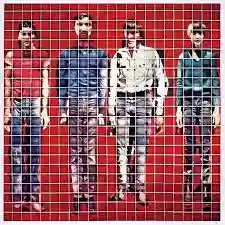
This review explores Talking Heads' album More Songs About Buildings and Food as a unique blend of neurosis and rhythm, marked by avant-garde influences and alienation. It highlights the album’s danceable yet intellectual qualities, the quirky vocal delivery of David Byrne, and the experimental use of rhythm that challenges traditional rock norms. Despite initial strangeness, the album endures as a fascinating and enjoyable listen. Memorable metaphors and humor enhance the reflection on its cultural and artistic significance.Tracklist Lyrics Videos
Talking Heads
Talking Heads were an American band formed in the mid-1970s, known for combining new wave with funk, art-rock experimentation, and sharply observed themes of modern life.19 Reviews
Other reviews
By hobbit
The Talking Heads were geniuses: stuff that you listen to today and think that clubs are missing something big by playing that Latin-American or techno-house garbage instead.
A genius record, like all the first four of this magical group, similar to Devo but less punk, not far from the Pop Group but more pop, to take with eyes closed, if you have at least a bit of taste for rhythm.
