
 •
Rating:
•
Rating:
THE REVIEW
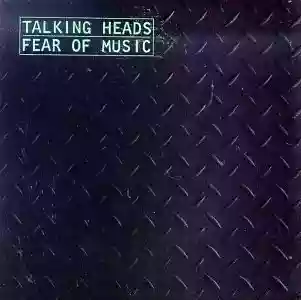
Where is the sex? Where are the drugs? Where is the violence? We are not dealing with a band of brazen rebels but are instead talking about four highly sophisticated intellectuals, one of whom, David Byrne, is obsessed with urban alienation and all its effects. Thus, explained are the demented melodies, off-kilter disco rhythms, asylum lyrics, and Byrne’s psychotic voice. "77" and "More Songs About Buildings And Food" had addressed more or less the same themes with a crazy and sardonic irony, but this time everything sounds damn serious and threatening...
"Fear Of Music" is a true essayistic work, a paranoid and surreal study on everyday life, incommunicability, and artificial hedonism, behind which lie neurotic and bizarre existences. Supported by a musical trio of absolute worth, consisting of a precise rhythm section absolutely suited to Byrne's intellectual ravings, namely bassist Tina Weymouth and drummer Chris Frantz (husband and wife), and guitarist Jerry Harrison, Byrne delivers his impressionist lyrics in a style that may remind one of David Thomas but is undoubtedly less inclined to the abstract vocal acrobatics of the famous leader of Pere Ubu, preferring only to hint at the unrestrained madness and sometimes settling into a cold and detached businessman tone. As critic Lester Bangs wrote, the album could have easily been called "Fear Of Everything," as nothing escapes Byrne's castrating obsessiveness: the singer is tormented by his inability to communicate in "Mind," repeatedly insisting, "I need something to change your mind,” but it quickly becomes apparent that he will never find that something. He is morbidly fascinated by paper and the rays of light passing through it in "Paper," desperately seeks a city to live in "Cities," where Birmingham is a city "where many rich people live, many ghosts in many houses" and Memphis is "the home of Elvis and the ancient Greeks", paints frightening war landscapes in "Life During Wartime" ("This ain't no party, this ain't no disco, this ain't no fooling around," he proclaims in the refrain) and dismisses Paradise as a place "where nothing ever happens."
Even the initial "I Zimbra," an exercise in icy and conceptual pseudo-world music with nonsense lyrics by Dadaist poet Hugo Ball, is overshadowed by this dense cloud of neurosis. The music is a fascinating mix of rock, funk, disco, and world music, all blended, sterilized, and covered by a dense layer of insane, almost childish absurdism: the greatest emphasis is placed on the rhythms, on the nearly perfect connection established by Weymouth and Frantz, and at the same time on Byrne's very distinctive singing. Impossible to overlook is Brian Eno's production (and his contribution to backing vocals on some tracks), adding an extra layer of surrealism to the whole, with his subtly humorous tricks (the sampling of birds and frogs in the threatening semi-ambient conclusion of "Drugs") and his particular attention to vocal effects and sinister synthesizer sounds ("Memories Can't Wait"). "Fear Of Music" is certainly an album-treatise, an intellectual and deep work in which Byrne perfectly illustrates his point of view: the problem is not the mind, not the paper, nor any city or even Paradise: the problem is life itself. Life, for Byrne, is an endless spiral of neurosis and unease, a cycle in which normality is the only anomalous element, and the only possible solution is mockery, hilarity, making fun of oneself and existence in every aspect. Much like Pere Ubu did, terrified of technology and industrial society, until they decided to talk about it with lightness, exorcising its traumas and tragedies.
Laughing to avoid crying, this is "Fear Of Music." Often, as in this case, it is all we can do.
Loading comments slowly
Summary by Bot
Talking Heads' Fear Of Music is an intellectual, paranoid exploration of urban life and existential unease. David Byrne’s distinctive voice and impressionist lyrics highlight themes of incommunicability and artificial hedonism. Supported by a tight rhythm section and Brian Eno’s surreal production, the album blends rock, funk, disco, and world music into a unique, thought-provoking experience. It's a serious, sometimes threatening work that tackles neurosis and the absurdity of modern life.Tracklist Lyrics Videos
Talking Heads
Talking Heads were an American band formed in the mid-1970s, known for combining new wave with funk, art-rock experimentation, and sharply observed themes of modern life.19 Reviews
Other reviews
By David Bowie
"Fear of Music serves as the soundtrack to the small (and large) obsessions threatening to imprison the common individual in a spiral of indecipherable alienation."
"Fear of Music, aside from being a great testimony of cultured and varied New Wave, is pure modern art."
