
 •
Rating:
•
Rating:
THE REVIEW
The Talk Talk are one of the mysteries of the 80s.
A story of a band that, starting from the hell of early 80s pop music, managed, by sacrificing fame and glory, to follow the path of success, but in reverse. From a band of "good" popularity to a seminal group for an entire generation of musicians and a reference point for the ambient/post rock/slo-core scene.
Born in the wake of the synth-based pop wave of the early 80s (Duran Duran and Depeche Mode among the masters), riding the new wave sounds of the period, after some terribly commercial albums (The party is over from '82 and It's my life from '84) and a couple of famous chart hits ("Such a shame" and "It's my life" above all), our five heroes (Hollis, Harris, Feltham, Ditchman, and Greene) decide to embark on a path of purification that will lead them to record two incredible albums (Spirit of Eden and Laughing Stock) and, having completed their atonement, disappear into nothingness. (it didn't quite go this way, but saying it like this makes more of an impact!)
Let's go step by step. 1988, Talk Talk releases Spirit of Eden. The work proves to be not only light years away from the easy synth-pop of previous work, but its atmospheres, extended with a jazz aftertaste, seem out of place even for that period, the late 80s.
But it is not this album that I want to talk about.
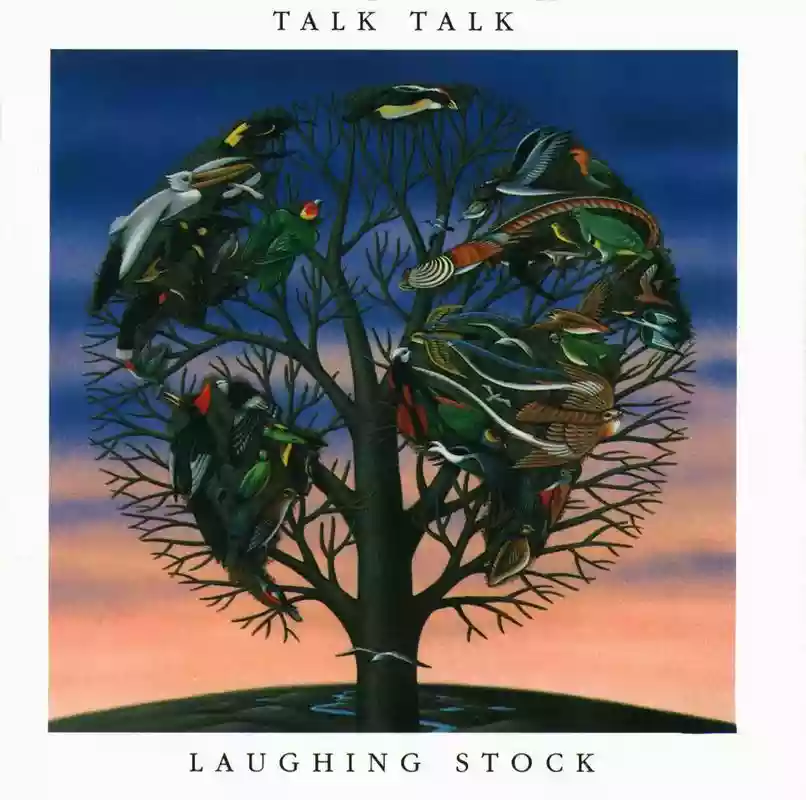
1991, Laughing Stock. This album moves from where the previous one ended, our Talk Talk feel the end of their atonement near, and the album is there to show us that glimpse of paradise that they must have begun to glimpse. Despite the clear ties to the previous work, they manage not to repeat themselves, pushing even further in their personal battle against the song form. In fact, everything but songs can be defined for the six tracks that make up this work. From the initial Myrrhman, with Hollis's voice (splendid to me) dragging, trailing over stretched guitar chords, almost a chant extending to infinity, to the more lively Ascension day, with the rhythm section marking a vivaciously melancholic jazz tempo (pardon the oxymoron) as in New Grass.
The whole album is a continuous alternation of melancholic chants, blues ballads, and free-jazz sounds which is impossible not to be fascinated by, or at least it should have been. But, it seems, at that time the media's eyes were probably focused on searching for new pop icons rather than a band capable of anticipating "slo-core" music.
Don't make the same mistake as the musical community in that 1991, and give the redeemed Talk Talk a chance to show you what music is heard up there, where mass pop music is just a distant memory...
Loading comments slowly
Summary by Bot
Talk Talk transformed from 80s synth-pop stars into pioneers of ambient and post-rock, culminating in their 1991 album Laughing Stock. This album breaks traditional song structures with melancholic chants, jazz, and blues influences. Despite lacking mainstream media attention at the time, Laughing Stock remains a seminal work that inspired future generations. The review encourages listeners to rediscover this overlooked masterpiece.Tracklist Lyrics Videos
Talk Talk
Talk Talk were an English band formed in London in 1981 by Mark Hollis, Paul Webb and Lee Harris, with early keyboardist Simon Brenner and long‑time producer/co-writer Tim Friese‑Greene. They evolved from acclaimed 80s synth-pop to the influential, spacious soundscapes of Spirit of Eden (1988) and Laughing Stock (1991), before disbanding in the early 1990s.10 Reviews
Other reviews
By nbaio
"Laughing Stock tells us what music is and what it feels like to listen to it."
The album is pervaded by a mysterious aura that drags the listener to the most hidden places of their subconscious.
