
 •
Rating:
•
Rating:
THE REVIEW
After a career built with synthesizers, marked by pop singles meant to be shouted in discos, reverberated drums, and millions of copies sold, Hollis and his companions decided to abandon that sound and venture into more magical, exotic, and intimate places. They did this by releasing two albums that were almost snubbed at the time and divided critics and the public, also putting a strain on the relationship between the band and their record label.
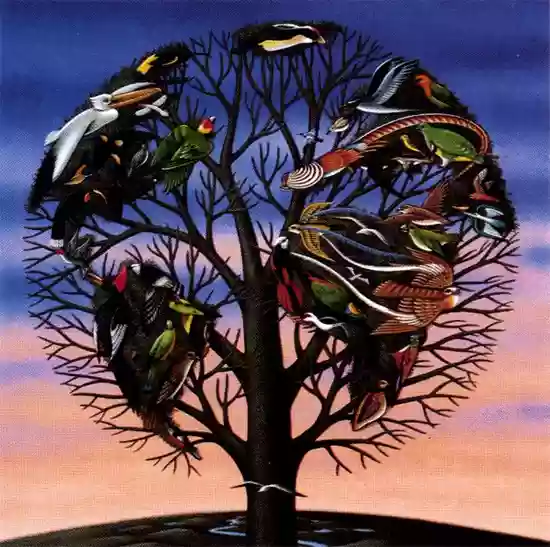
I'm talking about "Spirit of Eden" and "Laughing Stock"... Now, these two albums represent a duo destined to remain in the history of contemporary music, two timeless masterpieces.
With "Spirit of Eden", Talk Talk ventured into unexplored lands, producing avant-garde tracks that spanned from rock to jazz and chamber melodies: the music became more minimal and intimate, nothing to do with the sharp sound waves of their early hits; but if with this album the band had discovered a new way of making music, with "Laughing Stock" Hollis and company took a further evolution: the complete deconstruction of the tracks, which lose the traditional song form and consist of a weave of melodies as unpredictable as they are wonderfully enchanting, chasing each other through the piece as if to hypnotize the fascinated listener who is dragged by the notes to the most hidden places of their subconscious.
It is impossible to describe in words the listening experience obtained by placing such an album in the player: the emotions that overwhelm you are so many and varied, ranging from the apparent calm of the lull after the storm ("Ascension Day"/"After the Flood"), to the restless melancholic and lulling relaxation ("Taphead"), to the point of gliding carried by the wind ("New Grass"). The album is therefore constantly pervaded by a kind of mysterious aura that seems to make it come from another dimension, as if someone we cannot see wants us to feel their sensations on our skin, forcing us to orient and lose ourselves in the landscapes painted by the music.
The thing that surprises me the most about this album is the spirituality of the music that envelops you, managing to evoke images of a living nature that surrounds and hosts you... It's as if, after staying in Eden and admiring the wonders of the world, they began to ascend to the sky, describing what they see and feel in a more ethereal, dreamy, and also more hallucinatory form...
With this album, Talk Talk tells us what music is and what it feels like to listen to it.
"Laughing Stock", along with its companion "Spirit of Eden", will become a milestone that will inspire a multitude of subsequent artists; dedicating a listen to it is obligatory for a true music lover.
Loading comments slowly
Summary by Bot
Laughing Stock marks Talk Talk's radical departure from pop synth sounds toward an experimental, minimal, and intimate style. The album offers hypnotic and emotive soundscapes with spiritual and mysterious qualities. Alongside Spirit of Eden, it represents a milestone in contemporary music that challenged traditional song forms. Its influence endures, inspiring countless artists. A must-listen for serious music lovers.Tracklist Lyrics Videos
Talk Talk
Talk Talk were an English band formed in London in 1981 by Mark Hollis, Paul Webb and Lee Harris, with early keyboardist Simon Brenner and long‑time producer/co-writer Tim Friese‑Greene. They evolved from acclaimed 80s synth-pop to the influential, spacious soundscapes of Spirit of Eden (1988) and Laughing Stock (1991), before disbanding in the early 1990s.10 Reviews
Other reviews
By Jam
Our Talk Talk feel the end of their atonement near, and the album is there to show us that glimpse of paradise that they must have begun to glimpse.
Don’t make the same mistake as the musical community in that 1991, and give the redeemed Talk Talk a chance to show you what music is heard up there, where mass pop music is just a distant memory...
