
 •
Versione 1
Rating:
•
Versione 1
Rating:
THE REVIEW
I would start with Bernard.
Bernard White was the editor of "Terrapin," a fanzine for extreme Barrett fans that ran for seventeen issues in the early seventies.
This is how a journalist of those years described him, not very kindly: "short, with a sickly look, hair shaved like those of astronauts, sweaty handshake, frighteningly clumsy and shy."
During that interview, in an almost conspiratorial atmosphere, Bernard White let the journalist listen to three tracks, then still unreleased: "Opel" "Birdie hop" and "Word song."
In the article, there is talk of a fabulous chest, immense, supported by a wobbly stool, covered with a kind of Indian fabric, the drawers filled with Barrett memorabilia:
I dream of that chest at night, somewhat like the apple core a guy I know dreams of Matilde's toy chest.
“I understand Syd, they also called me crazy - said Bernard - I spent a year in a psychiatric hospital and you’re locked in this room.”
I have great affection for Bernard...
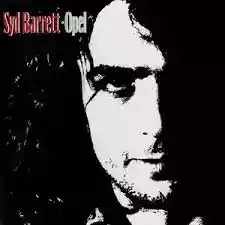
However, "Opel" "Birdie hop" and "Word song," since 1988, are part of this fabulous album of Barrett's unreleased works, where some indisputable masterpieces appear (who knows why left out of "The madcap laughs" and "Barrett"), in addition to valuable alternate takes and a bunch of skeletal songs.
Let's start then...
Before getting rid of some minor burdens, I want to play some discards.
The first is the little bird Hop, one of the many Barrett creatures. What does the little bird Hop do? What a question, it hops sadly in the snow, for it knows snow.
Syd knows it too, because he too is a hopping bird. And if there’s a voice that hops, or rather limps, it's his, especially in skeletal songs like this one...
The guitar is also more limping than ever and in the grip of a crying stutter, then there's a sort of revival, a hopping of the dream, even though it still limps...
I quote from Edgar’s notebooks, a distinguished Barrett-fan friend of mine: “a hopping sadness that identifies with the minimal flight of minimal creatures, in this case a little bird carrying in its beak, like a straw or a twig, some obscure debris of fantasy, not enough to lift it from the ground.”
The second discard is "Word song," or the little game of interstellar Scrabble taken to the extreme, with a list of words put together for pure rhythmic pleasure and a sly and mocking guitar bridge, the ideal soundtrack for the most pleasurable inconclusiveness. A trivial exercise by an art school student, or nonsense if you prefer, and yet I like it, especially because of the deadpan voice that doesn’t seem to enjoy such a feat at all.
But what is interstellar Scrabble?
It’s a magic box, invented to juxtapose random words, by a friend of Syd, Spike Hawkins, a completely spaced-out poet. It's worth recounting their first meeting, quoting Spike's own words, who, having fallen asleep at a party in the grip of deep thoughts, wakes up to find Syd watching him. Here’s the dialogue between the two.
Syd: "did you like it?"...
Spike: "Yes!!!"...
Syd: "and that's everything, right?"...
(long pause)...(but long, long, long)
Spike: "where have I been?"...
Syd: "wherever you wanted to be”...
Doesn't it sound like the perfect dialogue for one of his songs?
But let's get to the main points.
Even more than the hops of the little bird hop, "Opel" is an emotional peak and emotion, as an aesthetic phenomenon, was rare for Syd.
The sheen in the best Floydian youth and the absolute elusiveness of his later thought were like a psychic mute for him, a decantation chamber towards a strange kind of beauty.
Like "Birdie hop," "Opel" is a skeletal song, but in a different sense, you can hear the creaking of bones. So here’s “a bare, twisted, desolate carcass...” and “a sparkle of flies digging into emptied flesh”...
This extraordinary piece is divided into two parts, the first descriptive, the second an invocation: in between, a long wandering guitar that is like that carcass, bare, twisted, desolate... and it seems to ruminate... creating a sense of waiting, an almost unbearable suspense...
Then, from that landscape, which was described with a few quick touches a moment before (“a lone pebble”“a half-buried stick”“a black totem in the black sand”“a gray mist dream”“glowing mollusks”), Syd launches into a long, endless invocation, obsessively repeating phrases like “I’m trying to find you”“I’m living”“I’m offering myself”...
I don't know, one remains astonished in front of this heart-wrenching essentiality, there really is no trace of bizarre interstellar beetles dismantling language here... and you don’t travel inside a bubble just before it bursts... and there are no metaphysical funfair keyboards...
There is only a strange kind of blues, speaking of claustrophobia and lack...
But all this is not enough to explain the extraordinary beauty of this song. There is, for example, in the descriptive part, a great quality of singing, which carves each word and always emphasizes the last verse with insistent and vibrant cacophonies, cacophonies that then return after that incredible guitar part, and by taking the scene completely, make that voice all too human...
"Swan lee" (for years my favorite Barrett song) is like noticing the boiling of a pot of water you left on the fire, like the cicadas at two in the afternoon when you're sitting in the shade of a tree and after a while you don't notice them..
Like the noises of a distant workshop, dark machines turning on, like a murmur of a meadow that suddenly amplifies, revealing a tangled and innocent plot that you usually don’t notice.
You don’t notice. You don’t pay attention.
Yes, all this is "Swan lee," a lazy and distracted music that crackles like fire. But even this you don’t notice or don’t pay attention to, especially if you follow Syd’s voice, distant and neutral, which here is still that one, not mixed with Mandrax, of the best Floydian youth...and it imposes itself, and it is psychedelic without tricks and deceptions...it’s her and nothing else...
But it’s nice to notice the boiling of the pot.
It’s nice, that dark chorus "the land in silence stands" which contributes very well to creating that sense of suspense and mystery of which he was a master.
Regarding the alternate takes, two are particularly tasty.
"Octopus" masterpiece of "The madcap laughs," here renamed "Clowns and jugglers" has almost free form elements absent from the more well-known version.
"Rats," from "Barrett," here in a take with only voice and guitar, highlighting the crazy rhythm of the words..
Yeah, "Rats"... "I love the fall that brings me to"... "I love the descent that leads me" Syd says. And "Rats," indeed, is a descent with him reckless, very reckless, like certain cyclists at the tour under the rain, or certain friends of mine when with the ball-bearing little cart they faced the "neretta," the legendary descent called peak of broken bones.
Obviously in "Rats" there isn’t a little cart, but a wildly crazy sound jumble where screechy and playful words hop on a clattering and fast acoustic rhythm. Now, as known, in downhill, all saints help you, but only if you go slow, only if it’s not too steep, only if you’re not on top of the neretta.
When I climbed, I was in turmoil, also because I knew I would never have the courage to go down.
In "Rats" the ascending, the going up before the precipice, is a mad musing, every sentence a shaky step, and what we hear is a sweet and incoherent preparation for the descent.
And when you dive there are no more holds...and you're like without hands and feet, without anything, except the weight of the air which makes this still music and not simply crashing.
Also beautiful is the alternate version of "Dark globe," here renamed "Wouldn't you miss me." It's less drunk and shouted and more melancholic and sweet compared to the one appearing in "The madcap laughs."
The other unreleased tracks on the album are, as mentioned, skeletal songs, good only for extreme Barrett fans like me. I understand that others may find them just pointless mumbling. They have the charm of sketching, of the unfinished. Then since even the finished Barrett is indeed unfinished, the skeletal songs are an unfinished of the unfinished. So a cool thing.
The alternate takes add little, but they are still alternate takes of masterpieces, so...
so, if you haven't already, listen to this album...
Loading comments slowly
Summary by Bot
This detailed review explores Syd Barrett's 'Opel,' a collection of rare and unreleased tracks that showcase the raw, skeletal beauty of his music. The reviewer highlights key songs like 'Birdie Hop,' 'Word Song,' and the emotional centerpiece 'Opel,' praising Barrett's unique voice and songwriting. Alternate takes reveal fresh and intimate perspectives on Barrett's classics, making this album a treasure for dedicated fans. Though some tracks are skeletal and incomplete, their charm is undeniable.Tracklist Lyrics Videos
Syd Barrett
Syd Barrett (Roger Keith Barrett) was an English singer-songwriter and guitarist, best known as a founding member and early creative force of Pink Floyd. After leaving the band amid worsening mental health, he released two solo albums in 1970 (“The Madcap Laughs” and “Barrett”) and later became the subject of extensive posthumous/archival releases.22 Reviews
Other reviews
By lloyd
The crazy diamond fell silent softly when everyone had forgotten about him enough not to talk about him every day, but not enough to erase him from their minds.
Syd is dead and even though he hasn’t released anything for more than thirty years, the void he leaves is enormous.
