
 •
Rating:
•
Rating:
THE REVIEW
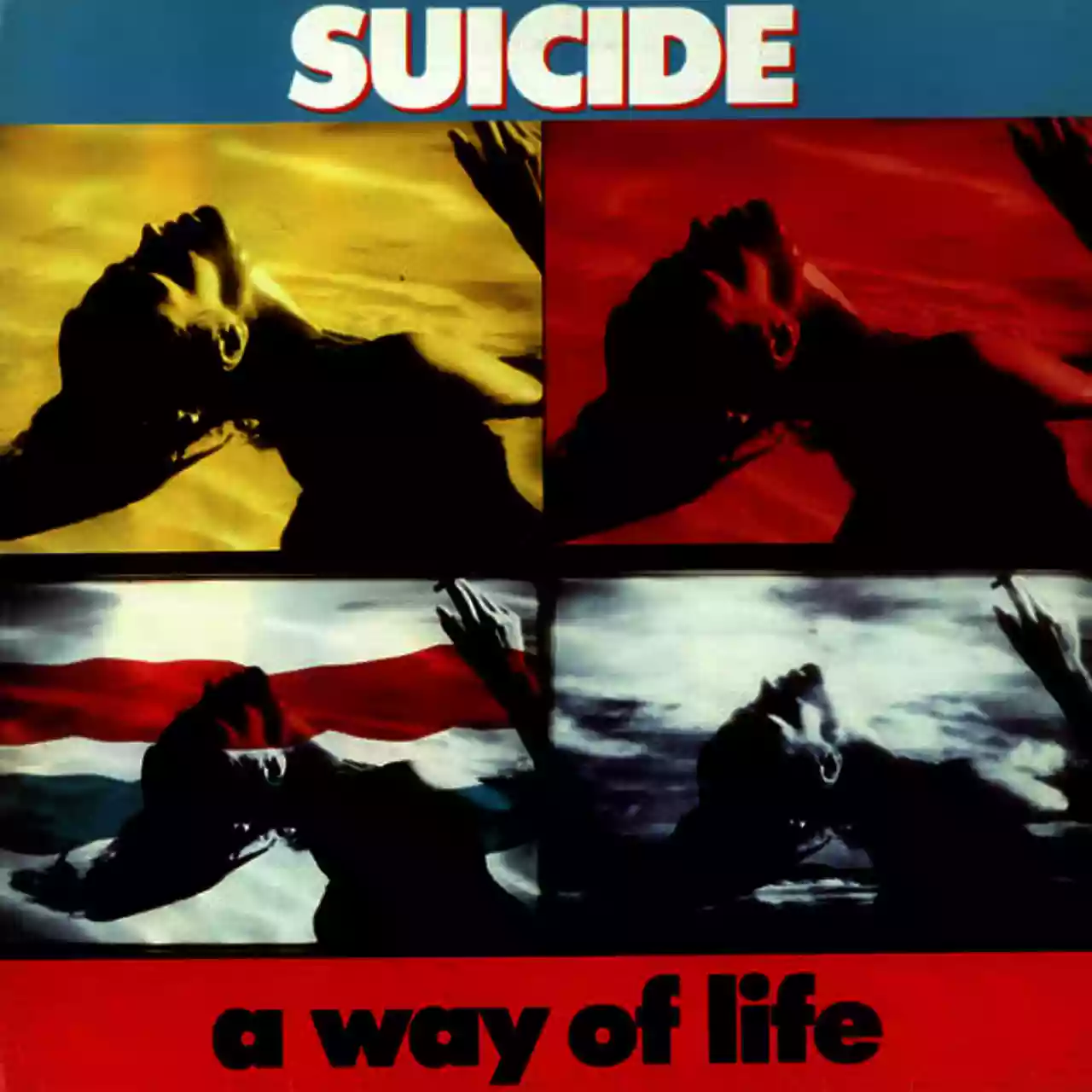
To say that suicide is a way of life would not be wrong for the ancient Stoics, who prepared daily to die.
But it wouldn't be wrong to say it for our civilization either, incapable of any reflection and collective action in the face of the enormous massacres of human beings, which occur every day through the lowest capillaries of a sick, corrupt, and decrepit system that somehow makes us all "forever involved." A system based on predation and annihilation, both masked by a gap between technique and imagination (Promethean, to put it in Anders' words) increasingly irreducible.
I don't know who would be willing to endorse this brief self-portrait, but this is how Suicide, in the nine frames of A Way of Life, paint our collective life: a long march at an industrial pace, without accelerations or jolts, a linear, monotonous, gloomy, and oppressed existence.
No space for the pathos of an individual tragedy or the epos of an existential and (anti)heroic abyss that finds a foothold in genuine emotion. No Faustian titanism nor deus ex machina or glimpses of salvation (but when ever?).
Everything is filtered through a heavy and often apocalyptic sound (certainly influenced by the new, for the time, industrial music drifts) and the form of a synthetic rock 'n' roll, adulterated and alien(ated), which at times recalls more the solo Alan Vega than Suicide.
Indeed, what better vehicle than the most popular and national musical genre, which most embodies the simple adolescent dreams of the workin' class and middle class, to represent not only the drama and decadence, but the Richmond of an entire society?
The glacial and dynamic expressionist theatricality of their personal fusion of popular music and avant-garde is banned in this record. When suicide is not a simple act, but a way of life, one cannot afford to reproduce it through the captivating psychology that makes us so appreciate modern and contemporary playwrights. Any form of allure or color, even in evil, must be sacrificed on the altar of grey and indifferent despair. For this reason, perhaps, the chronicles of A Way of Life are normally ignored even by the duo's fans.
Here their style is one of mannerism, artificial. All the tracks describe a world that is not life, but a mere simulacrum.
Rubble.
And the rubble conveys nothing but the Void.
Loading comments slowly
Summary by Bot
The review portrays Suicide's album 'A Way of Life' as a bleak, industrial-inspired record reflecting modern society's decay and monotony. It highlights the lack of emotional uplift or heroic themes, replaced by a cold, synthetic rock style reminiscent of Alan Vega's solo work. The album eschews theatricality and allure in favor of an oppressive, gray despair that some fans may overlook. Ultimately, it presents a stark musical simulacrum conveying void and rubble instead of life.Tracklist Videos
Suicide
Suicide were an American music duo formed in New York City, best known for the influential 1977 album “Suicide” and the song “Frankie Teardrop.” The group centered on Alan Vega (vocals) and Martin Rev (keyboards/electronics), using minimal electronic loops and confrontational performance to fuse rock ’n’ roll attitude with avant-garde electronics.11 Reviews
