
 •
Rating:
•
Rating:
THE REVIEW
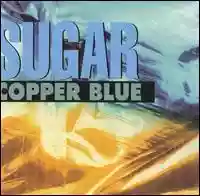
In the 90s, after "Black Sheets Of Rain", Bob Mould reunited with bassist David Barbe and drummer Malcom Travis, and formed Sugar, a band with a brief but intense life. In 1992, this first work was released.
The beginning is entirely devoted to melodic punk, but it's not syrupy to the point of seeming childish. And how will this album sound to the spiky-haired teenager, not just from '92? Will it satisfy his unrestrained craving for guitar chaos and, at the same time, cartoon theme songs? Certainly, Mould's voice is not that of a disheveled teenager, and the adolescent realizes this at the first syllable he hears him sing. He will soon notice, after all, that even the missteps—those things that the spiky-haired kids love so much—are few and far between in this work. The Husker Du fans, on the other hand, perhaps because they're too spoiled, wrinkle their noses at the mere mention of Sugar as if they were talking about Millencollin!
The opener "The Act We Act" is a good non-energetic track with an excellent chorus but a poor and too traditional guitar solo. "A Good Idea" has a mosquito-guitar that you can swat away as much as you want, yet it always returns. By the way, the song is so fun that you'd picture someone with the eternal repeat offender look, tattoos, and platinum blonde dyed hair, certainly not someone like Bob! "Changes" is another teenage punk softened by the bells/cowbells of Santa's reindeer. "Helpless" is emo: just listen to the initial guitar riff. "Hoover Dam" is a nice electrified folk song with, however, in the middle and end, keyboard parts that make Jean Michel Jarre seem like a man of taste in comparison. After the initial quartet, which the spiky-haired teenager will have liked, it really seems like the air has become more adult-oriented. "The Slim", which talks about a friendship lost due to A.I.D.S., is a superb track, though it has no accelerations, in fact, quite the opposite, a rarefied arpeggio mid-song. Bob's voice is no longer out of place in these parts, in fact, it's the best possible. It continues with acoustics for a fast and sweet sweet track titled "If I Can't Change Your Mind", something that could have been written by bands like Lemonheads or Goo Goo Dolls (and will be covered by the sycophants of rock, namely Train).
Teenage punk reappears in the unpleasant "Fortune Teller", while "Slick" is an excellent slow and laid-back rock. The final "Man On The Moon" seems like a clumsy attempt to combine modern punk with glam. The "only music" space in the middle of the track is terrible. A pity, since Bob has always managed to go beyond the boundaries with his concluding tracks, only to emerge with open applause (see more or less all the endings of his records, and read the related reviews, all done by yours truly).
If the goal was to present an "all singles" album, well, the attempt fails at track number 5. From there on, a spiky-haired teenager watching MTV wouldn't be able to enjoy the remaining tracks, except for "If I Can't Change Your Mind" (which will indeed be a single, along with three of the four initial tracks, i.e., the second, third, and fourth), in which, however, he will struggle to recognize a punk band in action. The lover, but what am I saying, the connoisseur, no no, better yet, the sommelier of Husker Du (notice the "slight" polemic vein?), didn't even come close to this record, skeptical—as he is entitled to be, from his point of view—about everything Bob did beyond and outside his superb eighties band. If what we're looking for, on the other hand, is yet another singer-songwriter album by Bob Mould, obviously the sole author of all the tracks branded Sugar, we will find ourselves in front of the "usual" Bob, who maybe sweetens a bit more a couple of episodes attributable to that good-humored self, to the little boy within him. And for the rest still offers us specimens of "caustic" rock, electrified folk, atypical ballads and a (this time not very successful) final experiment of hypnotic voices and sounds.
The album will achieve good critical success as well as positive chart results. New Musical Express will appreciate it so much that for 1992 "Copper Blue" will be nothing less than the album of the year. It's the same old story: where was NME when Bob was bringing out "Black Sheets Of Rain"? And where was it in a myriad of other episodes still?
Loading comments slowly
Summary by Bot
Sugar's 1992 debut album Copper Blue showcases Bob Mould's shift to combining melodic punk with more mature rock elements. The album offers a mix of energetic and softer tracks with well-crafted songwriting. Despite some debate from Husker Du fans, it gained critical acclaim, including NME's album of the year in 1992. Key songs like 'The Slim' and 'If I Can't Change Your Mind' highlight the album's depth. The review praises the band's intense but brief life and the album's balance of youthful energy and adult themes.Tracklist Lyrics Videos
Sugar
Sugar is an American alternative rock band formed in 1992 by Bob Mould with David Barbe and Malcolm Travis. They released Copper Blue (named NME’s Album of the Year 1992), the Beaster EP, File Under: Easy Listening, and the B-sides/live collection Besides before disbanding in 1995.04 Reviews
