
 •
Rating:
•
Rating:
THE REVIEW
Were you right to burn the rock star?
A while ago, we talked about the Morphine, and I remember someone (jdv? where did you go?) mentioned Soul Coughing for a more stringent comparison.
Nonsense.
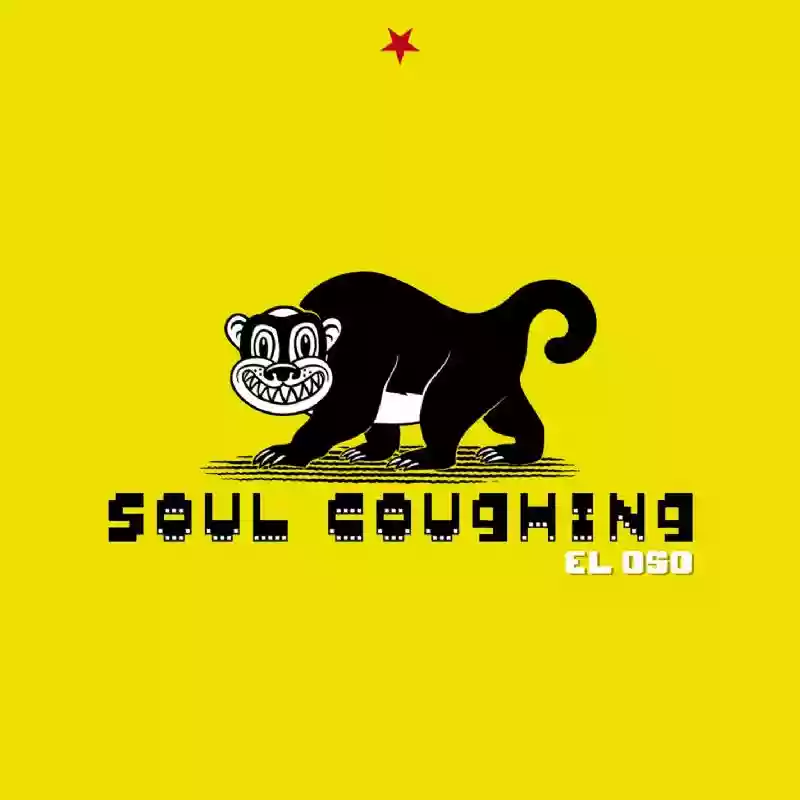
The Morphine could not exist without the night, just as the four from NY lived their listless restlessness in the daylight. Do I need to repeat once again the absolute uniqueness of this quartet within the already varied American landscape of twenty-five years ago? This is also why explaining their music remains a colossal task, so much so that they themselves invented a name for their genre (deepslacker jazz... slacker, the lazy one who doesn't want to work). Even the good Imasoulman had at the time some difficulty defining it. Be that as it may, “El Oso” – “the bear” that winks at us from the cover – is the band's third album, and I say this without fear of being contradicted, by far their best. Put on the headphones, I was listening to the first songs and it felt like it was recorded in a foundry. And that's the beauty of it: a bit like thinking of Kraftwerk's younger siblings, the Kling Klang moved by a not so accommodating moving company into the New York sewers. Rolling has a chainsaw instead of a bass, Misinformed and Houston pound on an anvil as persistently as a blacksmith, but one of those jittery and pissed-off ones.
The credit obviously goes to the fantastic and razor-sharp hyper-production of the trio Optical-Tchad Blake-Pat Dillett, tailors who sew half on the silhouette of a bony and very white post-’65 funk, and for the other half on the line that from krautrock goes directly to d’n’b, even citing the dark darkness that concealed the end of flower power – Doughty singing St. Louise is Listening is really scary eh! Needless to say, with such a context, Degli Antoni does both the good and the bad weather: his samples are practically insane, every second brings out a different and never before heard sound, and I challenge anyone to notice on the first listen the sonic expertise and the endless hidden details within these grooves.
But let's stop beating around the bush, do we want to talk about the heavy hitters then?? I’ve already mentioned a couple above, to be honest, even though it’s inevitable that the big single Circles – a scalene rectangle with Fa and Sol minor on its sides – is the benchmark and the diamond tip of songs that can even be whistled, or strummed in the room with our little guitar if we ever wanted to connect the amp to the entrance of the Fukushima plant. Then there are $300 and Monster Man which are nothing but wild car races launched at a thousand per hour on those high-speed tracks you see in movies, and Maybe I’ll Come Down, the dub ballad that Lee Perry would never have had the courage to write. Or further down the extreme sound expressionism of Fully Retractable, Pensacola, and I Miss the Girl. On the short, very short texts by Doughty, and their bewildered and mostly incomprehensible surrealism, it's almost pointless to dwell specifically; they’re simply there on purpose to imply much more than what is actually said.
A perfect album, which I fell in love with from the first listen, and practically unreproducible live: it’s not surprising that soon after, they would break up, unable to follow up on such kaleidoscopic magnificence. The recordings of some live performances released in the early 2000s, some excellent by the way, have in fact confirmed that, like for the Who with “Quadrophenia” at the time, the step was indeed longer than the leg. Despite the inspiration and technical competence – Steinberg and Gabay were the best double bass/snare drummer that a stateless group like SC could afford – the expressive urgency we find here was never fully transferred on stage. The classic state of grace that lasts the length of a season, and then fades away, ephemeral as it arrived.
Loading comments slowly
Summary by Bot
Soul Coughing's third album, 'El Oso,' is praised as their best work, combining unique 'deepslacker jazz' with innovative production and surreal lyrics. The review highlights the album's complex sound layers and standout tracks like 'Circles' and 'Monster Man.' Despite their studio brilliance, the band struggled to replicate this energy live. 'El Oso' remains a kaleidoscopic and influential masterpiece from the 90s alternative music scene.Tracklist Lyrics Videos
Soul Coughing
Soul Coughing are an American band formed in New York City in 1992 and active until 2000. The lineup featured Mike Doughty (vocals, guitar), Mark De Gli Antoni (sampler, keyboards), Sebastian Steinberg (bass), and Yuval Gabay (drums). They released three studio albums—Ruby Vroom (1994), Irresistible Bliss (1996), and El Oso (1998)—blending alternative rock with jazz, hip hop, funk, and sample-based experimentation. Notable tracks include Super Bon Bon, Circles, and Screenwriter’s Blues.04 Reviews
