
 •
Rating:
•
Rating:
THE REVIEW
This band predominantly played alternative rock and post-punk, and was more or less a candidate to carry on the legacy of their fellow townsmen Husker Du and Replacements... They had sold little, had done a lot and much of it was good, giving the right outlet to their creativity in all directions. In fact, they even released three albums in one year. Then, the nineties arrived...
In a triumph of seraphim and bargain bin jeans, dirty Converse, and scraped guitars, it was only right that Soul Asylum reached the mainstream audience, given how hard they worked in the previous decade, in the shadows shared with many other bands behind the anonymous definition of "alt rock".
And yet, one must say, those who had been listening to them for a long time (not me) could not help but notice the changes in musical approach, as they became a curious band of radio-friendly root rock. Not that David Pirner and his companions had completely ignored their acoustic vein before, but neither can it be said they had forced it to such levels.
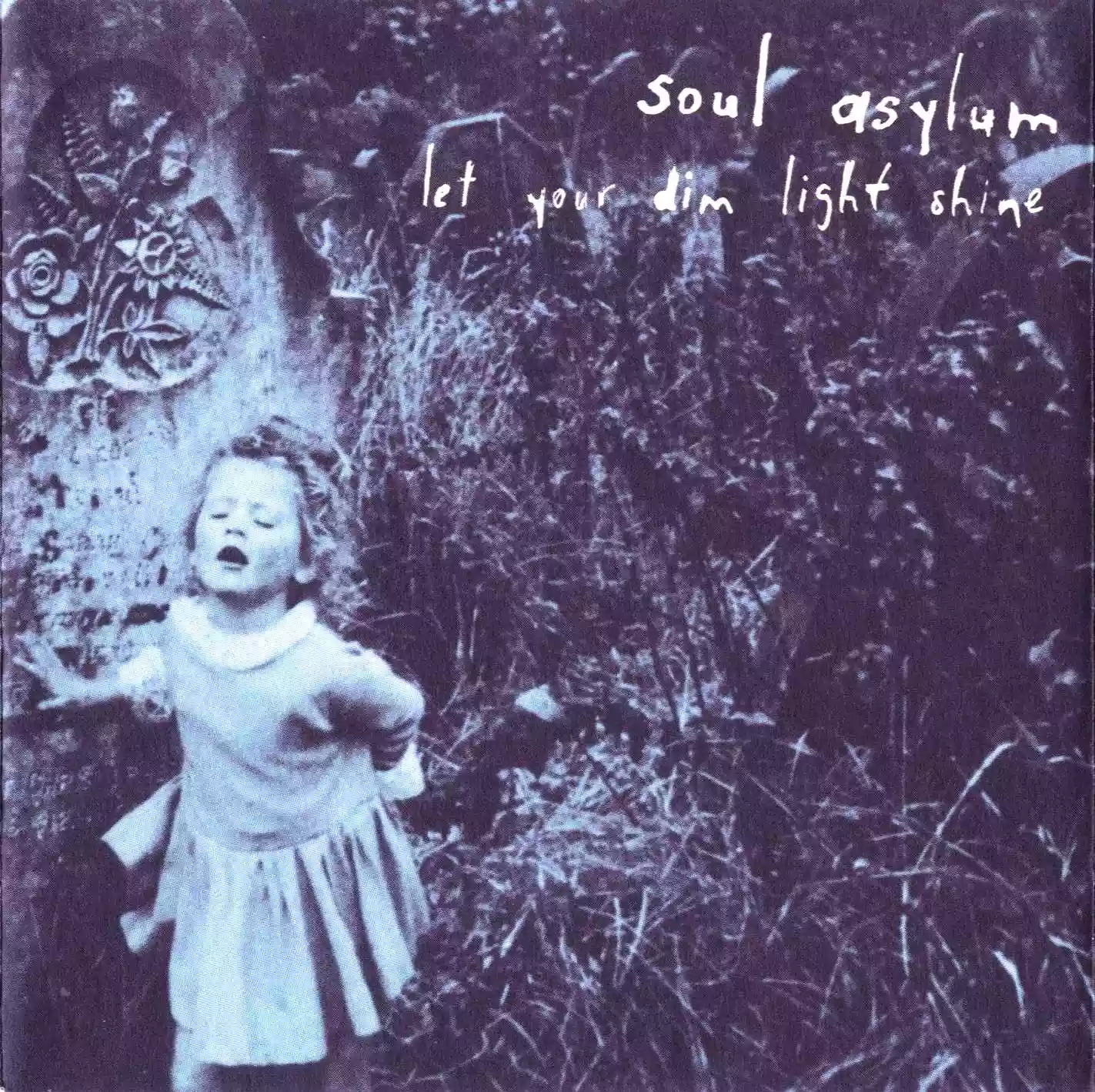
The story goes that "Grave Dancers Union" and "Runaway Train" arrived, and everything changed for them. In a rapid evolution towards the end, not material but creative, a few years after the 1992 hit came this "Let Your Dim Light Shine". Soul Asylum was, for a teenager who knew nothing of all the music of the past, the most honest and credible band around; David Pirner, even being a temporary boyfriend of the ubiquitous Wynona Ryder, lived the lives of us young street folks even when he was sitting on the toilet. His tormented vibrato is a world record (unsurpassed to this day), and it's genuine, so genuine it seems fake, too contrived. I envied his voice and the way he sang the opening line of "Runaway Train": "Call you up in the middle of the night"... Especially that "call you up" I tried several times to imitate...
Is Pirner's pose or a daily life to be shared and exported around the globe? Simple feelings, stories of daily misery: Soul Asylum seems like a band of UN ambassadors in a Third World America. And they tell it, they sing it, with a self-assurance that makes them standard-bearers of this nation of wretches, with such awareness that it seems as if they received an investiture straight from heaven. And then the first single and also the first track of "Let Your Dim Light Shine" is titled "Misery", and it was immediately successful. In '95, "Frustrated Inc." was born, a multinational producing misery. Just like Soul Asylum, who produce misery in their songs and (finally) become enriched. The kids from Minneapolis become entrepreneurs of despair, wholesalers of marginalization, licensees of the import/export of tears, speculators of existential discomfort. Clever ones from the community squares.
The tracklist unveils items like "Promises Broken", "Eyes Of A Child" (a slow woman, very poor and with a sea of children, who maybe, according to Pirner, mind you, is the only one who understood everything about life), "Just Like Anyone", "Nothing To Write Home About"... The Music? More or less like that of the previous "Grave Dancers Union". Namely, radio-friendly rock, almost eighties in the choruses, and root or folk rock in the verses as in the sound, apart from the essence of a rhythm guitar that acts as a true pivot, always very deaf and hard.
The chorus of "Misery" seems to come from a Poison LP, from Def Leppard... Do you remember the nineties well? So you haven't removed from your mind certain bands with bandanas and teased hair who decided to play a bit more grunge to make a buck, or certain vocalists who cut their hair, covered their tattoos, turned to acoustics? Soul Asylum, on the other hand, in the nineties, while Pirner's red hair grew longer, began to sing (for the first time in their career) eighties choruses. FM rock returns in "Hopes Up", and in "Tell Me When", the latter played on the goodness of the lead guitar riff. The verse, as often happens, is a catchy and smooth folk, maybe without great character. Folk-root verse/radio-rock chorus: it works even if instead of folk you find country-rock n' roll in the delightful "Bittersweetheart". "Mysery", however, is the prime example.
Very powerful riffs, even if not very original, for "Shutdown" and "Nothing To Write Home About", two fairly similar songs with the same slowdown at the moment the title is pronounced. The diagonal "Crowl" is fun, with those sophisticated verses crashing into an out-of-time hard rock chorus with those "see ya see ya later maybe one more beer". The ballad "Promises Broken" is evocative, sung by the drowsy but effective voice of the lead guitarist, which, however, seems to come directly from "Hotel California" by the Eagles: here the hotel, however, is called "Satellite". "Caged Rat" is interesting, showcasing a more extreme soul typical of a past known to few: here brief free-jazz phrases, cheap pop, and deafening guitar devastation mix into a filler-demonstrative act... The problem lies in the intentions: in '95, the caged rat wasn't the one in this little song but the one in Corgan's "Bullet With Butterfly Wings"...
The only perhaps original stuff, when compared to their own and others' discography, could be the other big single "Just Like Anyone": choruses all to squawk with a tongue-twister text, a powerful special for Pirner's voice and the jingle-jangle sonics of the guitar, all within a hard-college rock structure. The finale then is to shout, something that always the redhead achieves well.
A sequel record to the '92 hit, unresolved and less bright, without a track comparable to "Runaway Train" for effectiveness and translatability into banknotes. Less valid but all catchy, sometimes smoother (melodies) and sometimes harsher (rock) than its predecessor, thus often not reaching its level when it comes to the quality of marriages between melodic and rough.
The beginning of the end of an excellent band that previously maneuvered well without finding mass distribution and that three years before this record had already performed excellently in these radio and less daring paths.
Ryder will soon leave the "vibrant" David as success abandoned Soul Asylum. The only thing that did not abandon them was this taste for making root radio music. By this hour, success or no success, we would have found, in subsequent releases, another couple of good, perhaps even excellent, albums of punk, garage, and alternative rock. Alternative to this, at least.
Loading comments slowly
Summary by Bot
This review explores Soul Asylum's 1995 album 'Let Your Dim Light Shine' as a continuation of their alt rock legacy with a shift toward radio-friendly root rock. It highlights the lyrical focus on everyday misery and authenticity conveyed by David Pirner's distinctive vocal style. While the album lacks a hit as powerful as 'Runaway Train,' it offers catchy, sometimes smoother melodies mixed with harsher rock. The album marks a transitional period for the band balancing artistic integrity and mainstream success.Tracklist Lyrics Videos
Soul Asylum
Soul Asylum is an American alternative rock band formed in Minneapolis in 1981 by Dave Pirner, Dan Murphy, and Karl Mueller. Rising from hardcore/garage roots, they earned mainstream success with 1992’s Grave Dancers Union and the single Runaway Train, while maintaining a reputation for energetic live shows and emotionally direct songwriting.05 Reviews
