
 •
Rating:
•
Rating:
THE REVIEW
The Kora is a peculiar instrument; it belongs to the chordophone family and is a traditional instrument of the Mandinka (or Mandingo or Malinké, whichever you prefer), an ethnic group from West and, partially, Central Africa.
The master of the kora, called a “Jali,” is a man, generally from a “Griot” family, which is a storyteller, especially in the Malian, Gambian, or Senegalese tradition. The Jali title is important because he is the one who carries on the tradition of the people, an honorary, fundamental, male role. He is a musical sage.
A "special" woman.
A symbolic woman in African music.
A woman capable of imposing her desire and will over traditions.
A woman who overcomes the deeply rooted Islamic phallocentrism.
For the first few years, from three to eight years old, Sona Jobarteh played the kora in great secrecy after watching the lessons her father gave to her male sibling (Tunde Jegede). Her brother, eleven years her senior, took care of his sister and, always secretly, gave her the first lessons, but eventually... her father found out.
It could have been the end; instead, it was the great beginning.
Her father, Sanjally Jobarteh, already a citizen of the world, having moved to London before his children were born, allowed her to study the kora and simultaneously put her in a position to attend piano, cello, and harpsichord lessons at the Royal College of Music.
The study of popular culture, composition, and her voice made her a complete musician who imposes herself as the first female kora player, moreover born to a Griot family and therefore legitimately recognized as a kora master.
Her technical skills erased any doubt even for the elderly masters, the more conservative ones, the machist griots, who had to acknowledge the undisputed talent and ability of the Anglo-Gambian girl.
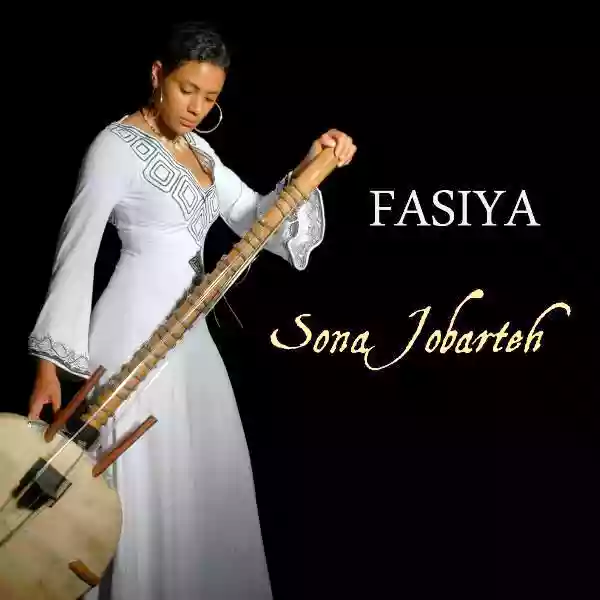
In 2011 "Fasiya" was released, meaning "A Kind Woman," an album sung in Mandingo for which I will not attempt a specific analysis because it is an album to be listened to as a whole, to immerse oneself in a sensory experience free from any technical analysis (although there is plenty of technique).
In the album, the multi-instrumentalist Jobarteh (vocals, acoustic guitar, and kora) is accompanied by 14 musicians (bass, drums, electric guitar, acoustic guitar, congas, balafon, calabash, flute, violin, djembe, dunun) for a journey I could define as country, but I immediately contradict myself, whimsically honoring the female indecision I love so much, preferring to use the term “afropop.”
It becomes almost pointless to speak of the captivating "Jaraby" ("Beloved") or "Bannaya" ("Power" or ambition), African folk-traditional pieces, which shake hands with pop sounds, combining them affably, with some minimal tension towards the Anglo-Saxon world ("Musow," "woman"), precious moments veering towards country-blues ("Saya" and "Mali Ni Ce"), rare but exquisite virtuosity for kora, violin, and guitar in "Gainaako" ("good fortune"), so I limit myself to this paragraph to give an idea of the sounds of the exquisite work.
It is a gentle album, a revolutionary album (the first female kora recording), it is an album that makes the heart beat, an album that brings a smile and that is worth much more than a yearly mimosa yellow.
It is worth the freedom from the conservative frameworks of a people.
Ça va sans dire that this is not well-regarded in most of the African and Islamic worlds, but it is March 8th, and I couldn't help but find it easy to talk about a woman of such moral and spiritual caliber. Enjoy listening.
Loading comments slowly
Summary by Bot
Fasiya by Sona Jobarteh is a groundbreaking album featuring the first female kora player from a Griot lineage. It blends traditional Mandinka music with afropop and other influences, showcasing virtuosic skills and cultural storytelling. The album is celebrated as a gentle but revolutionary work that challenges traditional gender roles in African music.Tracklist
01 Jarabi = Love (00:00)
02 Mali Ni Ce = Thank You Mali (00:00)
03 Fasiya = Heritage (00:00)
04 Mamamuso = Grandmother (00:00)
05 Saya = Loss / Passing Away (00:00)
06 Musow = Women (00:00)
07 Fatafina = Africa (00:00)
08 Mamaké = Grandfather (00:00)
09 Bannaya = Honourable / Respected / Revered / Successful (00:00)
10 Gainaako = Cattle Herdsmen (00:00)
11 Suma = Sorrow (00:00)
Sona Jobarteh
Sona Jobarteh is an Anglo-Gambian kora player, singer and composer from a griot family. She studied kora while also taking piano, cello and harpsichord lessons at the Royal College of Music and released the album Fasiya in 2011.01 Reviews
