
 •
Rating:
•
Rating:
THE REVIEW
The strange duo of Marc Almond and Dave Ball returned to the scene in 1983, two years after the successful full-length debut "Non-stop erotic cabaret". It was difficult to follow up on such a work, successful in both commercial and artistic outcomes, and able to provide an ambiguous and vivid social portrait of certain England at the dawn of Thatcherism. The sabbatical year was filled with the release of "Non-stop ecstatic dancing", one of the first "remix" albums in history, that confirmed their nature as prime movers of the techno-pop scene. "Memorabilia" also confirmed with the ballian restyling to be one of the most influential songs of the era (the New Order with "Blue Monday" would soon acknowledge this...) with that robotic bass line borrowed from James Brown, Moroderian echoes, assorted noises stitched by mastermind Ball and shaped by Almond's unparalleled expressiveness, while in "A man could get lost" even house forebodings were registered, amidst acidic and nagging synth and electronic drum beats.
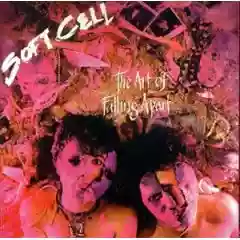
The gestation of "The art of falling apart" was therefore complex, both due to the enormous expectations and the first centrifugal forces within the duo, of which the title is clearly symptomatic. The result was a work with an epic flavor, not without contradictions, yet endowed with moments of absolute depth, where the loss of that sense of urgency, confusion, and vice that characterized the debut was partly compensated by greater compositional daring.
The first side repaints, with perhaps too much craft, the sound of "Non-stop erotic cabaret": obsessive sounds and chaotic vocalizations of seventies disco-music, Suicide-inspired keyboards recreating the up-tempo emphasis of Northern soul and a melodic taste derived from Roxy Music in weaving it all together (symbolic in this sense is "Kitchen sink drama", a somewhat pale copy of "Say hello wave goodbye").
Even Almond’s themes revisit his most famous hallmarks, although the pathos of a "Youth" is not matched. In "Where the heart is", Marc reconnects the tormented threads of bedsitting and the alienating young homosexual condition, while in "Heat" he plunges into a whirlpool of lascivious depravity, in the anonymity of a dark room. The very track in question, by leading to a disorienting sound coda, surprises and introduces the second side. Here an imposing baroque melodrama comes into play. Both Ball and Almond raise the stakes, with assured impact and enjoyment. "Baby Doll" engages, spiraling into a grandiose whirlwind, just like the title track, where the intertwining between Almond’s grandguignolesque voice, Ball’s dazzling keyboards, and synthesizer achieve perfection, while in "Loving you, hating me" the white soul echoes and unusual electric guitar slashing that tear opulent synth-pop blasts stand out.
The journey on the brink of collapse continues with "Jimi Hendrix medley", in which the sensuality and groove of the most classic of rock icons are deconstructed into glacial minimalist solutions. "Martin" is instead one of the peaks of the entire Soft Cell repertoire: an intense ride teetering between murky ferocity and refined theatricality, crossed by percussive clangors and dizzying arrangements in forging morbid almost industrial figures, to find an outlet in a nightmare without refuge: a starting point for many gothic drifts of the 90s, starting with those of Reverend Manson.
Almond and Ball parted ways shortly after, not before another noteworthy album (the ill-fated "Last night in Sodom"): the first to start a successful solo career, the second away from the scene, apart from the excellent project of the Grid. The successful reunion a few years ago would later reaffirm the consent and admiration for the cabaret by Soft Cell: always sparkling, just like that old sign in Soho.
Loading comments slowly
Summary by Bot
The Art Of Falling Apart, Soft Cell’s 1983 follow-up to their debut, blends artistic depth with compositional boldness. While it revisits the earlier disco and synth elements, it also offers epic, theatrical moments. Marc Almond’s expressive vocals and Dave Ball’s innovative synth work highlight the duo’s complex dynamics. This album, marked by social themes and sonic experimentation, remains influential in techno-pop and beyond.Tracklist Lyrics Videos
Soft Cell
Soft Cell are an English synth-pop duo formed in 1977 by vocalist Marc Almond and instrumentalist Dave Ball. They broke through with their 1981 cover of Tainted Love and the acclaimed debut album Non-Stop Erotic Cabaret, followed by darker, ambitious records like The Art of Falling Apart and This Last Night in Sodom. After splitting in 1984, they reunited in the 2000s and later returned to activity again.07 Reviews
