 •
Rating:
•
Rating:
THE REVIEW
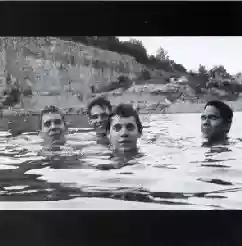
Well well... Spiderland.
What is Spiderland? Let’s start from the origins: Slint, indeed.
A band from Louisville formed in '87 by guitarist Brian McMahan and drummer Britt Walford, also includes a second guitarist, David Pajo (one of the most influential guitarists of the last fifteen years, as well as an introverted and elusive character) and bassist Ethan Buckler.
Their first album, Tweez, dated 1989, was produced by another of the few American thinking minds of the period, Steve Albini, who immediately saw its potential.
Tweez significantly diverges from the underground/American sound of the period. It’s an album that combines much more complex hardcore pieces than usual, with gems of unique fragmentation, a new style that stands out distinctly from any rock cliché. However, perhaps Albini’s presence intimidates the group itself and limits its creativity, given especially the too Big Black/Rapeman-like (Albini's groups) distortion sound, and some structures are too linear for them (which already means much broader for any other American group coming from hardcore or similar territories).
But it takes just two years, 1991, to reach Spiderland, one of the most influential albums of the last 15 years, the founder of a new style called post-rock, which distinctly departs from any rock habit created so far (only Talk Talk’s Spirit Of Eden and Laughing Stock can be called into question...).
There are indeed bass, drums, guitars, and voices, but they no longer have the roles they’ve always had in this field. The voice mostly narrates, the only calls to melody (still hardcore, so mostly desperate screams) serve solely to amplify the music itself; there is never a sense of vocal centrality. The guitars, especially Pajo’s, are the most revolutionary since Sonic Youth until then, they do not create riffs, do not accompany, but function more as classical instruments, creating a wave, always well-defined and precise, with an impressive emotional impact. The bass is perfect to accompany them with its rounded and never direct sound. The drums are at the same time of maniacal importance, rich in accents (kudos to Britt Walford) and never out of place. In short, everything is in perfect balance to transform the six tracks of the album into a dreamy and decadent journey.
Hardcore no longer exists, the album opens with three harmonics elegantly floating in the air (already something revolutionary that will later be used in abundance), and they narcotize the listener. Pauses and silences play a fundamental role, they amplify the experience, creating a smoky and dark layer on which one is lulled towards roaring waterfalls (Nosferatu Man), which never give a sense of violence or harshness (they have an intensity almost Wagnerian, more akin to classical music...).
Good Morning Captain, besides being one of the most beautiful things that I have personally ever listened to, slowly takes us among the clouds only to crash us back to the ground, except that at the moment of impact, instead of pain, we awaken from one of the most ingenious dreams ever played.
Loading comments slowly
Summary by Bot
Slint's 1991 album Spiderland is a groundbreaking post-rock record that redefined rock music conventions. With innovative guitar work by David Pajo and a perfect balance of instruments and narration, the album creates a dreamy and intense emotional experience. It stands alongside seminal works like Talk Talk's Spirit of Eden, shaping the genre's future.Tracklist Lyrics Videos
Slint
Slint are an American band from Louisville, Kentucky, formed in the late 1980s by Brian McMahan and Britt Walford with David Pajo and Ethan Buckler (later Todd Brashear). They released Tweez (1989) and the influential Spiderland (1991); a two-track Slint EP followed in 1994 after their breakup. The group reunited for live performances, including All Tomorrow’s Parties in 2005.10 Reviews
Other reviews
By ZiOn
"Forty minutes. That’s the duration of one of the most brutal murders in music history."
"In Spiderland, in 1991, it was all already there."
By zigghio
A symphonic poem of majestic silent acoustic terrorism.
The highest song of a troubled and devastated generation.
By Caspasian
Beauty is the deception of the senses, the spider here is the deception to the senses.
Like all true states of hallucination, the pieces zigzag, untainted by comparisons and parallels: it’s solely a short circuit that scrapes atrophied glands.
