 •
Rating:
•
Rating:
THE REVIEW
Back in the distant 1990, Slayer released what would be their last (at least for now… Let's hope the return of the octopus Dave Lombardo makes the difference) masterpiece, the excellent in every way "Seasons In The Abyss", which confirmed Tom Araya's trend of participating in writing the lyrics, which had already begun with the great "South Of Heaven" two years earlier.
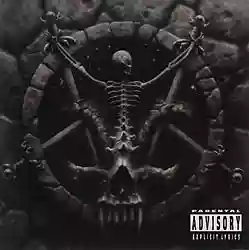
After a long and sad series of events that led to Dave's departure from the band, justified with a trivial "helping the wife after her delivery" but which suggested that the musical and familial bond between the four assassins was no longer what it used to be, the band, which hadn't released an album for four years ruining the previous average of a masterpiece every two years, decided not to sit idle and recruited the exceptional ex-Forbidden Paul Bostaph, who found himself playing on his first Slayer album, "Divine Intervention".
Strongly acclaimed at the time of its release by critics and fans, the album, initially seen as yet another masterpiece from the Los Angeles combo, however, underwent a significant negative revaluation over time.
Although, in fact, the content of the album was really excellent, it lacked the anger and violence that had characterized and led to the consecration of the band's previous works, which given the difficult circumstances (with the possible accusation of "You sold out" and slightly debilitated by the events of the time) was certainly not blameworthy, and indeed brought within this good CD some truly excellent and, I dare say, almost genius solutions.
But what drives me to say all this? Let's delve into the album, which features an excellent "Killing Fields" opening the dance (or satanic rituals? Who knows) but leaves a bitter taste in the mouth for fans who found themselves disoriented by the frequent use of mid-tempos, for goodness' sake, excellent and at times martial, but who left them eagerly awaiting a nice release of liberating "tupatupatupa": anyway, the opening song is excellent and confirms itself among the best of the album, which now shared with the old Slayer of the Eighties only the horrendous lyrics and little else.
It continues with a “Sex.Murder.Art.”, a song that I personally cannot tolerate for the total absence of characteristic Slayer-like solos and for the lyrics centered on rape and murder, which confirm it among the worst I have ever read (perhaps it was better if Araya continued to study medicine?).
"Fictional Reality" slightly below par, followed by a wild "Dittohead", which finally brings the Slayer trademark, with an initial "tupatupautpa" that, however, only serves to introduce a mid-tempo very similar to what was already heard on "South Of Heaven".
Fifth track the good "Divine Intervention", followed by a song that I really still can't digest despite numerous listens: it is "Circle Of Beliefs", perhaps the worst song of the entire album.
At this point, for me, the disappointment is quite substantial, but then comes something unexpected and absolutely brilliant: it is the mere twenty-five seconds of the opening to “SS-3”, the seventh track not even too striking in the follow-up, criticized by Max from Sepultura for its Nazi content. Now, listen to me well: just the intro of the song is worth the fifteen euros price of the album, it's one of the most irregular and beautiful riffs I've heard in Thrash, a great gem of the album that made me absolutely reevaluate it.
A subdued track, "Serenity In Murder" (the titles always leave one puzzled...) serves as a bridge to one of the strangest and most controversial songs I've ever heard in the Slayer household: "213" has an intro with melodic and semi-acoustic guitars, always recurring after so-called "rocking" parts: the song bodes well for a change in Slayer, which two years later would release the awful "Undisputed Attitude" and the merely decent "Diabolus In Musica" up to the forgettable "God Hates Us All".
Finished the heavy "213", we find the closing "Mind Control", an excellent song that could easily be contained in the very violent "Reign In Blood" from eight years earlier for the violence and mosh it unleashes.
Ups and downs, excellent solutions alternated with some decidedly banal ones, mid-tempos in place of the classic Thrash form: this album initially greatly confused my ideas, leaving me undecided for some time whether it was a masterpiece or a total flop: today, after digesting it, I can assure that the album, although it officially marks the decline of Slayer, is neither a flop nor a masterpiece, but simply a good album, and only the 25 seconds introductory to the riff of "SS-3" are worth the price of admission.
Recommended only for die-hard fans of the group: if you want to start listening to the assassins, you should listen to the immense masterpieces of the '80s when money was sought to be made and not to earn even more.
Loading comments slowly
Summary by Bot
Slayer's Divine Intervention marks a transitional period after Dave Lombardo's departure, introducing Paul Bostaph. While the album showcases strong tracks and brilliant riffs, especially in 'SS-3,' it features a notable increase in mid-tempo songs and controversial lyrics. The review acknowledges its excellence but stops short of calling it a masterpiece, recommending it mainly for die-hard fans rather than newcomers.Tracklist Lyrics Videos
Slayer
Slayer was an American thrash metal band formed in 1981 in Huntington Park, California. They are widely regarded as pioneers of thrash and extreme metal and remained active until their final shows in 2019.68 Reviews
